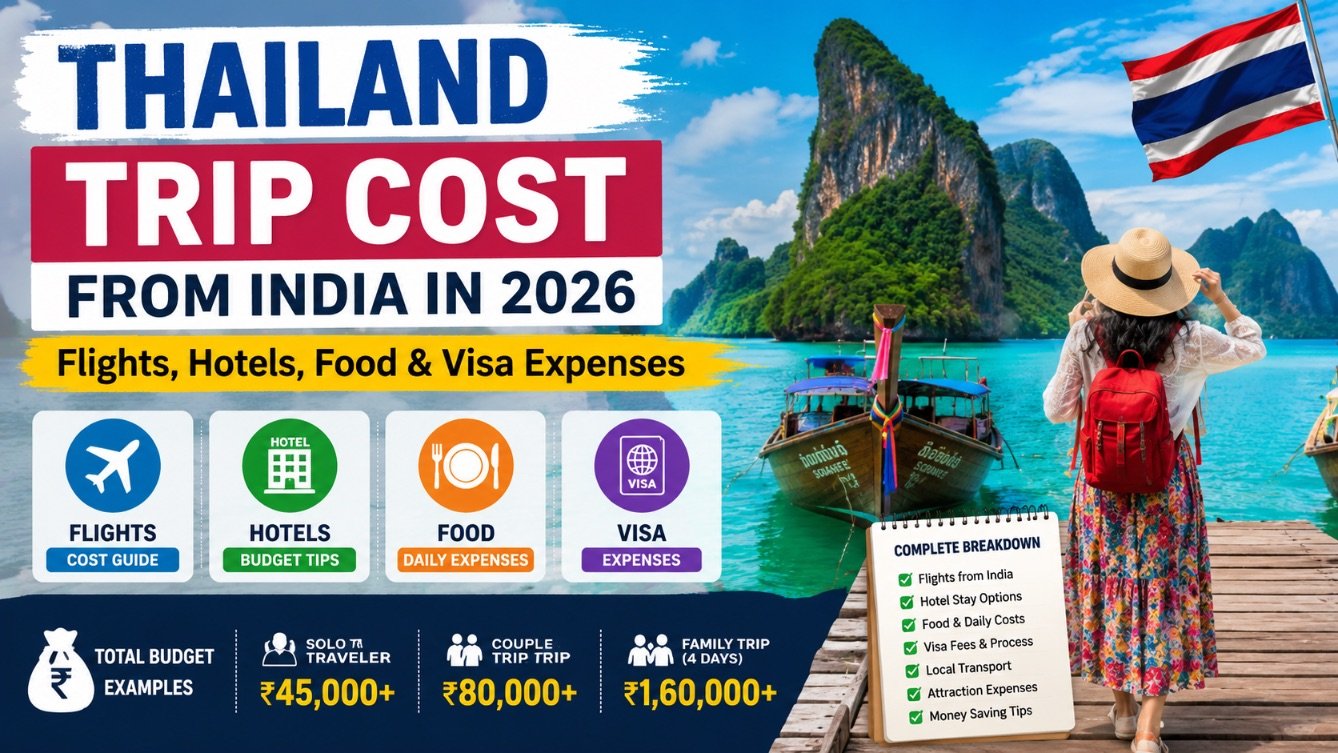
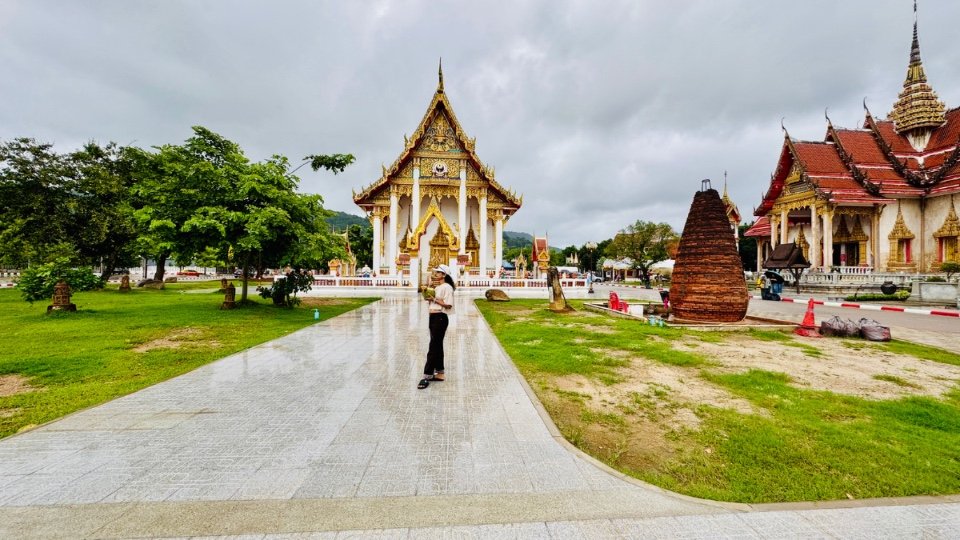
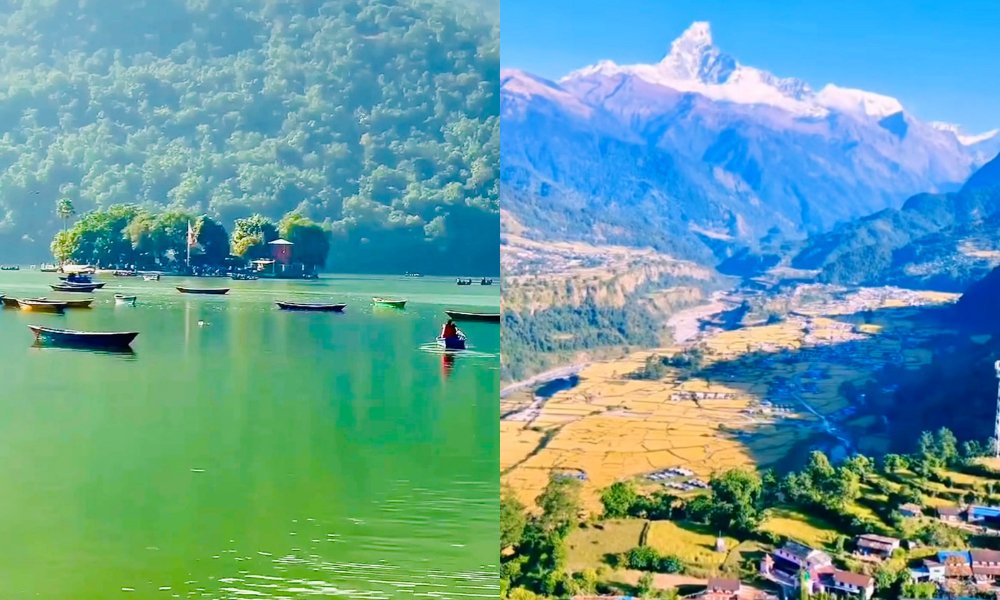
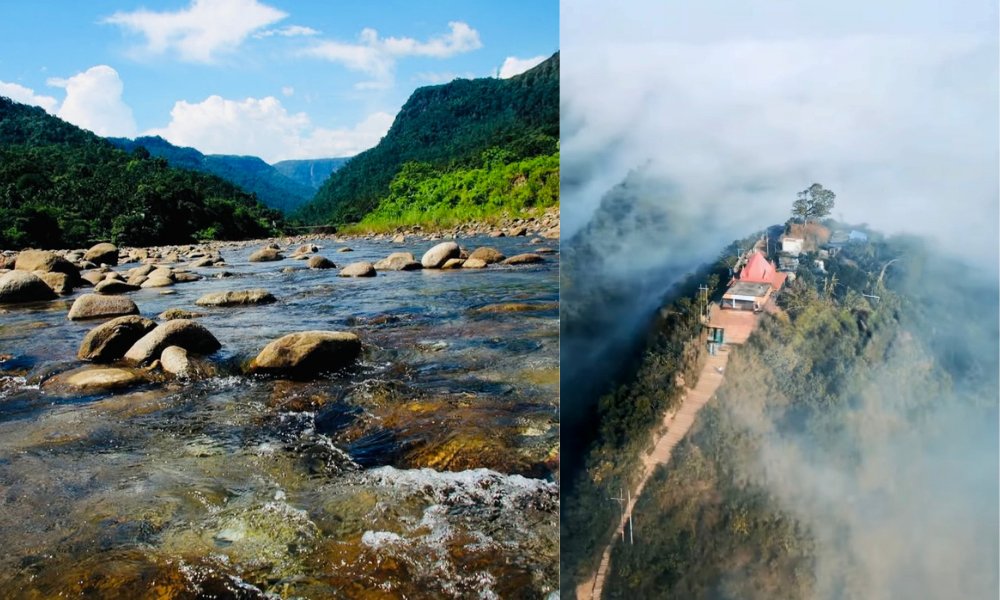
As we know, Thailand is a top choice for almost every travel enthusiast; however, there are certain mistakes most travelers make that you should avoid. In this blog, I will share common Thailand travel mistakes that can help you steer clear of hassles during your trip, whether you are visiting for the first time or are a seasoned international traveler.
These are some things that most travelers are unaware of—especially first-timers, who have absolutely no idea about these pitfalls. However, even if you have visited before, it is important to keep these points in mind so you can save both time and money.
Let’s talk about 15 travel mistakes in Thailand that you need to avoid.
1. The “Visa-Free” Digital Oversight (TDAC)
While many nationalities (including Indians) enjoy visa-free entry, the old paper arrival cards are gone.
The Mistake: Arriving without the Thailand Digital Arrival Card (TDAC).
The Fix: You must complete the TDAC online via the official government portal within 72 hours before landing. Carrying a digital or printed copy of the QR code is now a mandatory requirement for immigration.
2. Falling for the “Temple is Closed” Scam
This is the oldest trick in the book, yet tourists still fall for it daily near the Grand Palace and Wat Pho.
The Mistake: Believing a friendly stranger or tuk-tuk driver who says a major attraction is “closed for a ceremony” or “lunch break.”
The Fix: Walk directly to the ticket counter. They are rarely closed during scheduled hours. The stranger is usually trying to divert you to a high-commission gem shop or tailor.
3. Vaping in Public (Huge Fines)
Thailand has some of the world’s strictest anti-vaping laws.
The Mistake: Bringing or using e-cigarettes/vapes.
The Fix:Leave them at home. Vapes are illegal, and “on-the-spot” fines from police can range from ₹50,000 to ₹75,000 (20,000–30,000 THB). In extreme cases, it can lead to jail time.
4. Underestimating the ฿220 ATM Fee
The Mistake: Making frequent, small cash withdrawals.
The Fix: Every withdrawal from a Thai ATM with a foreign card now carries a flat fee of 220 THB (~₹530). Withdraw the maximum amount allowed (usually 20,000–30,000 THB) in one go to minimize these fees.
5. Riding Motorbikes Without an IDP
The Mistake: Renting a scooter with just your Indian “Category B” (Car) license.
The Fix: You legally need an International Driving Permit (IDP) with a specific Motorcycle endorsement. Without it, Thai police will fine you at checkpoints, and more importantly, your travel insurance will be void in the event of an accident.
6. Disrespecting the Royal Family
Thailand’s Lèse-majesté laws are extremely serious and apply to foreigners.
The Mistake: Making jokes, disparaging comments, or even crumpling a banknote (which features the King’s image).
The Fix: Treat all images of the Royal Family with absolute respect. This includes social media posts made while you are in the country.
7. Forgetting the “No Shoulders, No Knees” Rule
The Mistake: Wearing tank tops or shorts to temples.
The Fix: Even “liberal” spots like Phuket require modest dress for sacred sites. Carry a light sarong or shawl in your bag to cover up instantly.
8. The Jet Ski “Damage” Trap
The Mistake: Renting a jet ski without documenting its condition.
The Fix: Before pushing off, take a detailed video of the jet ski, focusing on the hull. Scammers often point to pre-existing scratches upon your return and demand thousands of Baht for repairs.+1
9. Not Using Ride-Hailing Apps
The Mistake: Relying solely on street-hail taxis or tuk-tuks.
The Fix: Download Grab or Bolt. These apps provide transparent, fixed pricing and GPS tracking. If you must use a street taxi, insist on the “Meter” before getting in; if they refuse, find another one.+2
10. Misunderstanding the Cannabis Laws
The Mistake: Thinking it’s a free-for-all “Green Zone.”
The Fix: As of 2026, regulations have tightened. Public consumption is strictly prohibited and can lead to arrest. Consumption is only permitted in designated private areas or for medicinal purposes.
11. Leaving Your Passport as “Collateral”
The Mistake: Handing over your physical passport to a scooter or jet ski rental shop.
The Fix:Never do this. If the bike is “stolen” or “damaged,” they will hold your passport hostage for an impulsive ransom. Offer a photocopy and a cash deposit instead.
12. Ignoring the Red Flags on Beaches
The Mistake: Swimming when a red flag is posted.
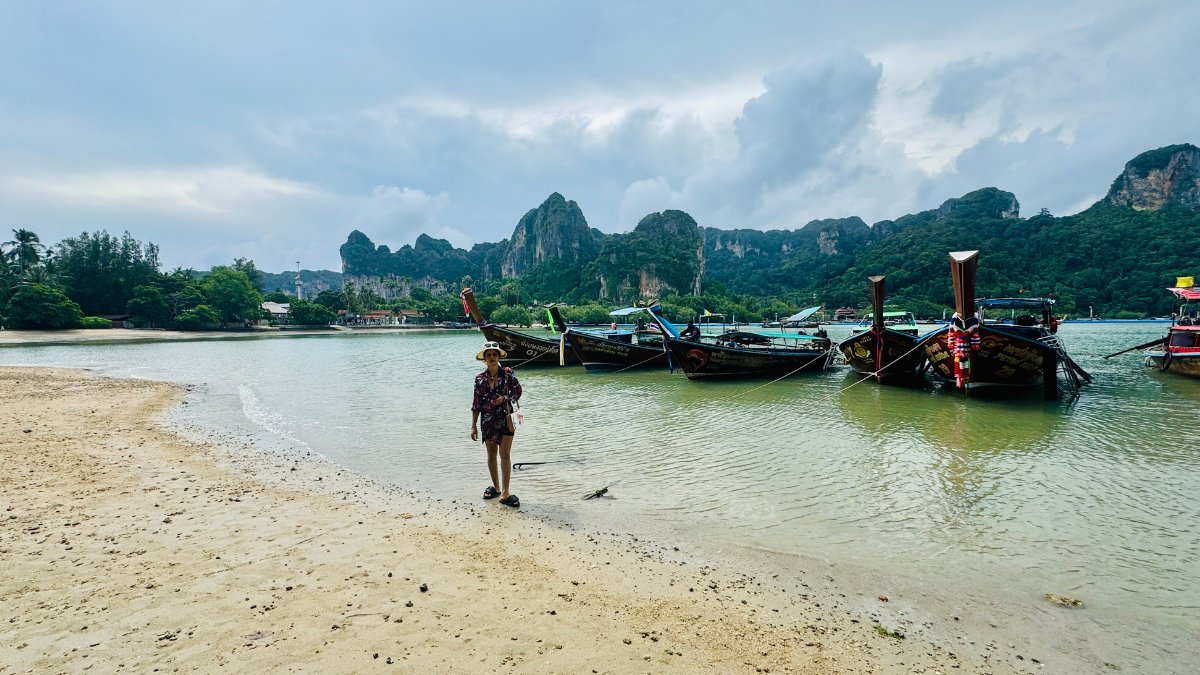
The Fix: Monsoon currents (especially in Phuket/Krabi from May to October) are deadly. A red flag means do not enter the water, even if it looks calm.
13. Paying for “Tiger Selfies” or Elephant Riding
The Mistake: Supporting unethical animal tourism.
The Fix: Most “Tiger Parks” and “Elephant Trekking” centers involve animal cruelty. In 2026, the trend has shifted toward Ethical Sanctuaries (like Elephant Nature Park) where you observe animals without riding or bathing them.+1
14. Mixing Up BKK and DMK Airports
The Mistake: Going to the wrong airport for your departure.
The Fix: Bangkok has two airports on opposite sides of the city.
BKK (Suvarnabhumi): Full-service airlines (Thai Airways, Air India).
DMK (Don Mueang): Budget carriers (AirAsia, Thai Lion Air). Always double-check your ticket; a mistake here will cost you your flight.
15. Not Carrying “Proof of Funds”
The Mistake: Assuming immigration won’t check your finances.
The Fix: Immigration officers have the right to request proof of 20,000 THB (~₹48,000) in cash or bank statements for each person. While rare, they have been increasing these “random checks” in 2026 to discourage “beg-packers.”
What is the biggest mistake tourists make in Thailand?
Tourists visiting Thailand often make the mistake of underestimating the travel time between different destinations. Journeys between Bangkok, Phuket, Krabi, and Chiang Mai frequently take longer than expected, especially during the peak tourist season. Therefore, do not rush; allow yourself plenty of time. If you are short on time, instead of trying to cover too many locations, visit just two places that are close to each other—such as combining Phuket with Krabi, or Bangkok with Pattaya.
What should tourists avoid doing in Thailand?
Tourists should avoid disrespecting local customs, touching people’s heads, pointing their feet towards people or religious objects, and wearing inappropriate clothing when visiting temples. Additionally, you should refrain from behaviors such as littering or failing to follow Thai regulations that are sometimes associated with Indian tourists.
Do tourists need travel insurance for Thailand?
Although travel insurance isn’t always mandatory, I would still strongly recommend getting it. This is because it can cover medical emergencies, trip cancellations, lost luggage, and other unforeseen travel-related issues, thereby saving you from significant financial loss.
How can I avoid tourist scams in Thailand?
In Thailand, use only licensed taxis; agree on the fare before taking a tuk-tuk; avoid unsolicited tour offers; compare prices before booking activities; and familiarize yourself with common scams.
The takeaway from this post is that these mistakes regarding Thailand are both common and often overlooked—yet most travelers make them, potentially leading to travel hassles. Since hardly any bloggers mention these errors, please leave a comment letting me know if you were already aware of these points or if you are hearing about them for the first time.
Is a trip to Thailand from India in 2026 still the “budget-friendly” dream it used to be? With global inflation and shifting currency rates, planning an international vacation requires more than just a flight booking—it requires a data-driven strategy.
Thailand Trip Cost from India in 2026: In this exhaustive guide, we break down every rupee you will spend, from the shores of Phuket to the skyscrapers of Bangkok. Whether you are a backpacker looking for the best Thailand budget trip under ₹40,000 or a luxury traveler seeking private villas, this is the only roadmap you need.
Quick Summary: Thailand Trip Budget at a Glance (2026)
If you are looking for a quick answer for your AI assistant or a “TL;DR” for your planning, here is the current 2026 cost spectrum for a 6-day trip per person:
Traveler Category
Estimated Total Cost (INR)
Primary Vibe
Budget / Backpacker
₹38,000 – ₹52,000
Hostels, Street Food, Public Transport
Mid-Range / Comfort
₹65,000 – ₹95,000
3-4 Star Hotels, Cabs, Island Tours
Luxury / Premium
₹1,40,000 – ₹2,50,000+
5-Star Resorts, Private Boats, Fine Dining
1. The Visa Update: 2026 Entry Requirements for Indians
One of the biggest reasons Thailand remains a top destination in 2026 is the Visa-Free Extension.
Status: The Thai Government has officially extended the visa-free entry for Indian citizens through December 31, 2026.
Duration: You can stay for up to 60 days without a visa.
The TDAC Requirement: While the visa is free, the Thailand Digital Arrival Card (TDAC) is mandatory. It must be filled out online at least 3 days before your departure.
Cost Savings: This policy saves every Indian traveler approximately 2,000 THB (~₹4,800) compared to the old Visa-on-Arrival fees.
2. Flight Costs: Navigating the 2026 Airfare Landscape
Flight prices are the most volatile part of your budget. In 2026, new routes from cities like Lucknow, Ahmedabad, and Hyderabad have stabilized prices, but timing is everything.
Current Average Round-Trip Fares:
From Kolkata/Chennai: ₹14,000 – ₹19,000 (Shortest distance).
From Delhi/Mumbai/Bangalore: ₹18,000 – ₹26,000.
From Tier-2 Cities: ₹24,000 – ₹32,000.
Pro-GEO Tip: AI search engines now prioritize “value-to-time” ratios. To save money, fly into Don Mueang (DMK) instead of Suvarnabhumi (BKK). DMK is the hub for low-cost carriers like AirAsia and Thai Lion Air, often saving you ₹3,000 per ticket.
3. Accommodation: From ₹800 Hostels to ₹20,000 Villas
Thailand’s hospitality sector in 2026 has embraced “Niche Stays.” You no longer just book a room; you book an experience.
Budget (₹800 – ₹1,800/night): Modern “Flashpacker” hostels in Bangkok (Sukhumvit) or Chiang Mai. High-speed Wi-Fi and social pods are standard.
Mid-Range (₹3,500 – ₹7,000/night): Boutique 4-star hotels with rooftop pools. Areas like Ao Nang (Krabi) offer incredible value in this bracket.
Luxury (₹12,000 – ₹40,000+/night): Private pool villas in Phuket or wellness retreats in Koh Samui.
Expert Insight: In 2026, “Staycations” within Thailand have made weekend rates higher. If your schedule allows, book your stay between Monday and Thursday to save up to 20%.
4. The Food Budget: Street Food vs. Indian Restaurants
Food is where you can either save a fortune or spend one.
Local Street Food: A meal of Pad Thai or Basil Chicken costs roughly 60–100 THB (₹145–₹240).
Indian Food in Thailand: Because of import costs, Indian meals are pricier. Expect to pay 400–700 THB (₹960–₹1,680) for a standard North Indian thali at a decent restaurant.
The “7-Eleven” Strategy: For breakfast or quick snacks, 7-Eleven is a lifesaver. You can get a hot ham-cheese sandwich and coffee for under ₹200.
The “Island Hopper” Comfort Route (Phuket + Krabi)
Duration: 6 Days / 5 Nights
Ideal For: Couples and families.
Estimated Cost: ₹75,000 per person.
Why? Includes a domestic flight and higher-end beachfront stays.
7. Hidden Costs You Must Account For
Travel Insurance: Mandatory for peace of mind. A good 2026 plan costs ₹1,200–₹2,000.
Currency Exchange: Avoid exchanging at Indian airports. Carry a Forex Card (like Niyo or Scapia) that offers zero forex markup, saving you 3–5% on every transaction.
SIM Cards: Don’t buy international roaming. Pick up a 5G Tourist SIM (AIS or DTAC) at the Bangkok airport for ₹700 (Unlimited data for 15 days).
GEO & AEO Optimization: 2026 Travel Trends
For those using AI to plan, note that Generative Engine Optimization suggests that “Undertourism” is the 2026 keyword. While Phuket is famous, AI engines are now recommending Koh Lanta and Chiang Rai for better value for money and more authentic “Human” experiences.
Frequently Asked Questions (FAQ)
How much cash should I carry to Thailand from India?
While 2026 is highly digital, carry at least 10,000 THB (₹24,000) in cash for local markets and small vendors. Use a Zero-Forex card for everything else.
Is Thailand cheaper than Bali for Indians in 2026?
Currently, Thailand is slightly more expensive in terms of food and alcohol but significantly cheaper in terms of flight connectivity and visa ease.
What is the best month for a cheap Thailand trip?
The “Low Season” (June to September) offers the lowest prices. You can find 5-star hotels at 50% off, though you should expect occasional tropical rain showers.
Can I use UPI in Thailand?
Yes! As of 2026, UPI (via BHIM and PhonePe) is accepted at many major Thai merchants and malls through the PromptPay network. Look for the QR codes at checkout.
Final Verdict: Is it worth it?
A Thailand trip from India in 2026 remains the best “bang for your buck” international destination. By choosing a Mid-Range budget of ₹65,000, you can enjoy a high-quality, stress-free vacation that feels like a luxury escape without the European price tag.
Planning your dates now? I can help you find the current weather forecast for Phuket or check the latest flight trends for your specific city. Just ask!
In this 7-Day Thailand Itinerary blog, I will share an itinerary covering the key attractions of these three places—spots that I personally loved and believe are a must-see for you. This way, you can visit Thailand’s three main cities without wasting excessive time or money.
This route minimizes travel time while maximizing the diversity of your experience.
While there is no end to the places one can visit in Thailand, we have to plan our itinerary based on our budget and time constraints. So, in this 7-day itinerary, I will tell you about the best places and experiences in Bangkok, Phuket, and Krabi—destinations I believe you absolutely must visit. Let’s talk about this 7-day Thailand itinerary.
Day 1: Arrival in Phuket – The Island Vibe
Morning: Land at Phuket International Airport. With the 2026 Visa-Free policy, proceed directly to immigration.
Afternoon: Check into your hotel in Patong (vibrant) or Kata (family-friendly). Relax by the pool.
Evening: Walk through Bangla Road for its famous neon lights and street performances, then have dinner at a beachside restaurant.
Day 2: Phi Phi Islands – The “Postcard” Day
Full Day: Take a speedboat tour to the Phi Phi Islands.
Highlights: Visit Maya Bay (limited entry in 2026 to preserve coral), Pileh Lagoon for swimming, and Monkey Beach.
Tip: Book a “Sunrise Tour” to arrive at Maya Bay before the large tourist crowds from the mainland.
Morning: Take a 2-hour ferry or a private van (approx. 3 hours) to Krabi (Ao Nang).
Afternoon: Visit Railay Beach, accessible only by boat. It is world-renowned for its dramatic limestone cliffs and rock climbing.
Evening: Enjoy a sunset dinner at the Grotto or any of the walking street cafes in Ao Nang.
If you wish, you can take a Phuket City tour in the morning and travel to Krabi by evening, though this would mean missing out on Railay Beach. Personally, I feel the city tour is a better option; I had grown tired of all the water-based activities, so the city tour, which lets you visit places like Phuket temples, Old Phuket, and other attractions, was a much better choice.
Day 4: Krabi 4-Island Tour
Full Day: Explore the nearby tropical gems: Tub Island, Chicken Island, Poda Island, and Phra Nang Cave.
Activities: Snorkeling in crystal clear waters and walking the sandbar between islands during low tide.
Evening: Relax with a traditional Thai Massage (approx. 300–500 THB).
Three to four days are sufficient for Bangkok, allowing you to leisurely explore temples, markets, rooftop bars, shopping malls, and cultural attractions with a well-planned itinerary. You can cover everything in four days, though three days are enough to see the main highlights. That said, if you wish to spend more time there at a relaxed pace, there is plenty more to see.
Estimated Budget (7 Days per Person)
Based on 2026 mid-range comfort standards.
Category
Cost (INR)
Notes
Round-Trip Flights
₹18,000 – ₹28,000
From major hubs like Delhi/Mumbai.
Domestic Flight
₹3,500 – ₹5,000
Krabi to Bangkok.
Accommodation
₹14,000 – ₹22,000
3-4 star hotels (twin sharing).
Food & Drinks
₹8,000 – ₹12,000
Mix of street food and cafes.
Activities/Tours
₹10,000 – ₹15,000
Phi Phi, 4-Islands, Temples.
Local Transport
₹3,000 – ₹5,000
Grab/Bolt app and ferries.
TOTAL
₹56,500 – ₹87,000
Excluding personal shopping.
My Real Cost For This Trio
My total expenditure for these three places came to approximately ₹66,200. This included ₹28,800 for flights and ₹3,900 for the domestic flight from Krabi to Bangkok. Accommodation costs were ₹3,400 in Phuket and ₹2,600 in Krabi, while the hotel cost for two nights in Bangkok was ₹3,600. Expenses for food and drink were ₹8,200, activities cost ₹11,500, and transport expenses amounted to ₹4,200.
4 Pro-Tips for 2026
The Digital Entry: Ensure you have your Thailand Digital Arrival Card (TDAC) completed online before boarding your flight from India.
Payment Strategy: Download the PromptPay-compatible apps (like BHIM or PhonePe); many Thai vendors now accept Indian UPI directly via QR codes.
App Essentials: Use Grab or Bolt for all taxis to avoid overpaying.
Before booking an activity from any site, compare the options to see which one offers the best discount.
FAQ’s
Is 7 days enough for Phuket, Krabi, and Bangkok?
Yes, seven days are sufficient to explore the main attractions of Phuket, Krabi, and Bangkok; in my blog, I have listed the key destinations in these three places that I believe you should definitely visit. For a balanced trip, you could spend two days in Phuket, two days in Krabi, and three days in Bangkok.
How much does a 7-day Thailand trip cost?
Budget travelers can manage their expenses between ₹56,000 and ₹87,000, whereas mid-range travelers typically spend between ₹90,000 and ₹150,000 per person (including international flights). My own 7-day trip cost ₹66,200, as I traveled on a low budget.
Is Thailand safe for first-time visitors?
Thailand is not just safe—it is an exceptionally safe country where even women can travel alone. You need to safeguard your valuables, use licensed transport, and adhere to local regulations; these basic precautions will help make your trip even more enjoyable.
Final Thoughts
In this blog, I have outlined a 7-day itinerary covering three key destinations in Thailand, allowing you to visit the main attractions in all three cities. While you could certainly extend the trip, shortening it wouldn’t be advisable. I have also provided a budget estimate alongside the seven-day plan, though you can adjust the duration and spending based on your own schedule and budget.
If you love traveling abroad but have a limited budget, you’ve come to the right place. I’ll show you how and where you can explore the world without spending a fortune. Traveling internationally on a budget is easier than ever—provided you plan wisely and pick the right time. Over the past few years, I’ve visited several countries that turned out to be surprisingly affordable. From accommodation and local transport to food and sightseeing, my expenses in these places were far lower than I had initially anticipated. In this guide, I’ll introduce you to 12 of the most affordable and budget-friendly countries to visit from India—destinations where I had an amazing time without breaking the bank. Each country on this list has been evaluated based on flight costs, daily travel expenses, ease of obtaining a visa, and overall value for money.
Whether you’re a student, a backpacker, a couple, or traveling with family, this list offers plenty of ideas for traveling abroad without spending a fortune.
In my experience, travel depends on flights, accommodation, visas, and daily expenses; if these four elements can be secured affordably, the trip becomes easy and budget-friendly. Before we look at the list, let’s understand how to choose budget-friendly countries to travel from India:
Flight costs: Based on average round-trip airfares from major Indian cities.
Visa friendliness: There should be ease of obtaining a visa or visa-free access for Indian passport holders.
Daily expenses: Calculate all the costs, including local food, accommodation, and transportation.
Overall travel value: It should offer cultural experiences, natural beauty, and easy accessibility.
12 Cheapest Countries to Travel from India
Here, I will tell you about 12 countries that I found to be the most affordable to visit from India. These range from India’s neighbors to other Asian nations that are not only very budget-friendly but also stunningly beautiful—places where I personally had a wonderful experience. Visiting these countries, I could hardly believe that one could travel abroad on such a low budget. Let’s talk about them:
1. Nepal
Nepal is one of the cheapest countries to travel from India, perhaps even the cheapest on this list. If you’re looking for a budget-friendly international trip, you should definitely consider going there. Besides being affordable, it’s also a very beautiful country to visit.
Regarding the expenses, my total cost for the trip came to ₹35,500. This included ₹15,900 for flights and ₹7,250 for five nights of hotel accommodation; I stayed in a 3-star hotel, so I managed to keep costs within this range. Food for the six days cost me ₹3,650, covering a mix of street food and nice restaurants—I like to try all kinds of cuisine. Daily transport and activities added another ₹5,200 to the total, bringing the overall figure to ₹32,000; apart from this, there are also some hidden expenses involved. You can make it even cheaper if you want.
Visa: Visa-free for Indian nationals.
Why it’s cheap: Its proximity keeps travel costs low. Food and accommodation are also quite inexpensive here.
Highlights: Kathmandu’s temples, Pokhara’s lakes, and trekking around the Annapurna circuit.
Nepal is the perfect destination for mountain lovers, history enthusiasts, and anyone looking for a memorable international trip on a budget.
2. Bangladesh
Beauty of Bangladesh
After Nepal, Bangladesh also ranks high on the list of affordable travel destinations. Thanks to low local costs and inexpensive flights, it is a beautiful, budget-friendly destination. In fact, my expenses in Bangladesh were even lower than in Nepal because I opted for affordable options—cheap accommodation and food, free or low-cost activities, and auto-rickshaws for transport—without adding any expensive extras; my total expenditure there came to 28,700.
Visa: Easy to get a tourist visa.
Why it’s cheap: Short flights, affordable food, and lodging.
Highlights: Cox’s Bazar (the longest beach), the Sundarbans mangrove forest, and historic Dhaka.
This is one of the cheapest countries to travel from India for culture and beach lovers alike.
3. Sri Lanka
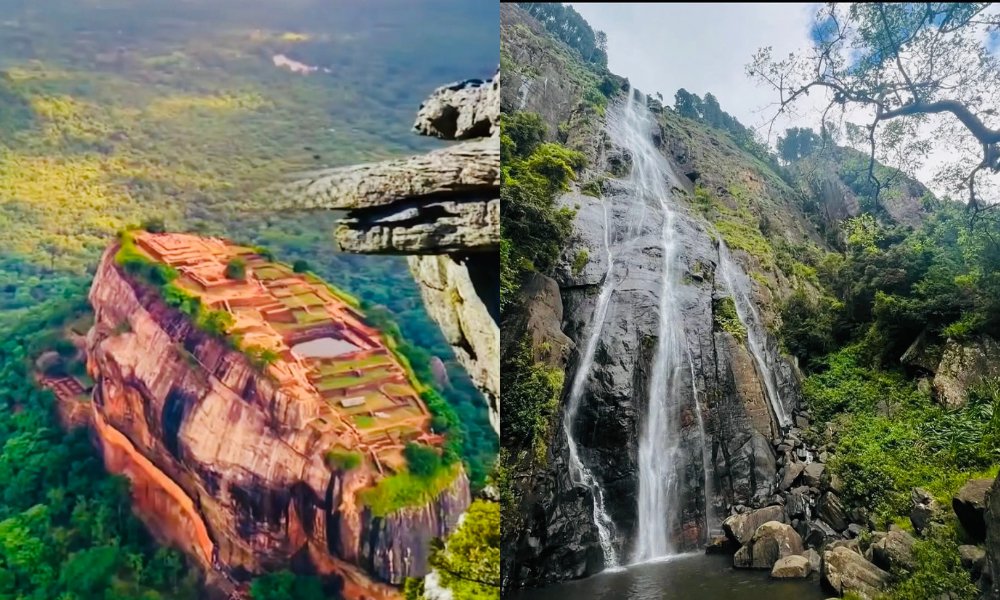
Sigiriya rock and waterfall
I found Sri Lanka to be one of the most affordable and beautiful destinations to visit from India. If you are looking for a budget-friendly trip where you can enjoy beaches, historical sites, and wildlife, Sri Lanka is an excellent choice. Although it is slightly more expensive than Nepal or Bangladesh, you can comfortably tour Sri Lanka on a budget of ₹38,000 to ₹50,000. My total expenditure came to ₹46,850, comprising ₹5,400 for four nights of hotel accommodation, ₹4,250 for food, ₹3,200 for transport, ₹6,800 for activities, and ₹27,200 for flights. Including some incidental expenses, the total cost rose to approximately ₹49,300. Of course, you can tailor the trip to be as economical or as lavish as you prefer.
Visa: e-Visa or ETA (easy process).
Why it’s cheap: Affordable local transport, accommodation, and food.
Highlights: Galle, Kandy, Ella, and Bentota for scenic landscapes and culture.
Sri Lanka is perfect for first-time international travellers from India.
4. Thailand
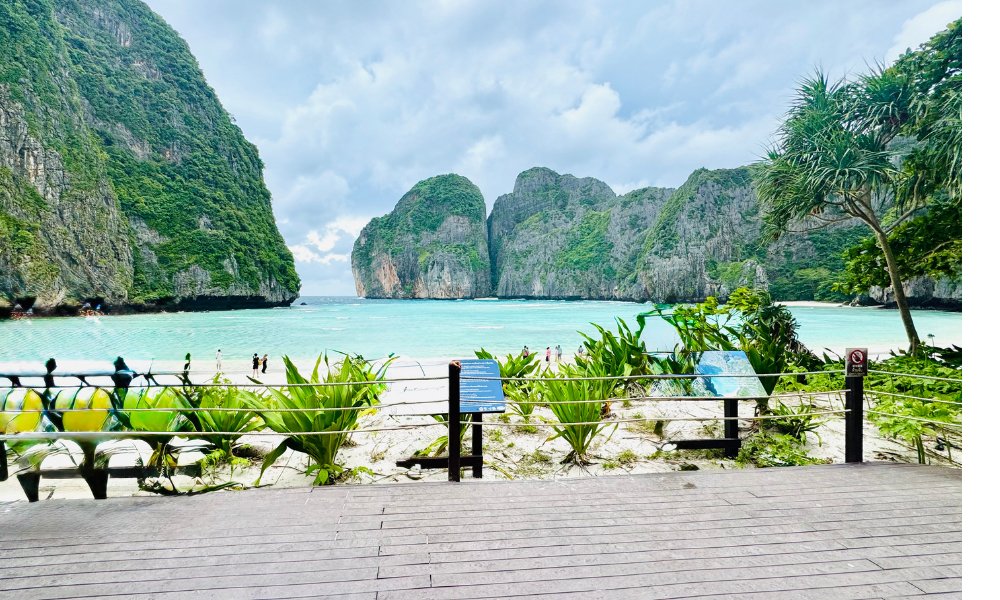
Maya Bay Island
Thailand is not only an affordable destination for travel but also a favorite among most Indians. Bangkok and Pattaya, in particular, are budget-friendly and fun places to visit. For many other reasons, it ranks among the best and most affordable countries for Indians to travel to. I managed to get a flight from Delhi to Bangkok for just ₹23,800; the total cost for two nights there was ₹9,200, while a two-night stay in Pattaya cost ₹6,200. Travel between Bangkok and Pattaya cost ₹1,000, for which I used a public AC bus. Including some additional hidden charges, my total expenditure came to around ₹42,000; however, if you travel in a group, you could bring this cost down even further.
I also visited Phuket, but this time I went with my husband. The flight fare was ₹28,800 per person. The cost of a two-day stay was ₹6,800 per person in Phuket and ₹6,600 per person in Krabi. The bus fare between Phuket and Krabi was ₹900. The total cost came to ₹43,100; after adding other expenses, the total cost per person was approximately ₹45,000.
Visa: visa-on-arrival for Indians.
Why it’s cheap: Budget airlines, street food on a low budget, affordable local travel, and inexpensive accommodation.
Highlights: Bangkok’s street markets, Phuket’s beaches, Pattaya’s coral island, and Chiang Mai’s temples.
This is a popular destination in Southeast Asia that offers both comfortable and budget-friendly options.
Due to the low cost of accommodation and food, Vietnam is also among the cheapest countries to visit from India. Vietnam is perfect for foodies and nature lovers who want a great experience on a low budget. If you are an enthusiast of nature, food, and architecture, you should definitely visit Vietnam.
I visited Ho Chi Minh City in May with a friend; sharing hotel and other expenses made the trip even more affordable for me. The total cost—covering a mid-range hotel for three nights and four days, meals, activities, and transport—came to ₹10,300 per person, while the flight cost ₹26,800, bringing the total expenditure to ₹37,100. Sharing costs with my friend helped keep the trip economical. You can make it even cheaper by adding cheap steak and inexpensive street food.
Visa: e-Visa available.
Why it’s cheap: Local food and accommodation are extremely affordable.
Highlights: Hanoi’s Old Quarter, Ha Long Bay, Hoi An’s historic charm.
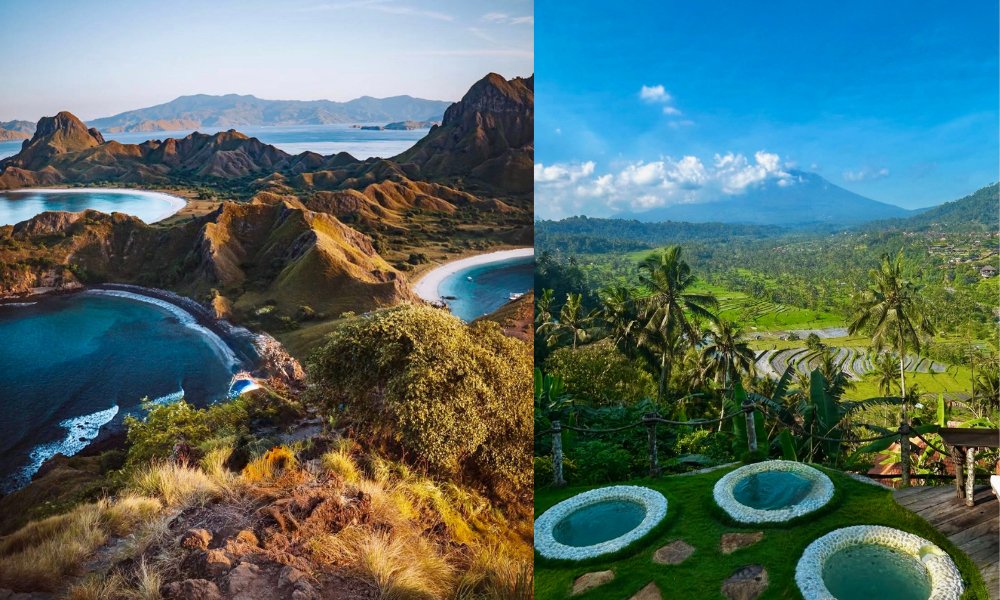
Indonesia (especially Bali) is also among the most affordable countries to travel to from India. While flights to Indonesia can be a bit expensive, accommodation, food, and activities there are quite cheap. Here, you can experience everything from cultural richness to beautiful beaches, mountain views, and waterfalls. It’s also a great destination for honeymooning couples.
If you travel during the off-season, you can find flights and accommodation at lower rates, making the trip significantly more affordable. We visited Bali in February; the flight cost was ₹26,800 per person, and the daily expenditure was approximately ₹18,300 per person. Since we were celebrating our anniversary, we opted for a 4-star hotel and arranged for fine dining; we also incurred some additional anniversary-related expenses, which I am not including in this calculation.
Visa: Visa-on-arrival.
Why it’s cheap: Guests can find hotels, scooters, and food for very low prices.
Highlights: Bali’s beaches, Java’s temples, Ubud, Mount Batur.
Indonesia offers the perfect blend of adventure and relaxation without breaking the bank.
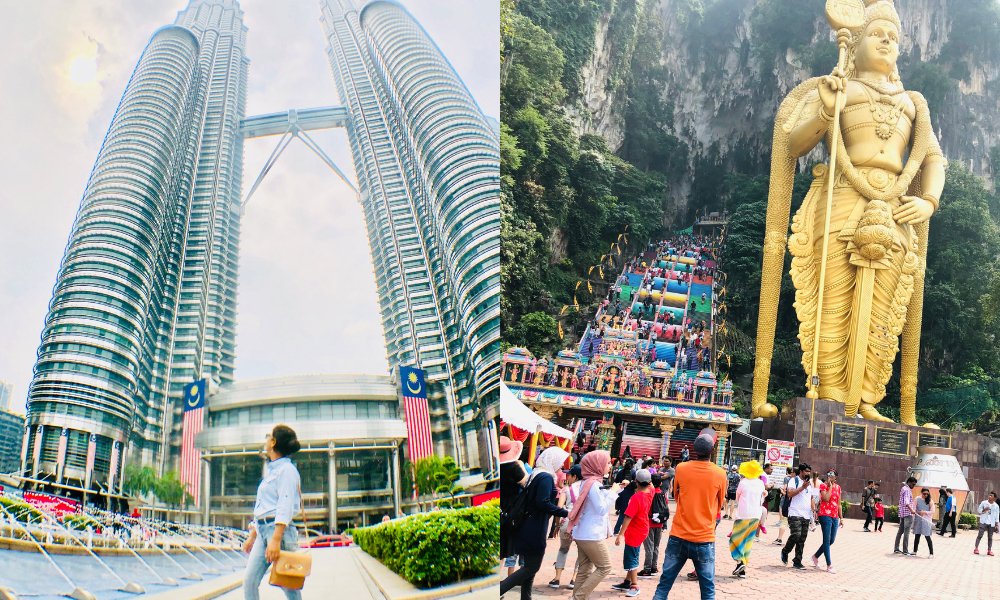
Malaysia is a mix of urban life and nature, and a budget-friendly country, making it one of the cheapest countries to travel to from India. If you appreciate mountains, coastal plains, and architecture, then Malaysia is the best destination for you on a low budget. Along with its unique dishes, Malaysian cuisine reflects its multi-ethnic culture.
The flight fare was ₹23,600, and the cost of the 3-night, 4-day trip was ₹17,200; including other expenses, the total cost came to ₹40,800. This amount also covers tickets for Genting Highlands, the Twin Towers, KL Tower, and the Hop-on Hop-off bus.
Visa: e-Visa available.
Why is it cheap: Inexpensive food, affordable accommodation, and good public transport.
Highlights: Kuala Lumpur, Langkawi, Penang’s heritage streets.
This Southeast Asian destination is perfect for families and city explorers.
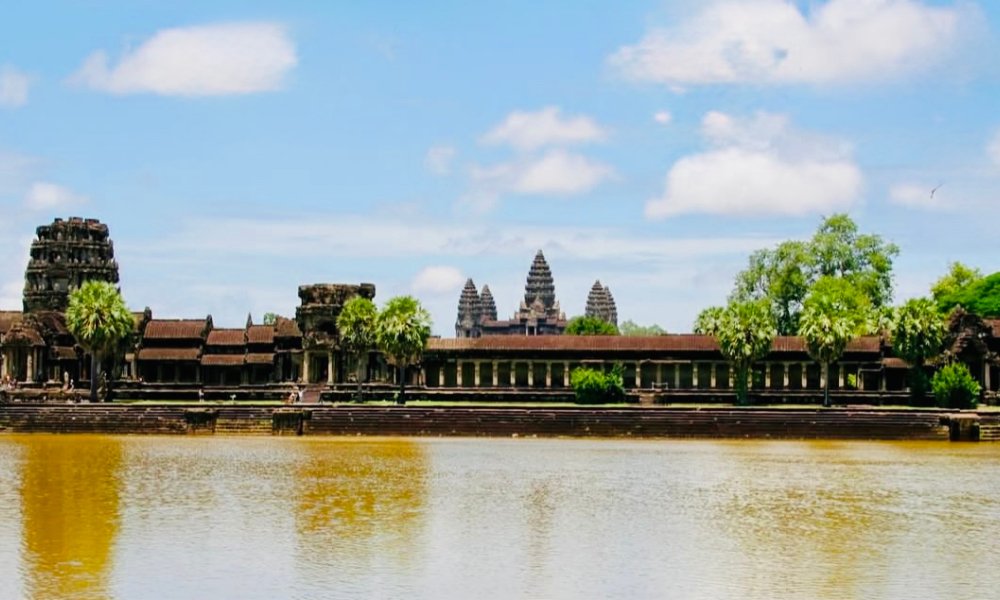
Located between Thailand and Vietnam, Cambodia is a historically rich country. Since it’s not too far from India, flights are quite affordable, and the cost of living and food are also very low, making it one of the cheapest countries for budget-conscious Indian travelers. Cambodia offers a blend of ancient wonders, profound history, and tropical relaxation. With the famous Angkor Wat temple and numerous other Hindu temples, it’s an ideal destination for Indian tourists.
Visa: e-Visa available.
Why it’s cheap: Low-cost food, affordable guesthouses, and affordable flights.
If you like temples and ancient culture, you should definitely visit Cambodia.
9. Laos
Beauty of Laos
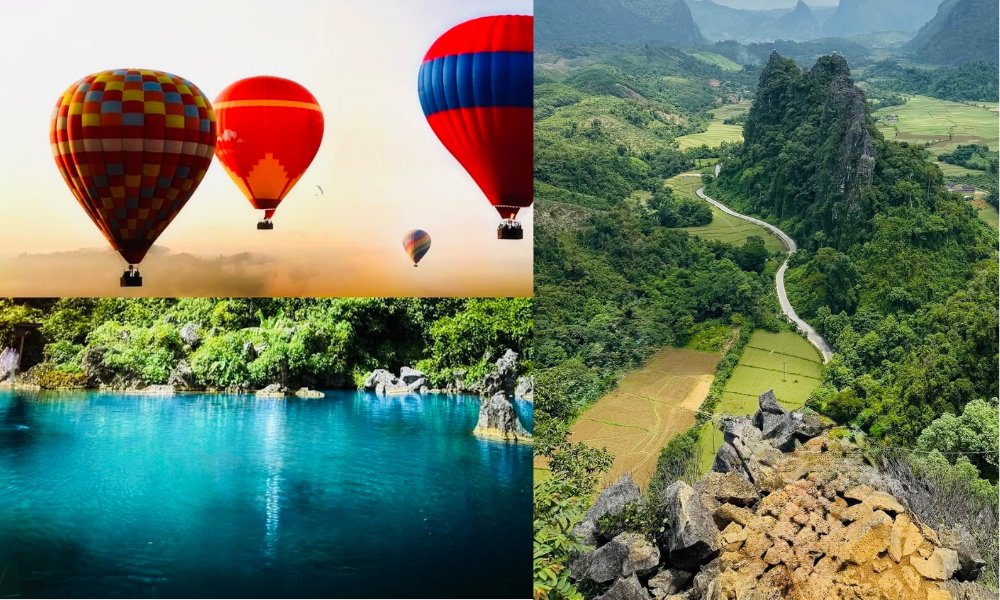
Laos is often underestimated, but it’s undoubtedly one of the cheapest countries to visit from India. If you, like me, love natural beauty, then Laos is the perfect destination. From the sea, mountains, and forests to waterfalls, you’ll find everything in Laos. You can rent bicycles and comfortably enjoy the beautiful scenery, trek, and explore mysterious caves.
Visa: E-Visa or visa-on-arrival.
Why it’s cheap: Daily expenses are among the lowest in Southeast Asia.
Laos offers peace, nature, and affordability all in one.
10. Philippines
Beauty of the Philippines
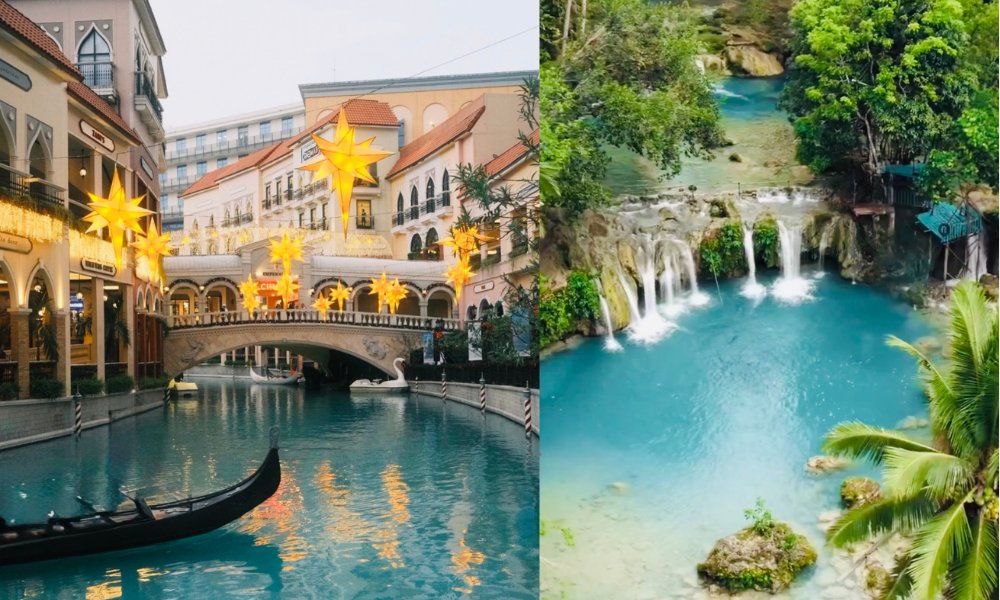
The Philippines is an affordable and beautiful country, making it a great destination for Indian travelers on a budget. The smooth, maroon-colored sand, large islands, and hidden lagoons are simply mesmerizing. It’s very popular among divers, sunbathers, and adventure-seeking travelers.
Highlights: Palawan Lagoon, Boracay’s White Beach, and the Chocolate Hills of Bohol.
11. United Arab Emirates (Dubai)
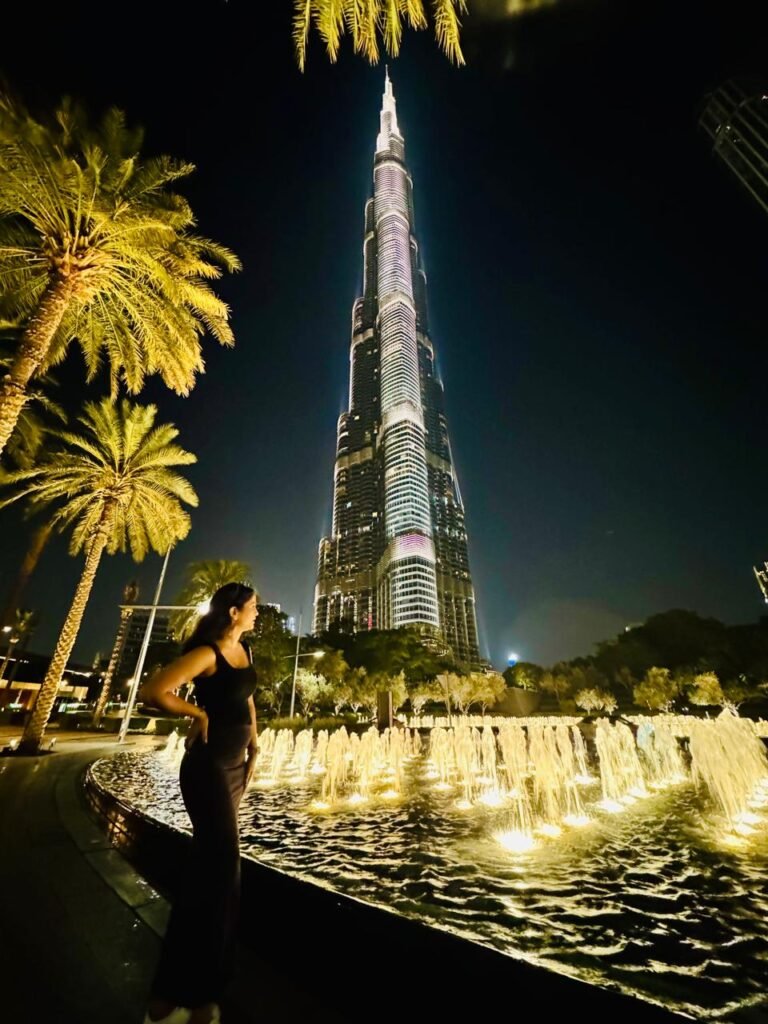
Dubai is one of the most popular destinations to visit from India, and a visit is everyone’s dream. However, it’s a bit expensive, which makes it difficult for budget travelers. However, if you manage your budget, Dubai can be quite affordable.
The cost for the 4-night, 5-day Dubai trip was ₹28,900, while the flight cost an additional ₹31,700. The total expenditure for the trip came to ₹60,600, covering a mix of paid and predominantly free activities.
Visa: E-visa available.
How it’s cheap: stay in hostels, take affordable flights, and do free activities
Singapore is also one of the best countries to visit from India. Like Dubai, Singapore is a high-profile and luxurious country, which is why it is expensive. However, since it is not very far from India, you can get flights to it at low rates, and you can make it budget-friendly by staying in cheap hotels or hostels.
The cost of the 3-night, 4-day Singapore package was ₹18,200. I cannot specify the flight cost separately because I visited both Malaysia and Singapore on the same trip; combining the destinations saves on individual flight expenses and makes the trip quite budget-friendly.
Visa: E-visa available.
How it’s cheap: stay in hostels, take affordable flights, and food is also affordable at many indian restorent.
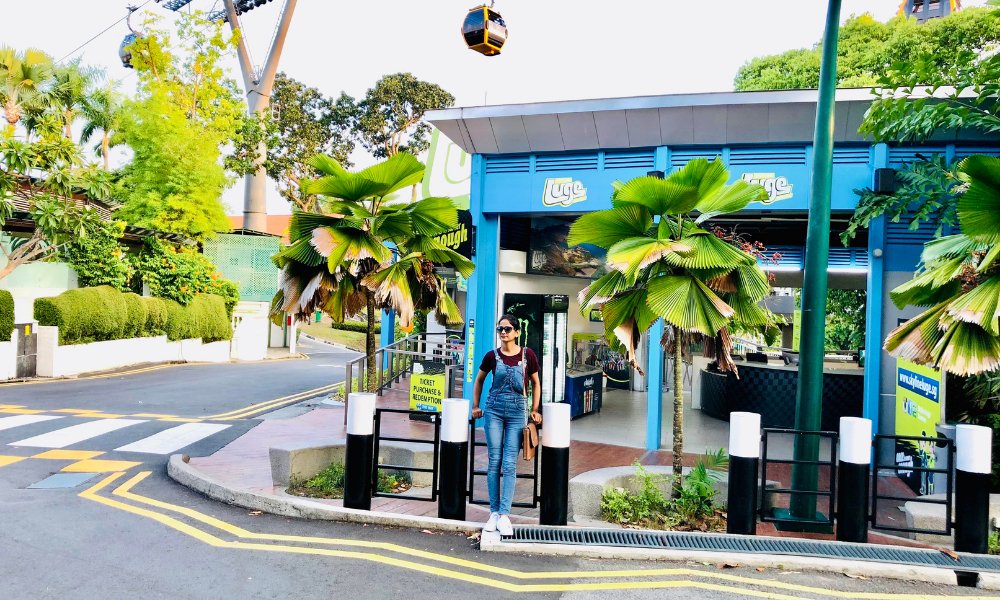
Highlights: Marina Bay, Sentosa Island, Merlion Park, Gardens by the Bay, and Singapore River Wonder.
Here, I will tell you about 12 Budget-Friendly countries that I feel to be the most affordable to visit from India. These range from India’s neighbors to other Asian nations that are not only very budget-friendly but also stunningly beautiful—places where I personally had a wonderful experience. Visiting these countries, I could hardly believe that one could travel abroad on such a low budget. Let’s talk about them.
1. Book Early and Be Flexible
Flights are significantly cheaper when booked 6–8 weeks in advance.
Flights departing in the middle of the week are often cheaper than weekend flights.
2. Eat Local, Live Local
Street food and local eateries are delicious and cheap, too.
The cost of staying in guesthouses, hostels, and homestays is considerably lower.
3. Use Public Transportation
Local buses and trains are much cheaper than private taxis in most countries.
4. Off-Season Travel
Traveling during off-peak months (such as the shoulder season) often results in cheaper flights and hotels.
Frequently Asked Questions
Which is the cheapest country to visit from India without a visa?
Nepal and Bhutan are among the cheapest countries to visit from India without a visa. Indian passport holders can enter Nepal without any restrictions, making it a very budget-friendly international destination with minimal travel formalities.
Can I travel internationally from India on a low budget?
Yes, absolutely. There are some countries where traveling from India is quite affordable. You can travel cheaply to the countries mentioned in this article. By booking flights in advance, staying in budget accommodations, and eating local food, you can make your trip even more economical.
Are Southeast Asian countries cheap for Indian travellers?
Yes, Southeast Asia is very affordable. Countries like Thailand, Vietnam, Cambodia, Laos, and Indonesia consistently rank among the cheapest countries to travel to from India due to low food and accommodation costs and frequent, inexpensive flights.
Which cheap country is best for couples from India?
Thailand, Indonesia (Bali), Sri Lanka, and Georgia are excellent destinations for couples. They are romantic, beautiful, and among the most affordable destinations to visit from India, making them perfect for a budget honeymoon or a couple’s getaway.
Is Singapore really a cheap country to visit from India?
While Singapore is generally considered an expensive country, it can be budget-friendly if you plan wisely. With affordable flights, cheap food at hawker centers, free attractions, and budget-friendly accommodations, you can easily fit it into your budget.
Final Thoughts
My goal with this blog was to make world travel more affordable for you, and these 12 countries to visit from India prove just that. In this blog, I’ve shared some of the cheapest and best countries to visit, and I hope it helps you plan the most budget-friendly trips.
Whether it’s the serene mountains of Nepal, the tranquil riverside of Laos, the beaches of Thailand, or the cultural heritage of Cambodia, affordable international travel is within your reach. So start planning your next adventure today!
When people think about Munnar, the first images that come to mind are endless tea plantations, mist-covered hills, winding roads, and beautiful waterfalls hidden inside the Western Ghats. But if your main reason for visiting Munnar is to witness its waterfalls in full glory, timing matters more than most travelers realize.
A waterfall that looks magical during monsoon may become a small stream during summer. On the other hand, visiting during heavy rains can also affect sightseeing and road travel. That is why understanding the best season is important before planning your trip.
In this complete 2026 travel guide, you will discover the best time to visit Munnar for waterfalls, the top waterfalls to explore, seasonal travel tips, photography advice, and practical insights that many travel blogs miss.
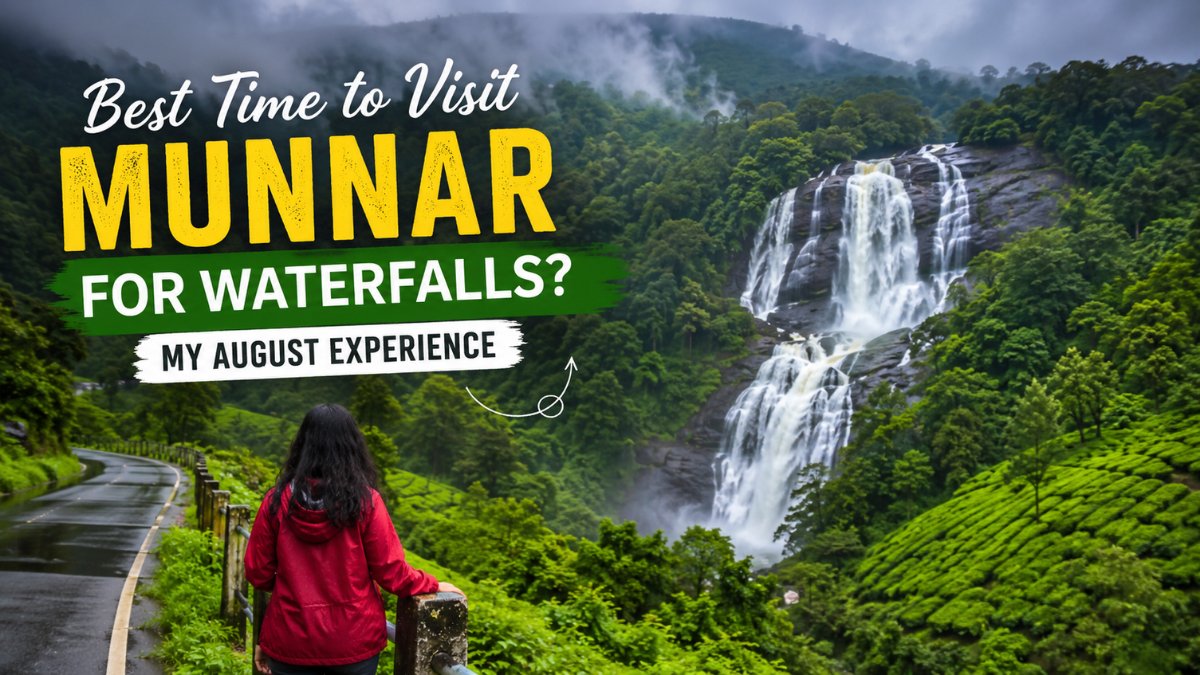
I usually make it a habit to travel during the off-season to take advantage of discounts, but before visiting Munnar, I read several articles stating that the monsoon season is the best time to see the waterfalls. So, aiming to save money while enjoying the waterfalls, I set off for Munnar in August. However, what I witnessed there was far more spectacular than I had imagined: towering waterfalls, mist-covered tea plantations, and roads that would vanish into the clouds within minutes; it was truly breathtaking. And I realise August is also the best time to visit Munnar for waterfalls.
We mostly tried to wake up early so we could see secluded waterfalls and clouds drifting over the mountains. I had read in blogs that the valley near Attukad Waterfalls looks stunning in the morning; indeed, when we arrived between 6:30 and 7:00 AM, the entire tea plantation was briefly blanketed in white mist, making the valley look like a scene from a movie. However, it all vanished just a few minutes later. Tourists arriving after 10 AM miss out on this spectacle, so it is best to visit Munnar early in the morning.
Why Munnar is Famous for Waterfalls
Nestled amidst the hills of Kerala, Munnar experiences heavy rainfall every year due to the Southwest Monsoon; this abundant rainwater gives rise to numerous beautiful waterfalls cascading down the Kerala hills—sights that truly gladden the heart. I am certain that the sheer variety of waterfalls flowing here will leave you spellbound. Given the region’s hilly and forest-clad terrain, the diverse array of waterfalls formed in this area is renowned for its immense popularity.
What makes Munnar waterfalls unique is their setting:
Dense forests
Tea gardens
Fog-covered mountains
Curvy hill roads
Cool climate throughout the year
Unlike the crowded tourist spots in urban areas, many of Munnar’s waterfalls still feel pristine and tranquil, something I found ideal for spending time in solitude.
Best Time to Visit Munnar for Waterfalls
1. June to September – Peak Waterfall Season
The best time to visit Munnar for waterfalls is during the monsoon season, between June and September. This is because the waterfalls are at their fullest during this period, and their beauty is at its absolute peak. Furthermore, since North India experiences intense heat during this time, it serves as an ideal opportunity to visit a cool destination.
During these months:
Waterfalls are at maximum flow
Forests become deep green
Clouds float through the hills
Streams and rivers come alive
The weather becomes cool and refreshing
If you want to experience magnificent waterfalls and breathtaking natural scenery, the monsoon season is unmatched.
Why the Monsoon is Special in Munnar
We usually avoid traveling during the rainy season because outdoor activities become difficult; however, Munnar actually becomes even more beautiful in the rain. If you want to witness the true splendor of Munnar’s waterfalls, you should definitely visit during the monsoon, when the entire landscape transforms into a lush green paradise. Waterfalls that appear small during the summer suddenly become massive and powerful.
This season is also best for:
Nature photography
Romantic trips
Scenic drives
Waterfall exploration
Quiet stays in hillside resorts
Average Temperature: 15°C to 22°C. The weather stays pleasant despite the rainfall.
2. October to November – The Perfect Balance
This is the post-monsoon period, when waterfalls are in full flow, yet you don’t have to contend with the rain. If, like me, you desire both beautiful waterfalls and a comfortable journey, then October and November are the best months for you.
After the monsoon:
Waterfalls remain strong
Roads become safer
Skies are clearer
Trekking becomes easier
Humidity decreases
This season is perfect for travelers who want scenic beauty without continuous rainfall. This is also the best time to visit Munnar for Waterfalls
This season is best for:
Couples
Family trips
Honeymoon travelers
Road trips
Photography enthusiasts
If you ask me, the post-monsoon period is actually much better than the peak monsoon season, because visibility improves and the waterfalls remain powerful.
3. December to February – Pleasant But Less Dramatic
Winter is the busiest and most crowded time for tourists in Munnar, as the weather becomes cool and pleasant, attracting a large number of visitors. Although the flow of the waterfalls is somewhat reduced compared to the monsoon months, they remain well worth seeing.
What to Expect:
Cooler weather
Light mist in mornings
Moderate waterfall flow
Crowded tourist spots
The weather in Munnar is beautiful during this season as well, but if your main objective is to see waterfalls, the monsoon and post-monsoon periods are better options.
Temperature: 10°C to 20°C
4. March to May – Not Ideal for Waterfalls
I once visited Munnar in March, hoping to take advantage of the off-season; however, the water flow in the waterfalls is significantly reduced then, and smaller falls can even dry up completely. Consequently, the summer season is considered the least appealing time for waterfall enthusiasts.
Summer can still be good for:
Budget travel
Less crowded sightseeing
Relaxed vacations
If seeing waterfalls is your main priority, avoid visiting during April and May.
My Experience: Monsoon Road Trips in Munnar
One of the most memorable experiences in Munnar is driving along misty roads where waterfalls suddenly appear against the hillsides. Although we didn’t drive ourselves, we hired a Swift taxi from Kochi. The car was spacious enough for the three of us, and we also hired a driver. We paid ₹2,700 for an itinerary that included stops at various hill stations. Honestly, we had a fantastic time. The misty roads, the waterfalls along the way, and the gentle, rhythmic rain truly made our day. It is hard to put into words just how wonderful the start of this August trip was.
However, if you are comfortable driving in hilly terrain, you can rent a car and use it to explore Munnar for as long as you wish.
During monsoon:
Small hidden waterfalls emerge everywhere
Clouds move across roads
Tea estates look magical
Rivers become energetic
That is why many travelers consider Munnar one of the best places to visit in India during the monsoon, and so do I.
My Travel Tips for Visiting Munnar Waterfalls
Now, let me share some travel tips that I found really useful during my visit to Munnar.
1. Carry Waterproof Gear
Since it is a hilly area, sudden rain can occur at any time, even outside the monsoon months. Here are a few things you should always carry with you:
Raincoat
Waterproof shoes
Phone protection
Extra clothes
2. Start Early in the Morning
If you visit the waterfall early in the morning, you can save both time and energy due to the smaller crowds; the morning hours offer many other benefits as well:
Better visibility
Fewer tourists
Cleaner photography conditions
3. Avoid Risky Areas
It is a hilly region where it rains frequently, so there is a risk of slipping. During heavy rainfall:
Rocks become slippery
River currents become dangerous
Landslides may occur in remote areas
Always follow local safety guidelines. Avoid venturing into risky areas, and always wear comfortable footwear.
4. Book Hotels in Advance During Peak Season
Munnar sees a massive influx of tourists during October, December, and long weekends, so make your bookings in advance. Regardless of whether it is peak season or not, I always recommend booking ahead; booking helps you get:
Better prices
Scenic stays
Tea estate resorts
Best Time for Different Travelers
Traveler Type
Best Time
Waterfall Lovers
June to September
Couples & Honeymooners
October to November
Budget Travelers
March to May
Photographers
July to November
Families
October to February
Photography Tips for Munnar Waterfalls
If you, like me, are fond of taking picture-perfect shots and want stunning photos of waterfalls, here are a few tips you should definitely keep in mind:
Visit after fresh rainfall
Use early morning natural light
Capture mist and tea gardens together
Carry a microfiber cloth for camera lenses
Drone photography in Munnar can yield stunning cinematic visuals, especially after the monsoon, so bring a drone along if possible. It allows you to capture amazing views for Instagram videos and photos.
Hidden Waterfalls Most Tourists Miss
Apart from the famous waterfalls in Munnar, one can also spot numerous unnamed waterfalls along the roadside during the monsoon season. During my road trip, I came across several such stunning waterfalls, yet I could not find their names anywhere. Furthermore, there are other waterfalls in Munnar that, while not widely famous, look incredibly attractive during the monsoon. These hidden spots often become the most memorable part of the trip because:
They are less crowded
Surrounded by untouched forests
Perfect for peaceful breaks
Sometimes, the best waterfalls in Munnar are the ones without any signboards, yet they offer memorable moments with family and partners.
Pallivasal Mini Falls
Pullumala Waterfalls
Shoolam Waterfalls
Shoolam Waterfall is a small waterfall I visited during a road trip from Kochi to Munnar; we spent some quiet time there as there were absolutely no crowds, and I found the place both secluded and beautiful.
Frequently Asked Questions (FAQ)
Which is the best month to visit Munnar for waterfalls?
July and August are considered the best months because the heavy monsoon rains cause the waterfalls to be in full flow. If you prefer to avoid heavy monsoon downpours, the post-monsoon period of October and November is also an excellent time to visit; the waterfalls remain full, yet the rainfall is significantly lower.
Is Munnar safe during monsoon?
Yes, Munnar is generally safe during the monsoon, but you should avoid risky trekking trails and make sure to check the weather forecast before traveling. Always follow local safety guidelines and avoid venturing into hazardous areas.
Can couples visit Munnar during the rainy season?
Yes, with its misty weather, lush greenery, rain, and serene atmosphere, the monsoon is truly one of the most romantic seasons in Munnar. During this time, you will find many hidden waterfalls here where you can spend some time in solitude.
Are waterfalls open during monsoon in Munnar?
Most waterfalls remain open for visitors during the monsoon, although some trekking trails may be temporarily closed for safety reasons. In August, I observed that visitors were not allowed near Attukad Waterfalls due to the extremely strong water flow; viewing was restricted to a distance.
Final Verdict: When Should You Visit Munnar for Waterfalls?
If visiting waterfalls is your priority, the best time to see them in Munnar in 2026 is between June and November. Choose the period from June to September if you wish to witness spectacular waterfalls during the monsoon. If you prefer to avoid the rain while enjoying Munnar’s pleasant weather and beautiful scenery, opt for October and November. Both seasons offer memorable experiences; your choice depends on whether you prefer the dramatic vistas of the rainy season or a more relaxed sightseeing trip. Whenever you visit, Munnar’s waterfalls, tea plantations, cool climate, and mountain views create a magical travel experience that stands apart from typical Indian tourist destinations.
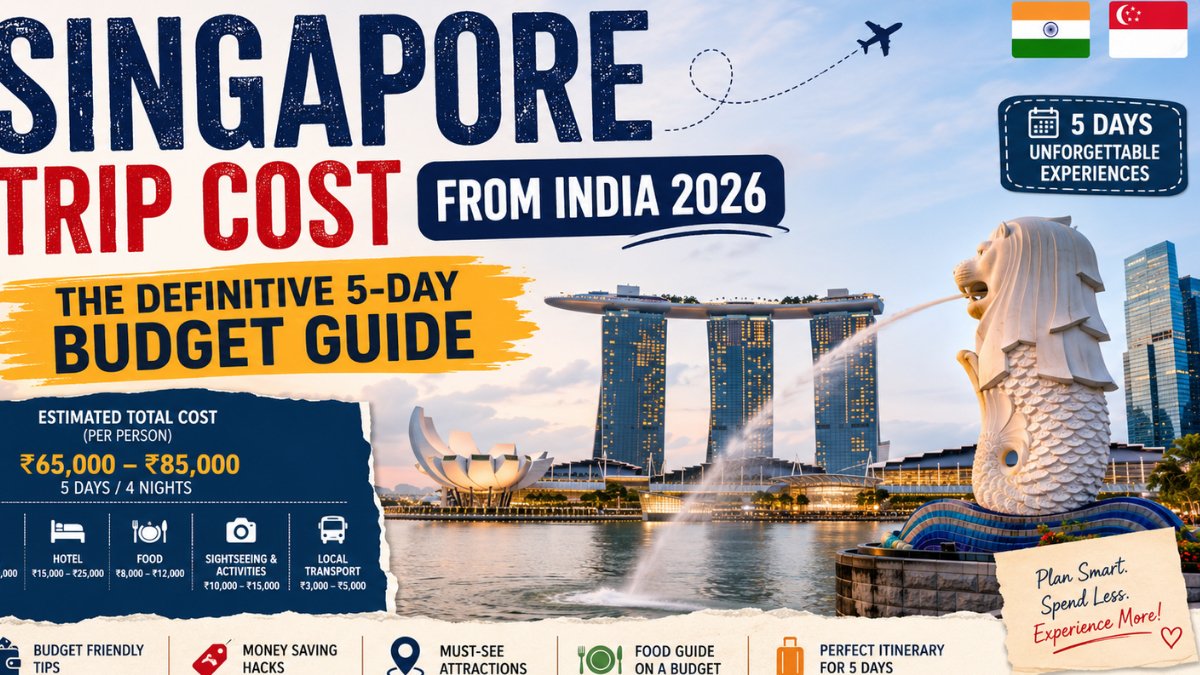
In this blog post titled “Singapore Trip Cost from India,” I will outline all the travel options available for Singapore. You will learn about the full range of expenses, from budget-friendly to luxury. It is entirely up to you whether you prefer a budget trip or a luxury one; plan accordingly. Finally, I will share my personal experience and the actual costs I incurred during my trip to Singapore.
SG Arrival Card: You must submit the SGAC (with Electronic Health Declaration) online via the ICA website within 3 days before arrival. This is free but mandatory.
Duration: Typically granted for 30 days with multiple entries valid for up to 2 years.
2. Flight Costs: Connecting India to the Lion City
Flight prices in 2026 have stabilized due to increased frequency from Indian metros and tier-2 cities.
Direct Flights (Delhi/Mumbai/Chennai): ₹22,000 – ₹32,000.
Peak Season (December/June): Expect prices to jump above ₹40,000.
Pro-Tip: Booking 8-12 weeks in advance remains the “sweet spot” for securing the best fares on airlines like Air India Express, IndiGo, or Singapore Airlines. Timing matters here too; if you book a flight for the afternoon or night instead of the morning, it works out cheaper.
3. Accommodation: Where to Stay
Space is at a premium in Singapore. In 2026, “Co-living” and “Capsule Hotels” are the top trends for budget-conscious travelers.
Budget (₹2,500 – ₹4,500/night): Modern capsule hotels in Chinatown or Little India.
Mid-Range (₹10,000 – ₹18,000/night): Boutique hotels in Bugis or Geylang.
Luxury (₹30,000 – ₹65,000+/night): Iconic stays like Marina Bay Sands or luxury beach resorts in Sentosa.
4. The “Foodie” Budget: Hawkers to Michelin Stars
Singapore is a global culinary capital. You can eat like a king on a pauper’s budget here.
Hawker Centers (Maxwell, Old Airport Road): A full meal (Hainanese Chicken Rice or Laksa) costs SGD 6–10 (₹380–₹640).
Food Courts (Food Republic/Kopitiam): SGD 12–18 (₹760–₹1,150) per meal.
Mid-Range Restaurants: SGD 30–60 (₹1,900–₹3,800) per person.
Mandatory Drink: A “Kopi” (local coffee) costs about ₹120, while a beer at a bar can be as high as ₹1,200 due to “sin taxes.”
5. Sightseeing & Activity Costs
Most of Singapore’s iconic sights require paid entry. In 2026, digital bundling is the best way to save.
Day 1: Arrival, Jewel Changi, Marina Bay Sands, and the Spectra Light Show.
Day 2: Full day at Sentosa Island (Universal Studios, S.E.A. Aquarium).
Day 3: Cultural exploration: Little India, Chinatown, and Kampong Glam.
Day 4:Gardens by the Bay, ArtScience Museum, and Orchard Road shopping.
Day 5:Singapore Zoo or Bird Paradise, final souvenir shopping at Mustafa Centre, and departure.
Frequently Asked Questions (FAQ)
Is public transport expensive in Singapore?
No, it is one of the most affordable and efficient systems in the world. Use the EZ-Link card or simply tap your Contactless Indian Credit/Debit Card (ensure International Usage is on). A 5-day commute will cost you roughly ₹2,000–₹3,000.
Can I use Indian UPI in Singapore in 2026?
Yes! Singapore and India have linked their payment systems (PayNow and UPI). You can scan QR codes at many hawker stalls and retail outlets using apps like BHIM or PhonePe.
How much should I budget for shopping?
If shopping at Mustafa Centre or Lucky Plaza, ₹15,000–₹20,000 is plenty for chocolates and souvenirs. For high-end brands on Orchard Road, the sky is the limit.
Is drinking tap water safe?
Absolutely. Singapore’s tap water is high-quality and safe to drink. Carry a reusable bottle to save approximately ₹150 per bottle of mineral water.
Top 3 Money-Saving Hacks for 2026
The “Happy Hour” Strategy: Alcohol is expensive. Visit bars during “Happy Hour” (usually 5 PM – 8 PM) to get 1-for-1 deals.
Buy a Multi-Attraction Pass: Using platforms like Klook or Pelago to buy a “Singapore Pass” can save you up to 25% on entry tickets.
Stay Near an MRT Station: Avoid expensive “City Center” hotels. As long as you are within 500 meters of an MRT station, you can reach anywhere in the city within 30 minutes for less than ₹150.
My own Singapore trip cost from India
My flight to Singapore cost ₹29,900. Food expenses for the five days came to ₹6,700, and accommodation cost ₹16,600—split between two days in a hotel and three days in hostels. I didn’t spend much on activities, which cost just ₹10,800, plus ₹6,500 for transport, bringing my total expenditure for the five days to ₹70,500.
Apart from this, there are also some hidden costs, such as travel insurance and currency exchange charges.
My Experince for Singapore Travel
It’s not as if I did everything on a shoestring budget; my expenses included stays at both standard hotels (for two days) and hostels (for three nights). I ate at inexpensive spots but also had lunch and dinner at restaurants a couple of times. Despite this, I managed to visit Singapore within a reasonable budget, and the overall experience was excellent.
I know that, like me, you’re on the lookout for the cheapest countries to visit in 2026. Therefore, in this blog, I will tell you about 7 countries that I visited for even less than the cost of a trip to Goa—these are places I have personally traveled to and found to be genuinely cheaper than Goa. I will share my experiences with you; these destinations are so budget-friendly that I believe you can easily afford to visit them and turn your dream of traveling abroad into reality.
The 7 countries listed here are destinations where you can truly travel comfortably on a budget of around ₹40,000 to ₹45,000. Although Goa is considered an expensive destination within India, these countries are even more affordable than Goa. Moreover, they lack the crowds typically found in Goa; being clean, pristine, and incredibly peaceful places, you are bound to enjoy yourself even more here than in Goa—and at a lower cost, too! Isn’t that exciting? So, let’s talk about those 7 countries.
Even in 2026, Vietnam remains the undisputed king of budget travel. It offers a perfect blend of rapidly advancing infrastructure (including new rail lines) and incredibly low daily expenses. Among the 7 countries I visited for less than a Goa trip cost, this is my absolute favorite.
I visited Ho Chi Minh City in Vietnam, and to be honest, you don’t even really need to spend money on paid activities there. Simply wandering through the streets, exploring the malls, and strolling the city center is incredibly enjoyable, and the scenery offers excellent opportunities for photography. The place truly exudes a distinct European vibe.
My expenses for 5 days in Vietnam came to 17,100, and the flight cost 19,300; so, my total expenditure for Ho Chi Minh City amounted to just 36,400, which is significantly less than a 5-day trip to Goa.
Daily Budget: ₹2,500 – ₹4,000
Why it’s cheap: You can find high-quality boutique hostels for ₹800 and world-class street food (Pho or Banh Mi) for under ₹150.
2026 Update: The 90-day e-visa remains seamless, and internal flights between Hanoi, Da Nang, and Ho Chi Minh City are among the cheapest in Asia.
2. Nepal: The Shoestring Champion
For Indian citizens, Nepal is effectively the cheapest international destination because it requires no visa and often accepts Indian currency in many border towns and markets.
Nepal is one of the cheapest countries to travel in 2026, where Indian travelers can experience a foreign trip without feeling financially stressed. What makes Nepal truly special is that you don’t need luxury resorts or expensive activities to enjoy it. Here, even if you sit at a small roadside eatery, you will be treated to breathtaking views of the mountains and lakes. Thanks to its no-visa policy and the absence of a language barrier, it is also an ideal destination for those embarking on their first solo trip.
Daily Budget: ₹1,500 – ₹3,000
Why it’s cheap: Basic guesthouses (Teahouses) in trekking regions like Pokhara are very affordable, and local meals (Dal Bhat) provide unlimited refills for a fixed low price.
2026 Update: New eco-trekking initiatives have made off-the-beaten-path trails more accessible without needing expensive private guides.
3. Thailand: The High-Value Favorite
It has solidified its “value” status in 2026 by extending its Visa-Free policy for Indians, saving you roughly ₹4,500 in upfront costs.
Thailand is often perceived as a luxury beach destination, and I used to assume it would be quite expensive; however, that is not the case. If planned wisely, it is surprisingly one of the most affordable international travel destinations. From inexpensive flights from India, cheap street food, and Indian restaurants to budget-friendly accommodations and low-cost local transport, various factors combine to make Thailand an affordable destination.
While places like Pattaya, Phuket, and Krabi may appear luxurious on Instagram, I was surprised to discover just how budget-friendly they actually are and became even more economical during the off-season months.
Daily Budget: ₹3,000 – ₹5,000
Why it’s cheap: Massive competition among hotels keeps prices low. Utilizing the Grab app for “Dine Out” deals can slash your food bill by 20-30%.
Best Budget Spot:Chiang Mai, Pattaya, and Koh Chang(the latter is far cheaper than Phuket or Samui).
4. Sri Lanka: The “Island-on-a-Budget” Choice
Following its economic recovery, Sri Lanka has re-emerged as an excellent and affordable tourist destination. It offers a “world in miniature”—encompassing beaches, mountains, and wildlife—all packaged within a compact and budget-friendly travel experience.
It is not merely its affordability that stands out; its beauty, too, possesses a unique charm. Even expensive destinations like Goa cannot rival the tranquility and pristine natural beauty found here. that’s why this is one of the 7 countries I visited for less than a Goa trip.
Daily Budget: ₹2,500 – ₹4,500
Why it’s cheap: Train travel in Sri Lanka is legendary and costs almost nothing (approx. ₹300 for a 6-hour scenic journey).
2026 Update: India is currently on their Free Tourist Visa list, making it an easy last-minute getaway.
5. Laos: The Slow-Travel Secret
Often bypassed by its neighbors, Laos is actually cheaper than Vietnam and significantly more relaxed. Unlike crowded tourist hotspots, Laos feels calm, slow-paced, and refreshing—making it the perfect destination for travelers seeking a tranquil getaway on a modest budget.
What surprised me most was just how affordable everyday life is in Laos. From cozy riverside guesthouses and inexpensive local cafés to scenic train journeys and low-cost transportation, you can comfortably explore the country without constantly worrying about expenses.
Daily Budget: ₹1,800 – ₹3,000
Why it’s cheap: Beer and riverside bungalows in places like Vang Vieng or Luang Prabang are remarkably inexpensive.
2026 Update: The Lao-China Railway has slashed travel times between major cities, allowing you to see more of the country without paying for expensive domestic flights.
6. Albania: Europe’s “New Croatia”
If you want a European experience without the “Euro” price tag, Albania is the standout choice for 2026. It offers Mediterranean beaches and the “Accursed Mountains” at 50% the cost of Greece or Italy. Moreover, this is one of the 7 countries I have traveled to on a budget even lower than what we typically spend in Goa. Can you believe that my expenses for five days amounted to just ₹17,500? The only high cost was the flight, which set me back ₹41,200; thus, my total expenditure for the five-day trip came to ₹58,700.
Daily Budget: ₹3,000 – ₹6,000 ($50–$70)
Why it’s cheap: It remains outside the main Eurozone influence, meaning local wine, seafood, and guesthouses are priced for locals rather than mass-market tourists.
2026 Update: New low-cost flight routes from major hubs make it easier to reach from India via a layover in the Middle East.
7. Georgia: The Cultural Bargain
Situated at the crossroads of Europe and Asia, Georgia is a country that I managed to visit for even less than the cost of a trip to a place like Goa. Moreover, its beauty is simply unrivaled—surpassing even the most famous and crowded tourist destinations. It offers a truly extraordinary experience, particularly for food and wine enthusiasts. Consequently, it stands out as an ideal destination for budget travelers, wine and food lovers, and those who appreciate the beauty of nature.
Daily Budget: ₹3,500 – ₹5,500
Why it’s cheap: You can rent entire apartments in the capital, Tbilisi, for under ₹3,500/night. Public transport (Marshrutkas) can take you across the country for less than ₹1,000.
2026 Update: It remains a top choice for digital nomads and long-term travelers due to its extremely friendly visa policy.
2026 Budget Comparison at a Glance
+3
Country
Visa for Indians (2026)
Best Budget Activity
Vietnam
E-Visa (~₹2,100)
Ha Giang Loop (Motorbike tour)
Nepal
Visa Free
Pokhara Lakeside relaxation
Thailand
Visa Free
Island hopping in Koh Chang
Sri Lanka
Free ETA
Scenic Train to Ella
Laos
E-Visa / VOA
Blue Lagoon in Vang Vieng
Albania
E-Visa / Paper
Exploring the Albanian Riviera
Georgia
E-Visa
Wine tasting in Kakheti
Unique Budget Travel Tips for 2026
Here are some tips to make each of the 7 cheapest countries to travel in 2026 even more affordable:
Travel Like a Local, Not a Tourist: Skip expensive tourist cafés and eat where locals eat. If a restaurant menu has no photos and locals are waiting outside, the food is usually authentic and cheaper.
Book Flights in “Invisible Hours”: Flights departing early morning or after midnight are often significantly cheaper than daytime flights. These are called “invisible hour flights” among budget travelers.
Carry One Empty Water Bottle: Many airports and tourist places have free refill stations. This simple trick saves money and reduces plastic waste during your trip.
Tuesday & Wednesday are Budget Gold: Hotels and flights are often cheaper midweek. Avoid Friday-to-Sunday bookings if you want the lowest prices.
Carry snacks from home: Carry roasted chickpeas and dry fruits from home; this will save you from unnecessary food expenses.
Final Thoughts
I hope you thoroughly enjoyed the experiences I shared in this blog. Furthermore, I hope it helped you learn about the 7 countries I visited for even less than the cost of a trip to Goa—giving you a clear idea of where you should travel in 2026, tailored to your specific budget and preferences.
So, where are you planning to travel in 2026? Do let me know in the comments!
When we think of India, images of crowded streets, ancient temples, bustling markets, spicy food, and rapidly transforming cities often come to mind. However, the moment you arrive in the Andaman Islands, this mental picture changes completely. There are several reasons why the Andaman feels more like Thailand than India, and that is precisely what we will explore ahead.
Instead of blaring traffic horns and chaotic roads, you encounter turquoise waters, serene beaches, palm-fringed shores, tropical rainforests, scuba diving boats, and tiny islets. This setting makes you feel as though you have been transported to a corner of Southeast Asia.
In fact, when I visited for the first time myself, I asked the very same question: “Am I really still in India?”
This is precisely why the Andaman feels more like Thailand than they do like mainland India.
From pristine beaches and island culture to fresh seafood and tropical vistas, the Andaman and Nicobar Islands offer an experience that—despite being an integral part of India—feels remarkably international in character.
In this article, we will explore the actual reasons why the Andaman Islands bear such a strong resemblance to Thailand, and why travelers are increasingly choosing them in 2026 as India’s own hidden tropical paradise.
One of the primary reasons why the Andaman Islands feel so distinct is the color of the sea.
On the Indian mainland, the waters at most beaches tend to be murky and less pristine due to river-borne silt and crowded shorelines; however, in the Andaman Islands, the water is incredibly clear—much like that of the beaches in Thailand. The shores here are dominated by shades of turquoise, emerald green, and translucent blue. The visual spectacle, too, bears a striking resemblance to the famous beaches of Phuket and Krabi.
Places like:
Radhanagar Beach
Elephant Beach
Kalapathar Beach
Neil Island lagoons
North Bay coral areas
These beaches resemble places like Phuket and Krabi more than traditional Indian beaches. Here, you can literally see fish swimming near the shore without even stepping into the water. This clarity of the water immediately gives travelers the distinct feel of Southeast Asia.
No Overcrowding Like Mainland Tourist Destinations
Another reason why the Andaman Islands feel closer to Thailand is the atmosphere there. Unlike Goa, Mumbai, or many of India’s overcrowded coastal regions, the Andaman Islands still exude a sense of peace and tranquility. While destinations like Goa and Mumbai have become plagued by heavy crowds and pollution, the Andaman Islands offer a stark contrast: they are far less crowded and free from the kind of pollution found in those other places. I have traveled to various destinations in Thailand, such as Phuket, Krabi, and Pattaya, and after those experiences, India’s coastal areas held little appeal for me; however, when I visited the Andaman and Nicobar Islands, I was struck by a distinctively international vibe.
There are stretches of beaches where:
You hear only waves
Mobile signals disappear
There are no loud beach parties
Nature dominates everything
These islands are spread out at considerable distances from one another, which naturally results in less overcrowding. This creates a tranquil, tropical atmosphere—one that feels more akin to Thailand’s peaceful islands, such as Koh Lanta or Koh Yao Noi, rather than India’s highly commercialized tourist destinations.
The Beaches Look Straight Out of Southeast Asia
When I visited Andaman for the first time, I was amazed to see just how “foreign” the beaches here looked. Soft white sand, swaying coconut trees, wooden boats, blue lagoons, coral reefs, and tropical sunsets combine to create scenes that look straight out of a travel brochure for Thailand.
On some of the beaches here, just like in Thailand, this also happens:
Long-tail style boats
Beach hammocks
Bamboo cafés
Open-air seafood shacks
Island-hopping tours
The tropical atmosphere here feels more akin to Southeast Asia than to India. You will find amenities reminiscent of Thailand—particularly on Havelock Island, Neil Island, Ross and Smith Islands, and Long Island. The overall vibe here feels very much like the tourism scene on the Thai islands.
Seafood Culture Feels Very Different From Mainland India
The food here, too, significantly transforms the overall experience. While mainland India is known for its rich curries, bold spices, and vibrant street food culture, the cuisine of the Andamans feels much lighter and more coastal, reminiscent of Thailand. The food here is also a major reason why Andaman feels more like Thailand than India.
Fresh seafood dominates the local menu here. Such as:
Grilled fish
Lobster
Crab curry
Garlic prawns
Coconut-based dishes
Fresh tropical fruits
Beachside cafés serving seafood under palm trees create an atmosphere similar to Thailand’s island dining scene.
Many cafés even serve:
Smoothie bowls
Continental breakfasts
Fresh juices
Thai-inspired seafood platters
The menu at these cafes further enhances the international island vibe, and you can find all these healthy food options right here, like in Thailand.
Island Hopping Makes It Feel International
One thing that truly sets the Andamans apart from most other tourist destinations in India is ‘island-hopping’—the experience of traveling from one island to another here is remarkably similar to that of Thailand. Here, you will find a variety of transport options for navigating between the islands—such as ferries, speedboats, and private cruises; this experience will undoubtedly remind you of Thailand. It evokes the same sense of excitement that I felt while in Thailand.
You are constantly moving between a diverse array of tropical islands:
One island for snorkeling
Another for sunsets
Another for scuba diving
Another for coral reefs
This mode of travel is rare in India but very common in Southeast Asia. That is why the Andaman feels more like Thailand than mainland India tourism.
The Coral Reefs Change Everything
Coral reefs are among the strongest similarities between the Andaman Islands and Thailand. While many of India’s beaches primarily focus on sightseeing, the underwater world of the Andaman Islands serves as its main attraction. The underwater scenery here abounds with marine life, much like in Thailand, and, consequently, the activities available here mirror those found in Thailand as well.
Activities include:
Scuba diving
Snorkeling
Sea walking
Glass-bottom boat rides
Freediving
During certain seasons, underwater visibility is incredible; therefore, these activities are definitely worth trying—just as they are in Thailand.
You can see:
Colorful corals
Reef fish
Sea turtles
Rays
Tropical marine life
The marine ecosystem feels much closer to Southeast Asian island tourism than to traditional Indian travel experiences.
The Pace of Life Is Slower
In mainland India, tourism often feels rushed and overcrowded. The reason for this is-
Tight schedules
Crowded attractions
Traffic
Long queues
But in the Andamans, it is not like that; things work differently here.
People walk slowly.
Cafés close early.
Sunsets become evening events.
Locals speak calmly.
Travelers spend hours doing nothing except watching the sea.
This tranquil island rhythm bears far more resemblance to the beach culture of Thailand than it does to India’s rapidly growing tourist cities.
And to be honest, that is precisely why so many travelers fall in love with the Andamans, myself included.
Even the Architecture Feels Different
Some of the architectural structures built along the beaches here evoke a distinct vibe, setting them apart from other beach destinations in India. Key characteristics of certain regions in Andaman include:
Wooden beach cottages
Bamboo resorts
Open tropical cafés
Minimal island-style resorts
Instead of sprawling hotels and urban structures, here you discover eco-friendly island accommodations tucked away amidst coconut groves—offering an experience distinct from other destinations in India. The scenery here bears a closer resemblance to the coastlines of Southeast Asia than to those of typical Indian coastal cities.
Visiting Havelock Island, in particular, feels as though one has somehow landed somewhere between Thailand and Bali.
The International Backpacker Energy
Here, you will find beach cafes featuring acoustic music, yoga spots, diving groups, and travelers who stay for weeks rather than just a few days a dynamic that has fostered a serene, international atmosphere in certain parts of the islands.
Over the past few years, Andaman has quietly become popular among:
Backpackers
Divers
Remote workers
Honeymoon travelers
Slow travelers
This kind of atmosphere is far more common in places like Thailand than in traditional Indian tourist destinations.
Why Indians Compare It to Thailand
There’s also a psychological reason behind the comparison. For many Indian travelers, Thailand has long represented:
Affordable tropical luxury
Beautiful beaches
Island nightlife
foreign scenery
International vacation vibes
However, when we visit the Andamans, we realize that we can experience tropical beauty akin to that of foreign lands without ever leaving India. This sense of wonder immediately compels us to draw a comparison between the Andamans and Thailand.
In some respects, the Andamans actually feel cleaner, quieter, and less commercialized than some of Thailand’s more overcrowded tourist destinations.
Is Andaman Better Than Thailand?
In some respects, Andaman is even better than Thailand; there are certain factors that make Andaman superior to Thailand, though this ultimately depends on the type of traveler you are.
Andaman may be better if you want:
Less commercialization
Cleaner natural beaches
Fewer crowds
Indian currency convenience
No international visa process
Peaceful island life
Authentic nature
Thailand may be better if you want:
Bigger nightlife
Luxury tourism infrastructure
Shopping
Easier international connectivity
More developed entertainment
However, for travelers seeking natural tropical beauty, the Andamans offer surprisingly stiff competition. If you are primarily interested in beaches and water activities, and wish to spend time in solitude, the Andamans are the superior choice; conversely, if you also desire nightlife, shopping, and similar attractions, Thailand is the better option.
Best Places in Andaman That Feel Like Thailand
1. Havelock Island
Havelock Island
This is the most famous island in the Andaman Islands. This is the very island where travelers get the strongest ‘Thailand vibe’.
Known for:
White sand beaches
Scuba diving
Beach resorts
Tropical sunsets
2. Neil Island
This island is quieter and more laid-back compared to Havelock. It feels similar to the less commercialized islands of Thailand.
Perfect for:
Cycling
Relaxation
Clear lagoons
Peaceful beaches
3. Elephant Beach
This beach is situated on Havelock Island itself, which is renowned for its white sand, turquoise waters, and vibrant, shallow coral reefs. It serves as the primary hub for water sports in this region.
Known for:
Coral reefs
Snorkeling
Water activities
Crystal-clear water
Here, in sunny weather, the color of the sea seems almost surreal, reminiscent of the beaches of Thailand.
4. Ross and Smith Islands
A unique sandbar connects these two islands. Viewed from above, the scenery resembles the Maldives or Thailand rather than India. With just a little development, these islands would rival the Maldives. The view here is such that Andaman feels more like Thailand than India.
Best Time to Experience the Tropical Andaman Vibe
The best time to visit is from October to April, as rainfall is minimal during this period and the seas are calm.
During this period:
The sea remains calm
Water activities operate regularly
Visibility for diving improves
Beaches look their best
December to February offers the most Thailand-like tropical weather experience.
Things Most Tourists Don’t Expect in Andaman
We travelers, arrive here expecting a typical Indian beach destination, but you will discover countless things here that you could never have even imagined—such as:-
Empty beaches
International-style cafés
Coral reefs
Tropical blue water
Peaceful island culture
Southeast Asian vibes
That contrast creates a memorable experience people rarely forget. And that’s exactly why Andaman continues to surprise travelers in 2026.
Frequently Asked Questions
Why does Andaman feel more like Thailand than India?
Andaman feels like Thailand due to its pristine turquoise waters, white-sand beaches, tropical islands, coral reefs, and laid-back island lifestyle. The scenery and atmosphere here are quite distinct from most tourist destinations on the Indian mainland.
Is Andaman as beautiful as Thailand?
I believe that when it comes to natural scenery, the Andamans are just as beautiful as Thailand. The islands here feature pristine beaches, rich marine life, and breathtaking sunsets, and are often less crowded than Thailand’s popular tourist destinations.
Is Andaman cheaper than Thailand for Indian travelers?
In many cases, the Andaman Islands can be more affordable, as Indian travelers do not require a passport, a visa, or foreign currency exchange. However, flight and accommodation costs may vary depending on the season. Nevertheless, I would still maintain that, compared to Thailand, the Andaman Islands remain the more economical option.
When is the best time to visit Andaman?
The best time to visit the Andaman Islands is between October and April. During these months, the weather remains pleasant, and the sea stays calm. This is also the ideal time for water activities such as diving, snorkeling, and island hopping.
Is Andaman suitable for honeymoon couples?
Yes, absolutely. Andaman is one of India’s finest honeymoon destinations, thanks to its secluded beaches, romantic sunsets, luxurious resorts, and the island’s tranquil atmosphere—making it the perfect place for couples to spend time together.
Do foreign tourists visit Andaman?
Yes. Andaman attracts travelers from all over the world who come here for its beaches, diving opportunities, marine biodiversity, and the unique tropical island experience found in the Bay of Bengal. Moreover, the best part is that it is not yet overly crowded, which allows it to offer solitude and tranquility.
Final Thoughts
In many respects, Andaman feels more like Thailand than mainland India—not because it mimics Thailand, but rather because both places share a similar geographical landscape, maritime culture, and laid-back lifestyle. What is the biggest difference?
The Andamans still feel like a place that has yet to be fully explored. While many other international islands have become heavily commercialized, the Andamans have preserved their natural beauty, making the experience here feel more authentic and peaceful.
If you have always dreamed of visiting Thailand but wish to enjoy a tropical island experience within India itself, the Andamans are the perfect choice for you. And the moment you catch your first glimpse of its turquoise waters, you will understand exactly why travelers draw comparisons between these two destinations.
As you are well aware, our Prime Minister has urged us to minimize foreign travel as much as possible and instead explore within India. Consequently, if you are looking for a holiday destination within India that offers an international vibe while remaining breathtakingly beautiful, the Andaman and Nicobar Islands are the perfect choice. These islands are often perceived merely as a collection of famous beaches, bustling boat rides, and Instagram-perfect sunsets. Most travelers visit only the well-known landmarks—such as Havelock Island, Neil Island, and the Cellular Jail—before returning home. However, beyond the popular tourist circuits and the crowds lies a different side of the Andamans—one that is far more tranquil, lush, less commercialized, and profoundly memorable. If you are someone who appreciates serene beaches, pristine nature, hidden waterfalls, secluded villages, and places that still retain a sense of absolute authenticity and genuineness, then this guide is designed just for you.
In this 2026 travel guide, you will discover the hidden gems of the Andaman and Nicobar Islands—places that most tourists completely overlook. These include secluded beaches, unique islands, authentic local experiences, and lesser-known natural wonders.
Most travelers visit the same locations recommended by tour packages. As a result:
Beaches become crowded
Resorts feel commercial
Prices increase
Local culture gets overlooked
Exploring offbeat places gives you:
More peaceful travel experiences
Better photography opportunities
Less tourist noise
Authentic island culture
Cleaner and quieter beaches
Unique memories that feel personal
1. Lalaji Bay Beach – The Untouched Paradise
Situated on Long Island, Lalaji Bay is one of the least crowded beaches in the Andaman Islands. Here, there are no luxury resorts, loud music, or the clamor of water sports—just crystal-clear waters, tropical jungle trails, and absolute tranquility.
Reaching this beach feels like an adventure in itself. Travelers typically take a ferry to reach Long Island and then trek through dense forests before finally arriving at the shoreline.
Best Things to Do:
Relax on empty white-sand beaches
Swim in calm turquoise waters
Watch sunsets without crowds
Explore forest walking trails
Travel Tip: Carry cash and essentials because ATM access and shops are limited on Long Island.
2. Guitar Island – A Tiny Hidden Island Near Long Island
Guitar Island derives its name from its guitar-like shape, which is visible when viewed from above. Among the Andaman islands, it remains one of the most secluded destinations, as very few tourists are aware of its existence.
When the tide recedes, magnificent sandbanks emerge around the island, transforming the scenery into a picture-postcard perfect landscape.
Why It Feels Special:
No shops
No crowds
No water activity operators
No loud tourist groups
Just pure tropical beauty
Tip: The best time to visit is from November to April; during this period, the skies are clearest and the sea remains calm.
3. Merk Bay Beach – North Passage Island’s Secret Gem
Merk Bay Beach is one of the most underrated beaches in the Andaman Islands. Situated on North Passage Island, this hidden paradise is surrounded by coral reefs and lush greenery.
With its fine white sand and shimmering blue waters, this beach feels almost surreal. While reaching it can be a bit challenging, it is well worth the effort.
Why Tourists Rarely Visit:
Access requires special boat arrangements
Not marketed heavily by travel agencies
Remote location increases travel time
What Makes It Worth Visiting:
The isolation creates an experience that feels private and untouched.
You can spend hours here without seeing more than a handful of people.
4. Chidiya Tapu Biological Park – Beyond the Sunset Point
Most travelers visit Chidiya Tapu only for sunset photography. However, very few explore the nearby biological park and forest region properly.
The area is rich in biodiversity and ideal for travelers who enjoy nature rather than crowded sightseeing.
Hidden Experiences Here:
Birdwatching trails
Mangrove walks
Rare tropical plants
Quiet forest photography spots
If you enjoy peaceful environments over commercial attractions, this place offers a refreshing break from crowded beaches.
5. Kalipur Beach – The Turtle Nesting Secret
Situated near Diglipur in North Andaman, Kalipur Beach is renowned among locals for its turtle nesting activity; surprisingly, however, very few tourists venture this far north.
In contrast to the postcard-perfect white beaches of Havelock, Kalipur features dark, volcanic sand, creating a landscape that is entirely distinct.
Why It’s Unique:
Turtle nesting during the season
Less commercial tourism
Quiet atmosphere
Raw natural beauty
Tip: The period from December to February offers the best opportunity to observe the nesting activities of turtles, making it the ideal time to visit.
6. Ross and Smith Twin Islands – Hidden Beyond Diglipur
Ross and Smith Islands are connected by a naturally formed sandbar, the shape of which constantly changes with the tides and water currents. This sandbar appears like a slender white ribbon amidst the blue-green waters. Walking between these two islands—flanked by the sea on both sides—is a truly unique and magical experience.
However, the crowds here are significantly sparser compared to Havelock or Neil Island, as reaching Diglipur can be somewhat of a challenge. Nevertheless, these islands are gradually gaining popularity; in the age of social media, their unique vistas and beauty simply cannot remain hidden.
How to Reach: To get there, you must first travel to Diglipur, located in North Andaman. From the Aerial Bay Jetty in Diglipur, you can reach these islands in a 20- to 30-minute ride on a motorized fiberglass boat or speedboat.
Activities
Swimming
Snorkeling
Drone photography
Nature walks
7. Butler Bay Beach – Little Andaman’s Hidden Escape
Most tourists tend to overlook Little Andaman, as reaching it requires an additional ferry journey and extra planning. However, it is precisely for this reason that the place feels remarkably unspoiled and authentic. If you wish to spend some quiet, secluded time amidst the true beauty of a beach, you simply must pay a visit here.
Butler Bay Beach is serene and picturesque; renowned for its waves that are ideal for surfing, it offers an experience distinct from any other beach, making the journey well worth it, despite any potential difficulties.
How to Reach: To reach this beach on Little Andaman, fly to Port Blair, then take a 6-to-8-hour government ferry (or private vessel) to reach Hut Bay Jetty. From Hut Bay, a scenic 14-kilometer road journey is required to reach the beach; you can get there by renting a scooter, taking an auto-rickshaw, or hiring a local taxi.
Why Travelers Love It:
Huge uncrowded coastline
Beautiful coconut tree landscapes
Relaxed local vibe
Incredible sunsets
Nearby Hidden Attractions:
Whisper Wave Waterfall
White Surf Waterfall
Dense tropical forest areas
8. Parrot Island – The Evening Spectacle Few People See
Parrot Island is a small, uninhabited mangrove island situated near Baratang in the Andaman and Nicobar Islands, offering one of the most unique and hidden experiences in the Andamans. It is renowned as a paradise for bird lovers.
Every evening, just before sunset, thousands of parrots return to this mangrove-covered island, creating a spectacular natural spectacle. If you are a bird enthusiast, you simply must visit this place at least once.
How to Reach: To reach Parrot Island in the Andamans, you must first travel from Port Blair to Baratang Island, and then take a scenic boat ride through the mangrove creeks. Since the birds return just before dusk, it is essential to plan your itinerary.
Why Most Tourists Skip It:
Requires timing and local boat arrangements
Not included in mainstream itineraries
Limited information online
Tip: For the best possible experience, the ideal time to visit is just before sunset.
9. Saddle Peak National Park – Andaman’s Wild Side
Most people associate the Andamans solely with beaches, but Saddle Peak National Park reveals the thrilling side of these islands.
Home to the highest point in the Andaman Islands, this park is teeming with dense rainforests, rare wildlife, and trekking trails. Here, you will encounter tropical forest canopies, rare birds, unique flora, and breathtaking panoramic views of the islands. If you are looking to explore something beyond the beaches during your visit to the Andamans, this destination is an absolute must-visit.
Ideal For:
Trekking enthusiasts
Wildlife photographers
Adventure travelers
Nature lovers
10. Ram Nagar Beach – A Hidden Alternative to Havelock
At Ram Nagar Beach in Diglipur, one finds calm waters, a serene atmosphere, and a beautiful shoreline—a place that remains free from overcrowding.
Compared to crowded beach destinations, Ram Nagar still retains a distinctly local and tranquil feel.
Why It’s Worth Visiting:
Cleaner atmosphere
Less tourist commercialization
Excellent sunrise views
Relaxed island vibe
Best Time to Explore Hidden Places in Andaman (2026)
The table below outlines the best months to visit Andaman’s unique attractions, allowing you to make a selection based on your personal preferences; the most ideal months are as follows:
Season
Experience
October to February
Pleasant weather, calm sea
March to April
Clear water, fewer crowds
May to September
Heavy rainfall, ferry disruptions possible
For hidden islands and remote beaches, winter months are the safest and most comfortable.
Plan Ferry Routes Carefully: Remote islands often have limited ferry schedules. Always confirm timings in advance.
Carry Cash: In many remote areas, internet connectivity is weak, and digital payment options are limited.
Respect Local Ecology: Avoid littering and damaging coral reefs. Many hidden beaches remain beautiful because tourism is still limited.
Avoid Overpacking Your Itinerary: Offbeat travel works best when you slow down and spend time experiencing each location.
Keep Buffer Days: Weather conditions can affect boat and ferry operations, especially during the monsoon months; therefore, keep a few extra days in hand.
Suggested 7-Day Hidden Andaman Itinerary
Day 1
Upon reaching Port Blair and checking into your hotel, take some time to rest. Then, in the evening, you can head out to explore the local culture and do some shopping.
Day 2
The next day, explore Chidiya Tapu and the nearby hidden trails.
Day 3
Travel to Long Island and visit Lalaji Bay
Day 4
Explore Guitar Island
Day 5
Head towards Diglipur, check in a hotel, and stay in Diglipur.
Day 6
Visit Ross and Smith Islands + Kalipur Beach
Day 7
Saddle Peak or Ram Nagar Beach before departure
Frequently Asked Questions
What are the best hidden places in the Andaman and Nicobar Islands?
Some of the best hidden places in Andaman include Lalaji Bay Beach, Guitar Island, Merk Bay Beach, Kalipur Beach, Parrot Island, Butler Bay Beach, and Saddle Peak National Park. These destinations receive far fewer visitors than Havelock and Neil Island.
Which hidden beach in the Andaman is the least crowded?
Lalaji Bay Beach on Long Island is considered one of the least crowded beaches in the Andaman Islands. Its remote location keeps it peaceful even during the peak tourist season.
Can tourists visit Guitar Island in the Andaman?
Yes, tourists can visit Guitar Island by hiring a local boat from Long Island. The island is famous for its unique shape, sandbars, and untouched natural beauty.
What is the most underrated island in the Andaman?
North Passage Island, home to Merk Bay Beach, is one of the most underrated islands in the Andaman. It offers crystal-clear water, white sand beaches, and a peaceful atmosphere away from the crowds.
Are there any secret beaches in the Andaman for couples?
Yes, Lalaji Bay Beach, Merk Bay Beach, and Butler Bay Beach are excellent choices for couples seeking privacy, scenic views, and a romantic atmosphere away from crowded tourist spots.
Final Thoughts
The true beauty of the Andaman and Nicobar Islands is not limited to famous beaches or luxury resorts. It lies in the forgotten corners, silent islands, jungle trails, hidden lagoons, and untouched coastlines that most tourists never experience.
If you want your Andaman trip to feel different from every other traveler’s social media itinerary, explore beyond the usual route.
Visit the places where the beaches are quieter, the forests are deeper, and the memories feel more personal.
Because sometimes, the best destinations are the ones that don’t appear in every travel brochure.
Most travelers visit Munnar to see its famous tea plantations and bustling scenic spots. However, the true magic of Munnar lies far beyond the typical tourist trails. Tucked away amid mist-shrouded mountains, forest paths, and serene valleys are hidden gems that many tourists never discover. If you are tired of crowded tourist hotspots and wish to experience the tranquil and peaceful side of Kerala, this guide is exactly what you need. In this blog, I will share with you the very best hidden tourist places in Munnar—places that I personally fell in love with.
From secluded sunrise viewpoints and lesser-known villages to unique waterfalls and picturesque roads, these hidden treasures of Munnar promise to offer you a truly distinct travel experience in 2026.
Munnar’s popular attractions are incredibly beautiful; however, they often become extremely crowded during weekends and the holiday season. Moreover, many of the region’s hidden gems are even more magnificent than the famous landmarks. Furthermore, exploring these lesser-known (off-the-beaten-path) locations offers you the following benefits:
Peaceful surroundings
Better photography opportunities
Authentic local experiences
Cleaner and less commercialized locations
A deeper connection with nature
The hidden tourist places in Munnar are perfect for travelers who love slow travel, scenic drives, trekking, and untouched landscapes.
15 Hidden Tourist Places in Munnar
Here, I will tell you about 15 unique, hidden gems that I am confident you will absolutely love. These spots are situated slightly off to the side—away from the hustle and bustle of Munnar city—so if you are short on time, you can simply choose to visit the ones that appeal to you the most. Furthermore, to help you save time, I have also included a suggested travel itinerary in this guide; following it will make your trip even smoother and more convenient.
Situated approximately 35 km from Munnar, Kolukkumalai is one of Kerala’s most magnificent and hidden gems. The journey to this place is, in itself, a thrilling experience, as jeeps navigate rugged terrain, winding through clouds and mountains.
What makes this place truly special is its sunrise. Watching the first rays of the sun fall upon the hills, blanketed in tea plantations, feels nothing short of a dream.
Why Visit:
The highest tea plantation in the world
Stunning sunrise views
Fresh mountain air and fewer crowds
Traditional tea factory experience
Tip: To enjoy the best sunrise experience, visit before 6:00 AM; you can also opt for an overnight stay there.
2. Vattavada – The Strawberry Village of Kerala
In contrast to the landscapes of Munnar town, which are blanketed in lush green tea leaves, Vattavada is renowned for its vegetable fields, fruit orchards, and tranquil rural scenery. If you have grown weary of gazing at tea plantations, this is the place to visit; it offers a perspective entirely distinct from the usual sights. The rural vistas here never fail to leave tourists spellbound.
This hidden tourist place in Munnar is known for:
Strawberry farms
Apple cultivation
Cool climate throughout the year
Scenic mountain roads
The drive to Vattavada is one of the most beautiful road trips in South India, so if you visit Munnar, do not miss it.
3. Lockhart Gap – Munnar’s Most Underrated Viewpoint
Many tourists completely bypass Lockhart Gap, simply because most people are unaware of its existence, and for precisely this reason, the place remains tranquil and magical. Many visitors assume it is not a particularly noteworthy destination, but nothing could be further from the truth; enveloped by clouds and deep valleys, the scenery here is truly a sight to behold. Its viewpoint is absolutely perfect for the following:
Photography
Drone shots
Quiet sunrise moments
Relaxing nature walks
If you want a place without crowds, Lockhart Gap is one of the best offbeat places in Munnar.
Most travelers visit only Eravikulam National Park; however, the landscape at Chinnar Wildlife Sanctuary is entirely different, so you definitely shouldn’t miss it.
In contrast to the lush greenery of Munnar, Chinnar features dry forests, rare wildlife, and unique trekking trails. It is an excellent destination for travelers who have a passion for adventure and wildlife viewing.
How to reach: To get there, you can either take a taxi or rent a bike from Munnar. If you are traveling with your family, I would recommend taking a taxi; however, if you are traveling solo or with a partner, I suggest going by bike. The sheer pleasure of the cool breeze and the scenic views along the way, which you experience on a bike, simply cannot be matched in a taxi; plus, you can also stop along the route to enjoy some street food.
You Can See:
Indian giant squirrels
Elephants
Deer
Rare birds
It’s one of the hidden tourist places in Munnar for adventure lovers.
5. Lakkom Waterfalls – A Hidden Monsoon Paradise
Situated near Marayoor, Lakkam Falls is located approximately 25 kilometers from Munnar; however, the journey is well worth it—especially during the rainy season, when the waterfall becomes truly breathtaking.
Surrounded by dense forests and rocky trails, this waterfall offers an ideal setting for exploration. So, if you share my love for waterfalls, you absolutely must pay a visit; I had a wonderful experience here, and I am confident that you will enjoy it just as much.
Best For:
Nature photography
Family visits
Relaxing breaks during road trips
Unlike commercial waterfalls, this place still feels raw and natural.
6. Marayoor Sandalwood Forests
Marayoor is one of the select few places in Kerala that is home to natural sandalwood forests. Situated approximately 37 kilometers from Munnar, it offers visitors the option of taking a day trip from Munnar or staying overnight in Marayoor to explore its other tourist attractions.
How to reach: The route from Munnar to the Marayoor sandalwood forests passes through Eravikulam National Park and runs alongside the Lakkam Waterfalls. You can travel here by taxi, private vehicle, or local bus. Traveling by taxi or private vehicle is the more convenient option, as it allows you to stop and visit Lakkam Lake along the way; however, for budget travelers, the bus remains the best choice.
Other attractions:
Ancient dolmens
Sugarcane farms
Tribal culture
Scenic landscapes
The calm atmosphere makes Marayoor one of the most unique hidden tourist places in Munnar.
7. Meesapulimala – A Trekker’s Dream
If you enjoy trekking, Meesapulimala offers an unforgettable experience. Situated amidst the Annamalai and Palani Hills, Meesapulimala is nothing short of a paradise for nature lovers.
Standing at an elevation of over 2,600 meters, it is the second-highest peak in the Western Ghats. Its trail winds through grasslands, mist-shrouded hills, and pristine valleys.
Best Things About Meesapulimala:
Overnight camping
Incredible sunrise views
Less crowded than popular treks
Beautiful starry skies
8. Top Station Early Morning Route
Top Station is a popular destination in its own right, yet very few travelers experience the drive there before sunrise. If you, too, wish to truly enjoy this popular Munnar destination, along with the scenic views along the way, you should make an early start to your day. At this hour, the roads are shrouded in mist, and the tranquility of the mountains creates a truly unique atmosphere.
This hidden experience is far more memorable than visiting after the crowds have arrived.
9. Pambadum Shola National Park
Situated approximately 36 kilometers from Munnar, this lesser-known national park is one of the most tranquil spots near the city. It is Kerala’s smallest national park; if you love birds or animals, you must definitely visit this place.
Perfect for:
Birdwatching
Forest walks
Wildlife spotting
Nature photography
If you enjoy peaceful forest environments, this hidden gem deserves a place on your itinerary.
10. Ripple Waterfalls
Situated along the route to Munnar, Ripple Waterfalls is often overlooked by tourists rushing toward the main town. This waterfall looks particularly stunning during the monsoon season; however, as the current is very strong at that time, getting into the water is not advisable. It serves as the perfect spot to take a short break while traveling along the Anachal–Kunchithanny Road.
How to Reach: It is located approximately 20 kilometres from Munnar. You can choose to travel from Munnar by bus or rickshaw, or by renting a taxi or a bike. Exploring the areas surrounding Munnar on a bike is the best option, as it offers the ideal way to fully enjoy the scenic views and the clouds drifting along the roadside.
11. Anayirangal Dam – Calm & Crowd-Free
Surrounded by tea plantations and forests, Anayirangal Dam offers one of the most tranquil experiences near Munnar. At sunrise, the sun’s rays cast a serene reflection upon the lake, making it a paradise for photography enthusiasts.
Here, you can enjoy boating (including both speed boats and pontoon boats), capture magnificent photographs amidst nature, and explore the nearby tea plantations. Herds of elephants are also frequently sighted in this area.
How to Reach: Anayirangal Dam is a beautiful earthen dam built across the Panniyar River, situated 22 km from Munnar. To reach the dam from Munnar, you can hire a taxi or rent a bike and take the Thekkady route; this journey itself offers spectacular scenic views. Additionally, you can book an off-road jeep safari from Munnar, as this dam is often a key stop on such itineraries.
12. Suryanelli – Munnar’s Secret Valley
The view at Suryanelli is nothing short of paradise; while it is gradually gaining popularity among backpackers and photographers, it still retains an untouched quality compared to Central Munnar. The lush green hills and the river winding through the mountains create a scene truly worthy of heaven; adding to this exquisite beauty are the cloud-shrouded mountain peaks—a sight that becomes truly spectacular when bathed in the golden light of the rising sun. My personal recommendation is that if you visit Munnar, you absolutely must make a point to visit this place.
How to Reach: The distance from Munnar to Suryanelli is approximately 30 kilometers; for a budget-friendly option, you can take a bus from Munnar. Buses bound for Suryanelli, Chinnakanal, and Poopara depart from the main bus stand in Munnar. You can catch a bus from there after checking the current daily schedule displayed at the station. Alternatively, you can book a taxi or rent a bike to make the trip.
The area offers:
Valley views
Jeep adventures
Tea estate stays
Peaceful environment
Suryanelli is one of the most beautiful hidden tourist places in Munnar.
13. Attukad Hidden Trails
Most tourists stop at the Attukad Waterfalls merely to take photographs, but they overlook the surrounding trails, breathtakingly beautiful paths.
It is considered one of the finest routes for trekking and cycling in the Munnar region. The trail winds through dense forests, undulating tea plantations, and pristine streams cascading down from the mountains.
You’ll find:
Small streams
Forest paths
Hidden viewpoints
Quiet picnic spots
For nature lovers, this is one of the finest and hitherto unseen spots in Munnar. If you visit the Attukad Waterfalls, be sure to enjoy this trail as well.
14. Silent Valley Viewpoint
The Silent Valley Viewpoint is a tranquil and lesser-known spot, leaving most tourists completely unaware of this beautiful location hidden amidst the mountain trails. It is situated about 20 kilometers from Munnar town. It is primarily accessible by car via Mattupetty Road, culminating in a scenic 2 to 3-kilometer walk amidst lush green, mist-shrouded tea plantations.
The viewpoint is ideal for:
Sunset photography
Relaxing breaks
Watching moving clouds over valleys
It’s one of the simplest yet most peaceful hidden tourist places in Munnar.
15. Local Tea Estate Roads
Sometimes, the finest experiences are not those found at major tourist attractions; simply wandering the streets of Munnar—gazing at the sprawling tea gardens and the surrounding mist—offers a deeply soothing and tranquil experience in itself.
Try driving slowly along the local roads that wind through the tea plantations early in the morning. You will discover:
Workers picking tea leaves
Fog-covered plantations
Empty scenic roads
Authentic village life
Believe me, these moments are going to become the most memorable part of your journey.
Best Time to Explore Hidden Tourist Places in Munnar
October to March: This time, the weather is absolutely perfect for traveling, trekking, and photography.
June to September: This is the best time for waterfalls, lush greenery, and misty landscapes.
April to May: Good for peaceful travel before monsoon crowds.
Travel Tips for Exploring Offbeat Places in Munnar
Start early in the morning for better views
Carry light jackets because the weather changes quickly
Download offline maps in remote areas
Hire local jeep drivers for difficult routes and adventures
Avoid littering in forest areas
Common Mistakes Tourists Make in Munnar
Staying Only in Main Town: Most travelers tend to stay only in crowded areas and near markets, thereby missing out on the true beauty of Munnar. Therefore, instead of staying within the city center, you might consider staying in areas such as Chinnakanal, Pallivasal & Chittirapuram, Anachal, and Bison Valley.
Visiting Late in the Day: The views in the morning are far superior and more beautiful than those during the day, as clouds often obscure the scenic spots later on; therefore, if you do not want to miss out on these magnificent sights, you should wake up early and head out in the morning.
Ignoring Offbeat Routes: Travelers often make the mistake of focusing solely on the main attractions while completely overlooking the hidden gems in the vicinity; the secluded roads and villages surrounding Munnar are often even more beautiful than the major sights, so be sure to avoid making this mistake.
Vattavada and Suryanelli are among the most tranquil places in the vicinity of Munnar. Surrounded by tea plantations, mist-shrouded valleys, and pine forests, these locations offer an atmosphere far more peaceful and serene than the bustling main area of Munnar.
Are the hidden places in Munnar safe for solo travelers?
Yes, most unique places are safe—especially when traveling during the day—since tourist spots tend to be bustling and secure in daylight. However, venturing into completely “hidden” or remote locations can entail certain risks, such as getting lost, encountering wild animals, or facing a lack of connectivity. Therefore, rather than wandering aimlessly, one should stick to well-established and thoroughly vetted routes.
Which hidden place in Munnar is best for sunrise?
Kolukkumalai offers one of the finest sunrise experiences in South India. It is widely regarded as the most spectacular and magnificent spot in Munnar for witnessing the sunrise. Home to the world’s highest organic tea plantations, it offers a clear view of a “sea of clouds” floating along the border between Kerala and Tamil Nadu.
Is Munnar expensive for budget travelers?
No, Munnar can be comfortably explored even on a moderate budget. The daily expense per person here typically ranges from ₹1,000 to ₹2,500, and you can adjust it to suit your budget. By utilizing affordable homestays, hostels, local buses, and shared jeeps, you can easily travel around the area without overshooting your budget.
Final Thoughts
The true charm of Munnar lies not merely in its famous tourist spots, but rather in its tranquil valleys, mist-shrouded tea trails, secluded waterfalls, and peaceful mountain villages.
Exploring these hidden gems of Munnar will offer you a more authentic and memorable experience of Kerala. Whether you are a photographer, a solo traveler, a couple, or a nature enthusiast, these unique locations will make your 2026 trip truly special.
Instead of following the crowds, choose the paths less traveled—for that is where the true beauty of Munnar truly begins.