Loading ...

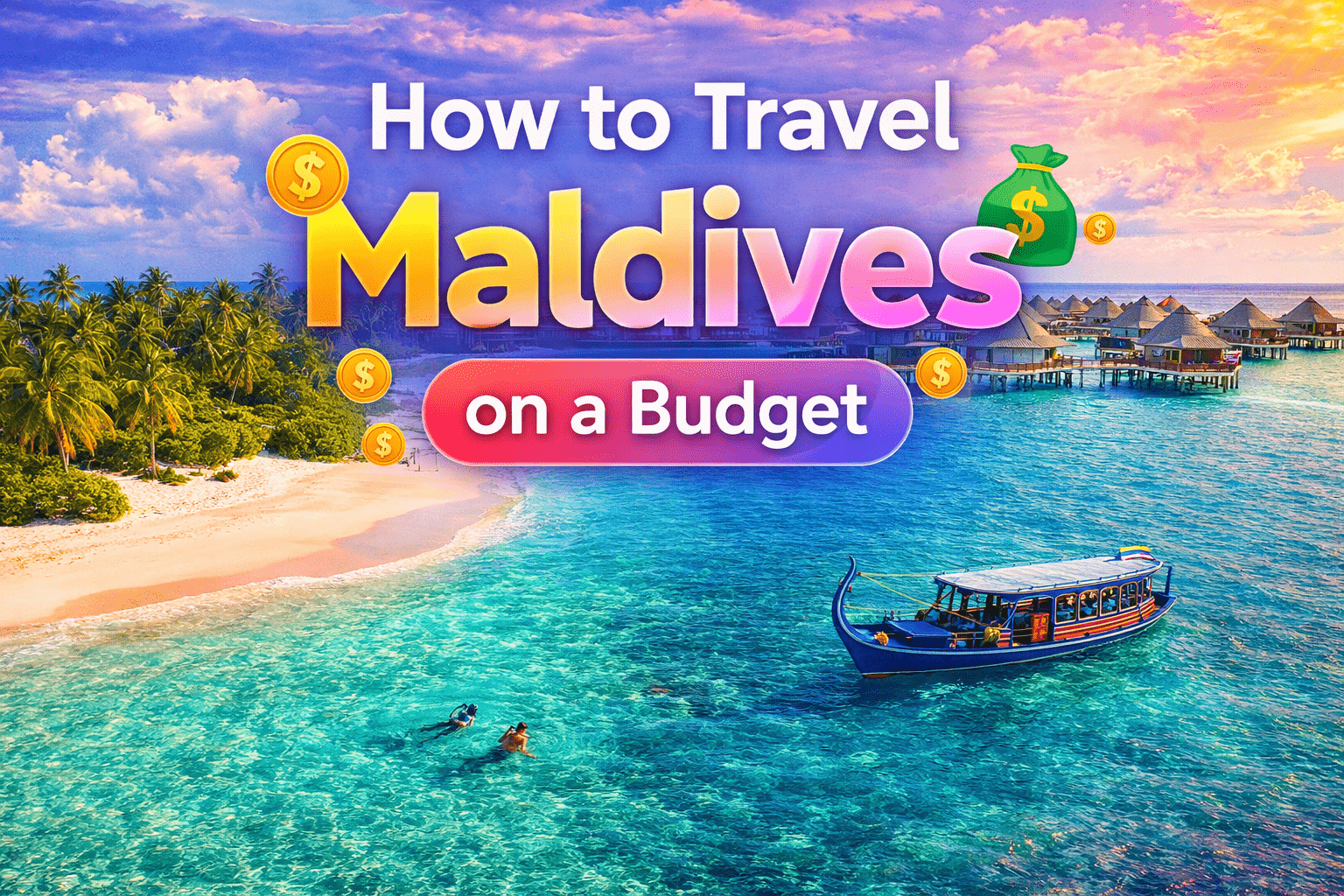
How to Travel Maldives on a Budget (2026 Guide)

Let me start with a confession: I almost didn’t go to the Maldives.

For years, I’d looked at those photos – overwater villas stretching into turquoise lagoons, private decks with direct ocean access, infinity pools overlooking endless blue. And I’d think the same thing everyone thinks: “That’s for rich people. That’s not for me.”

The Maldives felt like a place you go to spend money, not a place you go to travel.

Turns out, I was wrong.

My trip to Dhigurah Island completely changed how I think about this country. Yes, the ultra-luxury resorts exist. But tucked away on the local islands – places where Maldivian families actually live, where guesthouses cost $70 a night instead of $700 – there’s a whole different Maldives. One that’s accessible, authentic, and honestly just as beautiful.

This guide is everything I learned about experiencing the Maldives without going broke. How to get there, where to stay, what to do, and how to avoid the mistakes that cost other travelers hundreds of dollars.


First, Understand How The Maldives Works

The Maldives is basically 1,200 tiny islands scattered across the Indian Ocean. Here’s what you need to know:

Resort Islands: These are private islands where one resort occupies the entire landmass. You fly in, take a seaplane or speedboat, and don’t leave until you fly out. Beautiful, exclusive, expensive. Think $500+ per night.

Local Islands: These are inhabited by Maldivians. Guesthouses operate alongside local homes, schools, and mosques. You experience actual Maldivian culture. Guesthouses run $50-100 per night. This is where budget travel happens.

The Catch: Local islands have different rules. No alcohol. Conservative dress codes outside designated beach areas. But honestly? Those “limitations” are part of what makes the experience real.


Best Local Islands For Budget Travelers

Not all local islands are created equal. Based on my research and experience, these are the ones to know:

Dhigurah Island (South Ari Atoll)

My personal favorite.

This island has one of the longest beaches in the Maldives – four kilometers of white sand running down the west side. The sandbar at the southern tip is stunning. And crucially, Dhigurah sits in South Ari Atoll, which means whale shark excursions are excellent year-round.

Best for: Beach lovers, whale shark seekers, people who want space to walk

Fulidhoo Island (Vaavu Atoll)

Smaller, more traditional vibe. The highlight here is literally steps from the ferry dock – stingrays and nurse sharks gather in the shallows daily. You can stand knee-deep and watch them cruise past. It’s surreal.

Best for: Wildlife up close, traditional village feel, photographers

Maafushi (Kaafu Atoll)

The most developed local island, closest to Male. Lots of guesthouses, restaurants, tour operators. It’s busy – some say too busy – but the infrastructure is solid and prices are competitive.

Best for: First-timers, people wanting maximum tour options, shorter transfers

Ukulhas (Alif Alif Atoll)

Known for being environmentally conscious – one of the cleanest local islands with good waste management and protected marine areas. Beautiful beach, laid-back vibe.

Best for: Eco-conscious travelers, families, relaxed pace

Thoddoo (Alif Alif Atoll)

Famous for its watermelon farms (yes, really) and a stunning lagoon on the north side. Less touristy than Maafushi, more agricultural feel.

Best for: Off-the-beaten-path vibes, lagoon swimming, budget longer stays


How To Get To The Local Islands

You’ll fly into Male International Airport (MLE) . From there, you’ve got options.

Public Speedboat (Best Balance)

Cost: $40-60 USD one way
Duration: 1-3 hours depending on island

This is the sweet spot. Comfortable, air-conditioned boats with daily schedules to most major local islands. To Dhigurah, it’s 2 hours and about $50. To Maafushi, it’s 30 minutes and about $25.

Pro tip: Ask your guesthouse to book the speedboat for you before you arrive. They’ll add it to your room bill, you pay by card, and you don’t have to worry about a thing.

Public Ferry (Cheapest)

Cost: $3-10 USD one way
Duration: 1-7 hours depending on island

The MTCC public ferries are absurdly cheap. To Dhigurah, it’s about $8 for a 6-7 hour journey. To closer islands like Maafushi, it’s faster. The trade-off is time and comfort – these are basic vessels with limited schedules (often only a few times per week).

Speedboat + Domestic Flight

Cost: $150-200 USD one way
Duration: 20 minute flight + boat transfer

For distant atolls like Addu or Baa, flying makes sense. Fly from Male to a regional airport, then a short speedboat to your island. More expensive than public options, but saves serious time.

Seaplane (The Splurge)

Cost: $250-400 USD one way
Duration: 30-60 minutes

Look, I’ll be honest – seaplanes are incredible. Flying low over those atolls, watching the colors shift… it’s a memory for life. But it’s also expensive. If you can swing it for one leg of your journey, do it. If not, you’re not missing essential Maldives experiences.


Where To Stay (Without Breaking The Bank)

Guesthouses are your friend. Family-run, clean, breakfast included, and often the owners will help arrange everything – transfers, excursions, dinner reservations.

Typical costs: $50-100 USD per night for a double room with AC, private bathroom, and WiFi.

What to expect: Simple but comfortable. Think clean tile floors, decent mattress, hot water, reliable WiFi. Not luxury, but perfectly fine.

Booking tip: Use booking sites to research, then email guesthouses directly. Sometimes you’ll get better rates, and you can ask questions before committing.

Hotels we liked:

  • Dhigurah: Khao-Sok Bed and Breakfast (friendly owners, great location)
  • Fulidhoo: Huvan Inn (right near the shark/stingray point)

Getting Around The Islands

Here’s the beautiful thing about Maldivian local islands – they’re tiny. Most are less than a kilometer wide. You walk everywhere.

Some islands rent bicycles. Some have the occasional taxi pickup truck. But honestly? Walking is the way. You see more, meet more people, and it’s free.


What To Do (Excursions & Activities)

This is where your budget stretches further than you’d expect. Excursions from local islands cost a fraction of resort prices.

Whale Shark Safari (South Ari Atoll)

Cost: $60-80 USD per person
Duration: 2-4 hours

South Ari Atoll is one of the best places on earth to swim with whale sharks. Year-round presence, good chances of sightings. Multiple tour operators run trips from Dhigurah and other South Ari islands.

Warning: These are wild animals. No guarantees. But the operators are experienced and want you to see them as much as you do.

Manta Ray Excursions

Cost: $50-70 USD per person
Duration: 2-3 hours

Manta rays visit cleaning stations around many atolls. Baa Atoll is famous for them, but they’re spotted elsewhere too. Snorkeling with these gentle giants is unforgettable.

Dolphin Cruises

Cost: $30-50 USD per person
Duration: 1-2 hours

Dolphins are everywhere in the Maldives. A sunset dolphin cruise is one of the most relaxing ways to spend an evening. They move fast, so snorkeling isn’t really possible, but watching them leap alongside the boat is pure joy.

Sandbank Trips

Cost: $25-40 USD per person
Duration: Half day

Those tiny sandbars you see in photos – just a patch of white sand in the middle of turquoise water? You can visit them. Usually combined with snorkeling stops. Bring lunch, spend a few hours on your own private paradise.

Snorkeling Safaris

Cost: $30-50 USD per person
Duration: Half day

Visit multiple snorkeling spots – house reefs, turtle cleaning stations, coral gardens. Equipment usually included. Good snorkelers will see plenty.

Diving

Cost: $60-100 USD per dive

The Maldives has world-class diving. Local island dive shops are significantly cheaper than resorts. Dhigurah in particular is known for excellent diving.

Fishing Excursions

Cost: $40-60 USD per person
Duration: 2-4 hours

Big game fishing, night fishing, reef fishing – options vary. Catch your dinner and have your guesthouse cook it.

Resort Day Trips

Cost: $100-200 USD per person

This is a fun hack. Many nearby resorts offer day packages to local island guests. Boat transfer, pool access, facilities, and usually a food/drink credit. Experience the “resort Maldives” for a fraction of the cost.


How Much Does A Budget Maldives Trip Actually Cost?

Let’s get specific. Here’s roughly what we spent per day:

ItemCost (USD)
Guesthouse (double room)$35-50 per person
Meals (3 local restaurants)$20-30
One excursion$40-60
Speedboat transfer (amortized)$15-20
Miscellaneous$10
Daily Total$120-170

For a week, that’s $840-1,190 USD including accommodation, food, excursions, and transfers. Add your international flight, and you’re still way under what a resort would cost.

Can you do it cheaper? Yes. Stay longer on one island, take public ferries, cook some meals, skip expensive excursions.

Can you spend more? Absolutely. More excursions, fancier guesthouses, seaplane transfers.

But this range gives you a realistic picture of what a comfortable, enjoyable budget Maldives trip looks like.


Money Tips (Read These Before You Go)

Currency

  • Maldivian Rufiyaa (MVR) is local currency
  • US Dollars accepted almost everywhere, but you’ll get better rates with Rufiyaa
  • Don’t take Rufiyaa home – worthless outside Maldives

ATMs & Cards

  • Male airport has reliable ATMs – withdraw enough for a few days
  • Most local islands have one ATM (may or may not work with your card)
  • Guesthouses often accept credit cards (sometimes 3-5% fee)
  • Restaurants and shops are cash-only
  • Strategy: Withdraw at Male airport, use card for guesthouse and big excursions, cash for everything else

Tipping

Not expected but appreciated. Service workers earn modest wages. 10% at restaurants, $1-2 for hotel staff helping with bags, $5-10 for guides who did well.


Packing List Essentials

Clothing:

  • Lightweight, modest clothing for walking through villages (cover shoulders/knees)
  • Swimwear for designated bikini beaches only
  • Sarong or cover-up (useful for transitions)
  • Reef-safe sunscreen (regular sunscreen damages coral)

Gear:

  • Snorkel mask (fits better than rentals, though rentals are fine)
  • Underwater camera or phone housing
  • Power bank (some islands have occasional power fluctuations)
  • Reusable water bottle (plastic waste is a huge problem here)

Health:

  • Mosquito repellent (essential, especially near jungle areas)
  • Basic first aid kit
  • Any prescription medications (pharmacies are limited)

Important Cultural Notes

The Maldives is a Muslim country. On local islands, this matters:

Dress Code: Cover shoulders and knees when walking through villages. Swimwear only on designated bikini beaches. We saw tourists ignoring this and nothing bad happened, but it’s respectful to follow local norms.

Alcohol: Not sold on local islands. Zero. If you want a drink, you need to visit a resort island or wait until you’re back in Male. Honestly, we didn’t miss it – but worth knowing.

Prayer Calls: You’ll hear the call to prayer from mosques. It’s part of life here. Not “noise” – it’s culture. Bring earplugs if you’re sensitive, but approach it with respect.

Ramadan: If visiting during Ramadan, expect shorter operating hours for restaurants during the day. Evening meals become festive. It’s a special time to visit if you’re culturally curious.

Relationships: Unmarried couples can share rooms without issue on local islands. Public displays of affection are frowned upon – save that for private spaces.


When To Visit (Weather & Seasons)

Dry Season (December – April): Peak season. Sunny skies, calm seas, perfect beach weather. Prices slightly higher, crowds slightly larger. January through March are particularly gorgeous.

Shoulder Months (November, May): Transition periods. Could be great weather, could be rain. Fewer crowds, better deals.

Wet Season (June – October): More rain, but often in short bursts. Greener landscapes, emptier beaches, lowest prices. South Ari Atoll still has good whale shark viewing. If you’re flexible and don’t mind occasional rain, this is the budget traveler’s sweet spot.


Sample 10-Day Budget Maldives Itinerary

Day 1: Arrive Male, speedboat to Dhigurah. Settle in, explore village, sunset at North West Beach.

Day 2: Morning walk to Long Beach sandbar. Afternoon snorkeling at Turtle Reef (from shore).

Day 3: Whale shark safari (full morning). Relaxed afternoon. Sunset dolphin cruise.

Day 4: Scuba diving or snorkeling safari. Evening fishing excursion, cook your catch.

Day 5: Resort day trip (experience the luxury side). Sunset at the sandbar.

Day 6: Morning kayaking. Speedboat back to Male. Overnight in Male (or connect to next island).

Day 7: Speedboat to Fulidhoo. Afternoon at the stingray/shark point. Village walk.

Day 8: Snorkeling excursion to nearby reefs. Relaxed evening.

Day 9: Sandbank trip (half day). Last beach time. Sunset photos.

Day 10: Morning speedboat to Male. Airport, fly home.


Common Mistakes To Avoid

Booking one island without research. Every island has different character. Dhigurah for beaches, Fulidhoo for wildlife, Maafushi for convenience. Match the island to your travel style.

Skipping travel insurance. Medical evacuation from remote islands is expensive if something goes wrong. Don’t risk it.

Assuming resorts are the only option. This almost kept me from visiting. Local islands offer the same water, same sunsets, same marine life – for a fraction of the cost.

Forgetting cash. Card acceptance is limited outside guesthouses. Run out of cash and you’re hunting for an ATM that may or may not work.

Overpacking excursions. You don’t need to book everything. Leave days empty to just be on the beach. That’s the point.

Ignoring dress code. You’re a guest in someone’s home. Cover up in villages. It’s not complicated.


Final Thoughts

The Maldives taught me something important.

Luxury travel and budget travel aren’t opposites. They’re just different ways of experiencing a place. The overwater villa traveler and the guesthouse traveler both end up in the same turquoise water. Both watch the same sunset. Both leave with memories that last.

One pays ten times more for the privilege of a private deck and a mini-fridge full of champagne.

The other meets local families, eats where Maldivians eat, and stretches a week’s budget into two weeks of travel.

Neither is wrong. But if you’re reading this because you thought the Maldives was out of reach – it’s not. The water is waiting. The beaches are waiting. And they’re more accessible than the Instagram photos would have you believe.

Go. You’ll thank yourself.


Planning a Maldives trip? Been to a local island? Drop your questions below – I read every comment and I’m happy to help!

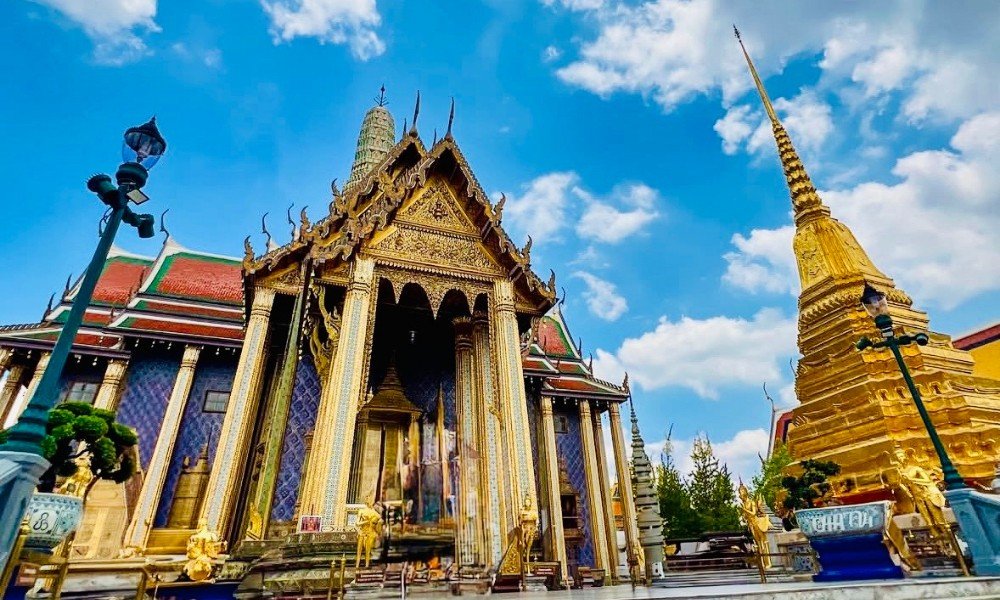
Grand Palace in Bangkok: History, Tickets, & Travel Tips

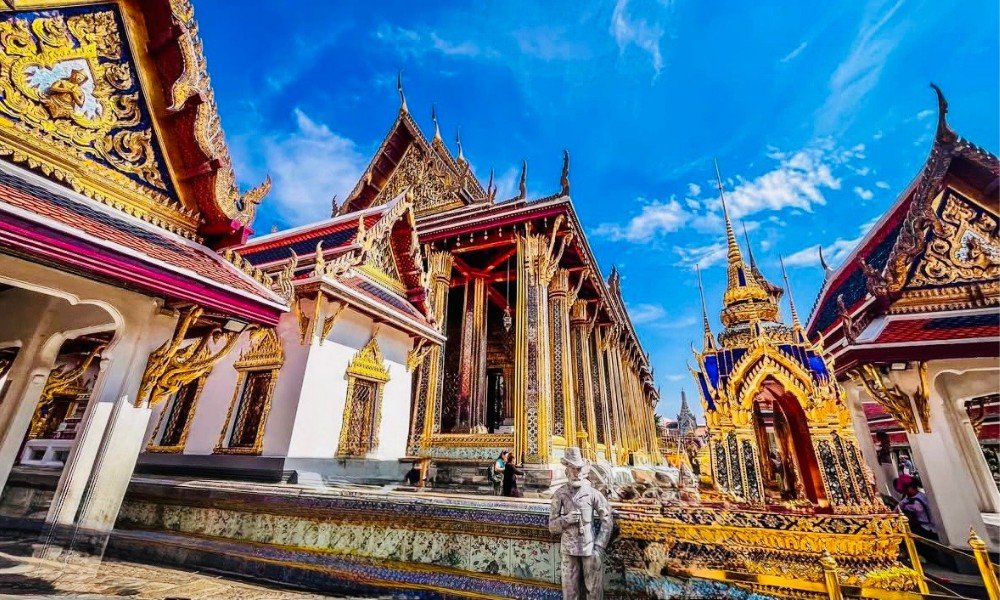
The Grand Palace is one of Thailand’s most renowned landmarks and a must-visit destination for travelers exploring Bangkok. Known for its magnificent golden spires, intricate Thai architecture, and profound cultural significance, this palace stands as the very heart of Thai history and royal heritage.

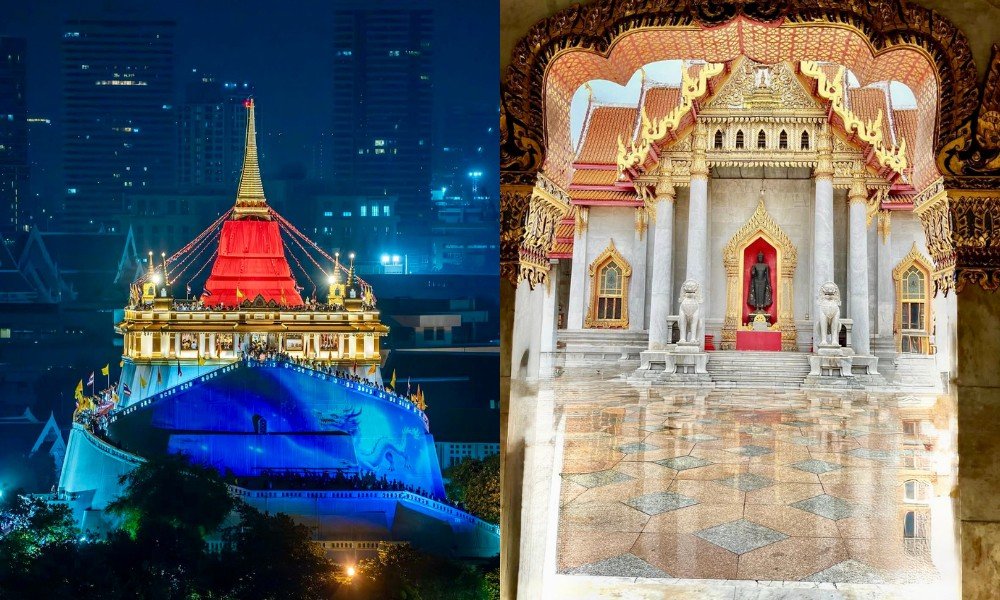
Constructed in the late 18th century, the Grand Palace served as the official residence of the Kings of Siam for over 150 years. Today, it remains one of Thailand’s most visited attractions, drawing millions of tourists annually who come to admire the beauty of its magnificent temples, courtyards, and the famous Wat Phra Kaew—home to Thailand’s most sacred Buddhist image.

If you are planning a visit, this comprehensive guide will help you navigate the history, ticketing, dress code, key attractions, and essential travel tips regarding the Grand Palace.

Also Check – Tourist Attractions in Bangkok, Thailand You Must See

History of the Grand Palace

The construction of the Grand Palace in Bangkok began in 1782, during the reign of King Rama I, the founder of the Chakri Dynasty. At that time, the Thai authorities relocated the capital across the Chao Phraya River and established this palace complex as the state’s new royal residence and administrative center.

For over a century, the Grand Palace served as Thailand’s political and spiritual hub. It was here that the King resided, royal ceremonies were held, and significant government activities took place within its walls.

Although the Thai royal family later relocated to Dusit Palace, the Grand Palace in Bangkok remains a vital ceremonial venue and a powerful symbol of Thailand’s monarchy and culture.

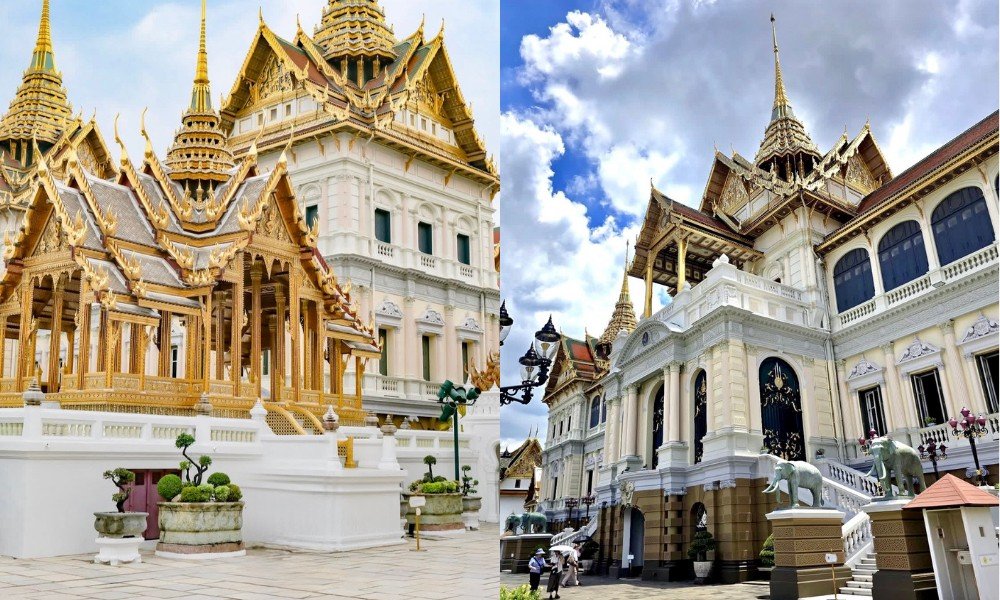
Among the most sacred structures within the palace complex is the ‘Temple of the Emerald Buddha,’ which houses the revered statue of the Emerald Buddha. Carved from a single piece of jade, this statue is regarded as Thailand’s most significant religious icon.
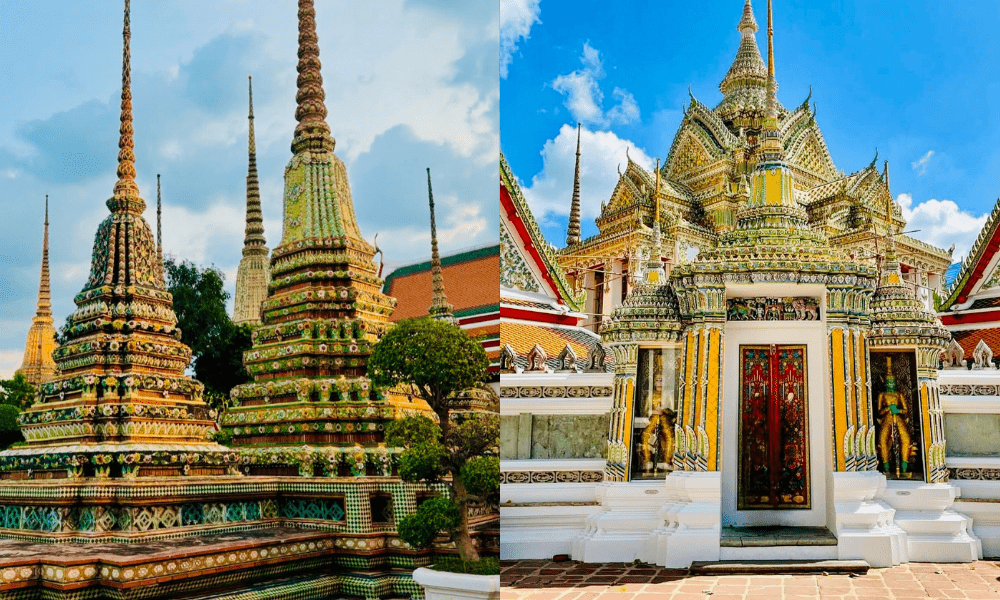
Today, people recognize the Grand Palace in Bangkok as a magnificent architectural masterpiece that showcases traditional Thai design, elaborate murals, gilded stupas, and colorful mosaic art.

Check for – King Power Mahanakhon: SkyWalk Bangkok

Why the Grand Palace in Bangkok Is So Famous

There are many reasons why the Grand Palace in Bangkok attracts millions of visitors every year.

  1. Thailand’s Most Sacred Temple: The complex includes Wat Phra Kaew, the Temple of the Emerald Buddha, which is considered the most important Buddhist temple in Thailand.
  2. Stunning Thai Architecture: The buildings inside the Grand Palace in Bangkok feature intricate carvings, colorful mosaics, and golden spires that reflect traditional Thai craftsmanship.
  3. Historical Significance: The palace served as the official residence of Thai kings for more than 150 years.
  4. Cultural Importance: Even today, important royal ceremonies and national events take place at the Grand Palace in Bangkok.

Top Attractions Inside the Grand Palace

When visiting the Grand Palace in Bangkok, you will encounter numerous magnificent buildings and temples within the complex. The attractions found inside make the visit well worth it.

1. Temple of the Emerald Buddha (Wat Phra Kaew)

 Temple of the Emerald Buddha (Wat Phra Kaew)

Wat Phra Kaew is the most prominent attraction within Bangkok’s Grand Palace. Artisans carved the Emerald Buddha statue from green jade, and during special ceremonies, the Thai King adorns it with seasonal golden robes. The Thai people deeply revere this statue and regard it as a symbol of Thailand’s spiritual heart.


The temple does not permit photography; therefore, visitors must strictly follow the rules when they enter.

2. The Great Golden Stupa

Inside Bangkok’s Grand Palace lies another beautiful attraction: the Golden Chedi (Stupa), which symbolizes Buddhist cosmology and houses sacred relics.

3. Chakri Maha Prasat Hall

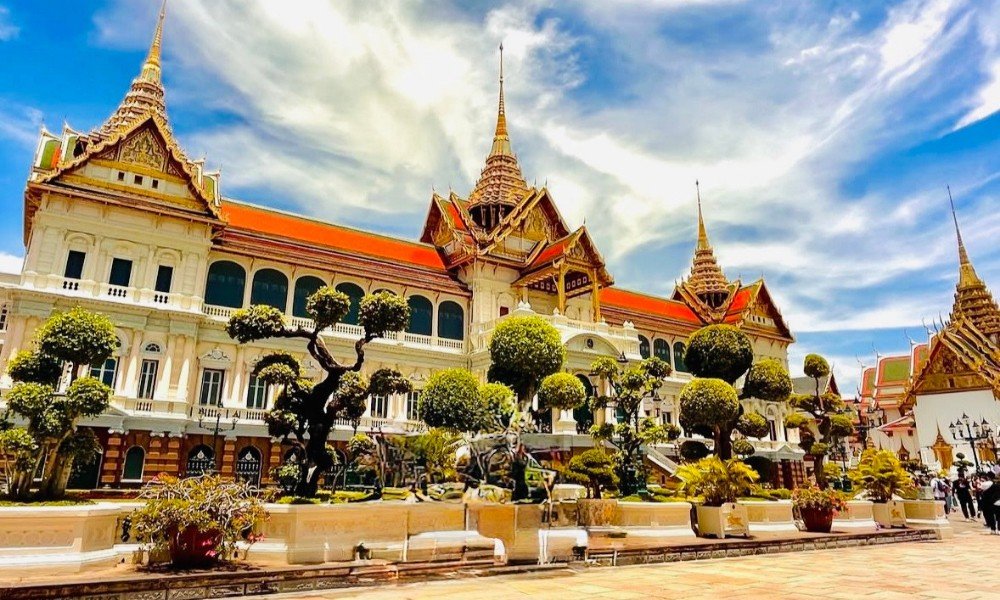
This magnificent building represents a unique blend of traditional Thai roofs and European architecture, and is renowned for its distinctive style. This makes it one of the most unique structures within Bangkok’s Grand Palace.
The Chakri Maha Prasat Hall serves as the royal residence and hosts foreign dignitaries; designers built it in the 19th century to symbolize Thailand’s modernization.

4. Murals of the Ramakien

Walking along the inner walls of the palace, visitors can admire intricate murals depicting scenes from Thailand’s national epic, the ‘Ramakien’.
Created in 1783 during the reign of King Rama I, these historic murals portray the triumph of good over evil through vivid scenes of gods, monkeys, and demons.

Grand Palace in Bangkok Tickets & Entry Fees

If you plan to visit the Grand Palace in Bangkok, here is the latest ticket information:

Entry Fee:

  • Approximately 500 Thai Baht for foreign visitors
  • Children under 120 cm can enter free.

The ticket usually includes access to:

  • The Grand Palace complex
  • Wat Phra Kaew
  • Queen Sirikit Museum of Textiles

Audio guides and guided tours are also available for an additional fee.

Opening Hours of the Grand Palace in Bangkok

The Grand Palace is open daily. Its opening hours are from 8:30 AM to 3:30 PM, and the ticket counters close around 3:30 PM.

The palace may occasionally close during special royal ceremonies, so you should check the official schedule before visiting.

Dress Code for the Grand Palace in Bangkok

Since Bangkok’s Grand Palace is a sacred religious site, visitors must adhere to strict dress code regulations.

Allowed Clothing:

  • Long pants or ankle-length skirts
  • Shirts with sleeves
  • Modest clothing covering shoulders and knees

Not Allowed:

  • Shorts
  • Sleeveless tops
  • Short skirts
  • Ripped jeans
  • Revealing clothing.

If you arrive wearing inappropriate clothing, you can rent or purchase a sarong near the entrance.

Best Time to Visit the Grand Palace in Bangkok

The Grand Palace in Bangkok is one of Thailand’s busiest attractions, so timing your visit is important.

  • Early Morning (Best Option): Arriving right at 8:30 AM, when the palace opens, helps you avoid crowds and extreme heat.
  • Cool Season (November – February): This period offers the most comfortable weather for exploring the palace complex.
  • Photography Tip: Morning sunlight creates beautiful lighting on the golden temples and colorful mosaics.

How to Reach the Grand Palace in Bangkok

The Grand Palace in Bangkok is located in the historic Rattanakosin district near the Chao Phraya River.

  • By BTS Skytrain: Take the BTS to Saphan Taksin BTS Station, then ride a boat to Tha Chang Pier.
  • By MRT: Take the MRT to Sanam Chai MRT Station and walk a short distance.
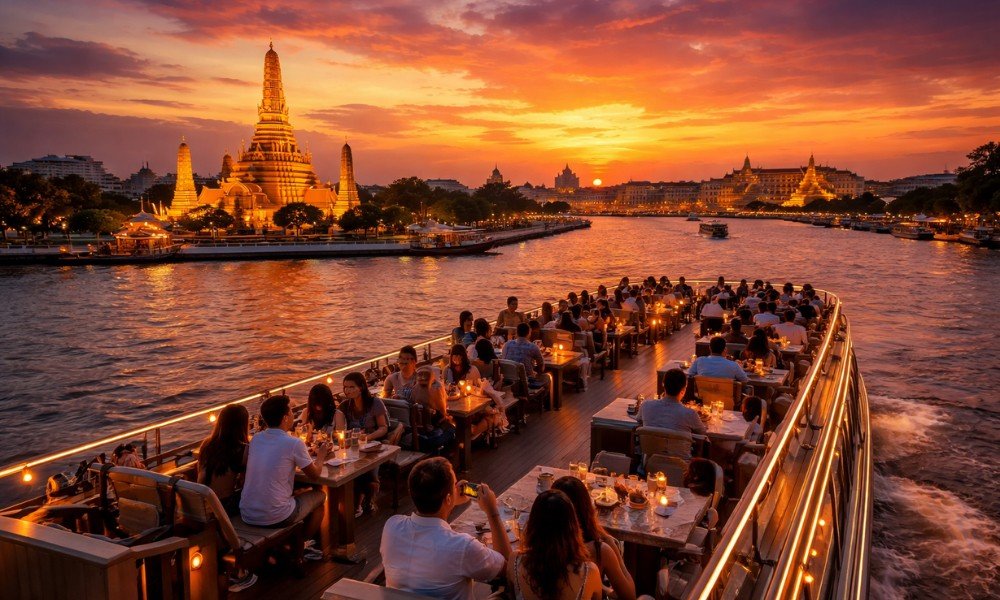
  • By Boat: The Chao Phraya Express Boat is one of the most scenic ways to reach the palace.

Travel Tips for Visiting the Grand Palace in Bangkok

Here are some useful tips to make your visit smooth and enjoyable.

  • Beware of Tourist Scams: Some people outside the palace may claim that the palace is closed and offer alternative tours. These are common scams, so always go directly to the official entrance.
  • Wear Comfortable Shoes: The Grand Palace in Bangkok is huge, and exploring the complex involves a lot of walking.
  • Carry Water: Bangkok can be extremely hot, especially during midday.
  • Respect Temple Etiquette: Remove your shoes before entering temple buildings and behave respectfully.
  • Allow Enough Time: Exploring the Grand Palace requires a considerable amount of time; therefore, most visitors spend 2–3 hours touring it.

Nearby Attractions You Should Also Visit

While visiting the Grand Palace, you can also easily explore these nearby attractions.

  • Wat Pho: Home to the famous 46-meter reclining Buddha statue, located just 700 meters from the palace.
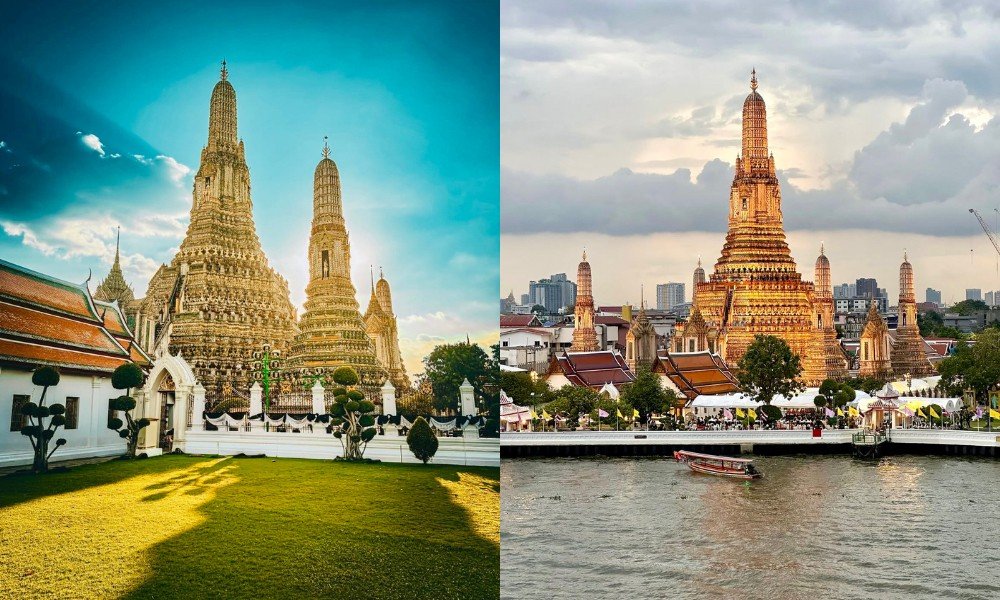
  • Wat Arun: A beautiful riverside temple famous for its towering prang and sunset views.
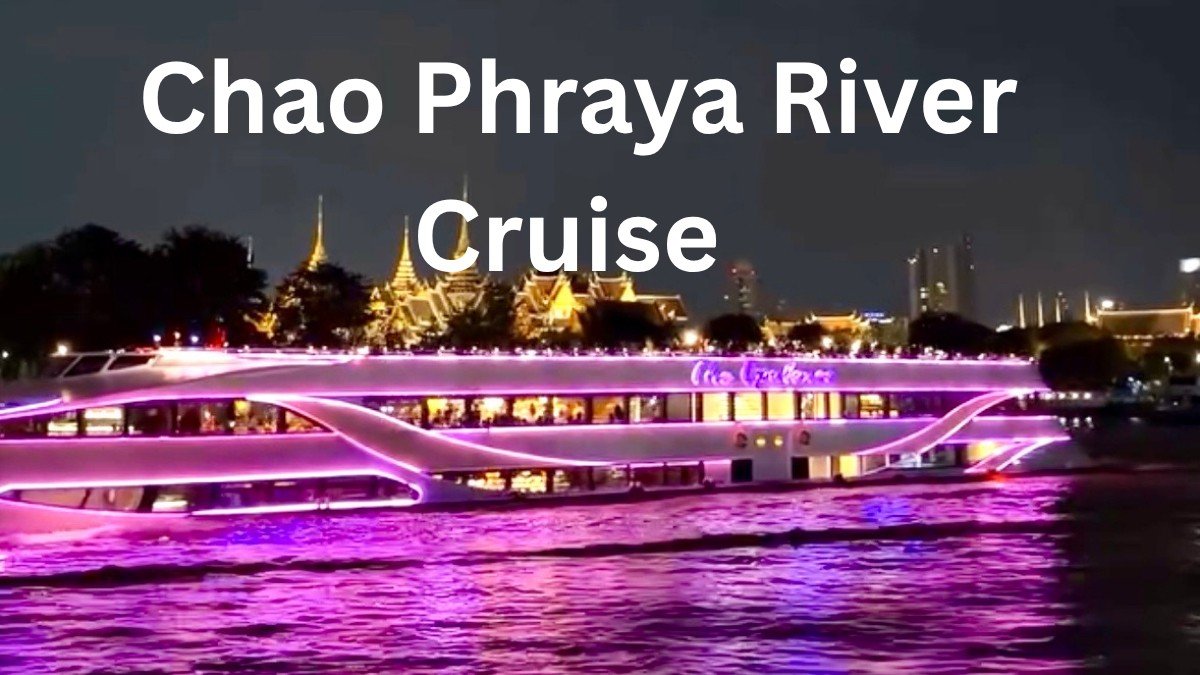
  • Chao Phraya River: To enjoy the historical sights of Bangkok, you can take a beautiful boat ride on this river.

FAQ

What is the Grand Palace in Bangkok famous for?

The Grand Palace is famous for its stunning Thai architecture, rich royal history, and the sacred Wat Phra Kaew, which houses Thailand’s most revered Emerald Buddha statue.

Can you take photos inside the Grand Palace in Bangkok?

Photography is allowed in most outdoor areas of the Grand Palace in Bangkok. However, it is strictly prohibited inside certain temple buildings, especially inside Wat Phra Kaew.

Is the Grand Palace in Bangkok still used by the royal family?

The Grand Palace in Bangkok is no longer the official residence of the Thai royal family, but it is still used for important ceremonies and state events.

Are there any scams near the Grand Palace in Bangkok?

Yes, some scammers may tell tourists that the Grand Palace in Bangkok is closed and offer fake tours. Always go directly to the official entrance and purchase tickets there.

Conclusion

Bangkok’s Grand Palace is far more than just a tourist attraction; it is a powerful symbol of Thailand’s history, culture, and spiritual heritage. With its magnificent temples, royal architecture, and the sacred ‘Temple of the Emerald Buddha,’ the Palace offers one of the most memorable travel experiences in Southeast Asia.

Whether you are a history buff, an architecture enthusiast, or a cultural traveler, a visit to Bangkok’s Grand Palace should be at the very top of your Thailand itinerary. Just remember to arrive early, adhere to the dress code, and set aside ample time to explore this magnificent royal complex.

Top 10 Most Romantic Places in the World for Couples

Quick Navigation: Looking for the perfect romantic getaway? Whether you're planning your honeymoon, celebrating an anniversary, or simply craving quality time together, this guide covers the world's most enchanting destinations for couples—from budget-friendly escapes to luxury paradises.

🎯 What Makes a Destination Truly Romantic?

  • Intimate atmosphere that encourages connection
  • Stunning natural beauty or architectural charm
  • Activities designed for two people to enjoy together
  • Privacy and exclusivity when you want it
  • Memorable experiences you can't find elsewhere

1. Paris, France – The Eternal City of Love 🗼

Best for: First-time couples, honeymoons, anniversary celebrations
Budget: ₹2.5-4 lakh for 5 days
Best time: April-June, September-October

Paris hasn't earned its reputation as the world's most romantic city by accident. Walking along the Seine during twilight, with street musicians creating the soundtrack and the Eiffel Tower sparkling like diamonds every hour, feels like stepping directly into a love story.

Start your mornings with buttery croissants from neighborhood boulangeries, lose yourselves in Montmartre's cobblestone maze, and steal kisses beneath ornate bridges crossing the river. The true magic of Paris lives not just in famous landmarks, but in intimate bistros where locals gather, hidden bookshops along the Left Bank, and the way the entire city seems to pause for lovers.

💡 Insider Tip: Visit the Eiffel Tower at 1 AM when crowds disappear and the champagne bar at the top offers the most romantic views imaginable. Book restaurants in the Marais district for authentic Parisian dining without tourist prices.

2. Maldives – Your Private Paradise on Earth 🏝️

Best for: Honeymoons, beach lovers, luxury seekers
Budget: ₹1.5-6 lakh for 4-7 nights
Best time: November-April
Visa: Free visa-on-arrival for Indians

Imagine waking to gentle waves lapping beneath your overwater villa, stepping directly from your bedroom into crystal-clear turquoise water. The Maldives transcends typical vacation experiences—it's pure, uninterrupted togetherness.

Each resort occupies its own private island where time follows a different rhythm. Spend days snorkeling among vibrant coral gardens teeming with tropical fish, indulge in couples' spa treatments overlooking endless ocean, or simply lounge on your private deck watching manta rays glide beneath glass floor panels. As evening arrives, dine on sandbanks under star canopies with nothing but ocean surrounding you for miles.

💡 Budget Hack: Visit during May-October shoulder season for 40-50% savings. Choose local island stays (₹15,000-25,000 per night) instead of private resort islands (₹40,000+ per night) for authentic Maldivian experiences at fraction of luxury resort costs.

3. Santorini, Greece – Where Sunsets Become Magic ☀️

Best for: Photography lovers, wine enthusiasts, sunset chasers
Budget: ₹1.8-2.5 lakh per couple
Best time: April-May, September-October
Save: 30-40% during shoulder season

Santorini doesn't merely have beautiful sunsets—it has the kind that make conversations stop mid-sentence. Those iconic white-washed buildings with cobalt blue domes aren't just Instagram backdrops; they're where couples rediscover what drew them together.

Wander through Oia's winding streets hand-in-hand, discovering family-run tavernas serving wine from vineyards passed through generations. Explore dramatic black sand beaches formed by ancient volcanic eruptions, take catamaran cruises around the caldera's rim, or simply perch on your hotel terrace watching the Aegean Sea transform through endless shades as day becomes night.

💡 Photography Tip: Book accommodations in Imerovigli (called the "balcony to the Aegean") for Oia's famous views without the crowds. The sunset from here rivals Oia while costing 30% less.

4. Bali, Indonesia – Romance Meets Adventure 🌺

Best for: Adventure couples, culture lovers, varied experiences
Budget: ₹1.2-2.5 lakh for 7 days
Best time: April-October
Visa: Visa-on-arrival for Indians (₹4,000)

Bali understands that different couples define romance differently. Adventure seekers trek through emerald rice terraces at sunrise or catch waves together at pristine surf breaks. Culture enthusiasts explore ancient temples shrouded in jungle mist or master traditional Balinese cooking side by side.

What makes Bali extraordinary is how effortlessly it blends excitement with tranquility. Spend mornings white-water rafting through jungle gorges, afternoons receiving couples' massages in open-air spas surrounded by tropical gardens, and evenings watching traditional Kecak fire dances under starlight. The island's spiritual energy, genuine warmth, and stunning landscapes create atmospheres where authentic connection happens naturally.

💡 Hidden Gem: Skip crowded Ubud for Sidemen Valley—equally stunning rice terraces, authentic culture, and fraction of tourists. Stay in boutique villas (₹3,000-6,000/night) with private infinity pools overlooking mountains.

5. Venice, Italy – Floating Romance Through Time 🚣

Best for: Classic romance, history buffs, unique experiences
Budget: ₹2-3 lakh for 5 days
Best time: February-June, September-November
Gondola ride: €120 for 45 minutes

Venice makes you understand why people write poetry. This impossible city built entirely on water offers experiences found literally nowhere else on Earth.

Yes, gondola rides scream "tourist"—and remain absolutely worth every euro. Gliding through narrow canals while your gondolier shares centuries-old stories about surrounding buildings feels like time travel. Intentionally lose yourselves in quieter neighborhoods beyond St. Mark's Square, stumbling upon artisan workshops, hidden courtyards, and intimate trattorias serving pasta recipes perfected across generations.

💡 Money Saver: Book gondola rides directly at smaller stations (not tourist hotspots) for negotiable rates. Visit during Carnivale (February) for magical masked balls, or avoid it entirely for 50% cheaper accommodations.

6. Kyoto, Japan – Tranquil Beauty & Cultural Depth 🌸

Best for: Culture seekers, peaceful couples, nature lovers
Budget: ₹2-3.5 lakh for 7 days
Best time: March-May (cherry blossoms), October-November (autumn colors)

If your relationship thrives on peaceful moments and cultural depth, Kyoto will capture your hearts. This ancient city moves at gentler rhythms, inviting couples to slow down and genuinely be present together.

Walk through Arashiyama's ethereal Bamboo Forest where towering stalks create natural cathedrals of green light. Visit temples where monks have meditated for centuries, participate in traditional tea ceremonies together, or spend evenings in the Gion district hoping to glimpse geishas gliding gracefully through lantern-lit streets.

💡 Experience Tip: Stay in traditional ryokans (Japanese inns) with tatami rooms, futon beds, and kaiseki dinners. Book private onsen (hot spring) baths for intimate couples' experiences. Visit Philosopher's Path early morning for cherry blossom serenity minus crowds.

7. Prague, Czech Republic – Fairytale Romance on Budget 🏰

Best for: Budget travelers, architecture lovers, charming experiences
Budget: ₹1.2-2 lakh for 5 days
Best time: April-June, September-October
Why Prague: European charm at 40% less cost than Paris

Prague looks exactly how fairytales should—straight from storybook pages. Gothic spires, Baroque buildings, and medieval bridges create backdrops so romantic, walking through feels dreamlike.

Begin mornings with coffee at historic cafes unchanged for centuries, cross Charles Bridge before crowds arrive, and watch street performers bring music to cobblestone streets. Take sunset cruises along the Vltava River, explore Prague Castle's hidden gardens, or simply wander Old Town Square watching the famous Astronomical Clock mark time as it has for over 600 years.

💡 Budget Win: Dine at local pubs (hospodas) for delicious Czech meals at ₹800-1,200 per person. Stay in boutique hotels in Lesser Town (Malá Strana) for castle views at affordable rates. River cruises cost ₹1,500-2,500 vs. ₹5,000+ in Paris.

8. Bora Bora, French Polynesia – Ultimate Luxury Escape 💎

Best for: Luxury honeymoons, milestone anniversaries, splurge-worthy trips
Budget: ₹5-12 lakh for 5-7 nights
Best time: May-October
Worth it for: Once-in-a-lifetime luxury experiences

When you want to splurge on something genuinely extraordinary, Bora Bora delivers beyond even romantic imaginations. The iconic Mount Otemanu rising from turquoise lagoons creates views so stunning they seem unreal.

Stay in overwater bungalows where glass floor panels let you watch tropical fish swim beneath your living room, and private decks with direct lagoon access mean slipping into warm water whenever mood strikes. Snorkel in coral gardens teeming with colorful marine life, enjoy private beach dinners with toes in sand, or simply float in your infinity pool watching sunsets transform skies into masterpieces.

💡 Luxury Tip: Book all-inclusive packages including meals, activities, and spa treatments for better value. Consider Moorea or Tahiti islands for similar beauty at 40-50% less cost. Four Seasons or St. Regis offer iconic Bora Bora experiences with impeccable service.

9. Udaipur, India – Royal Romance at Home 👑

Best for: Indian couples, heritage lovers, accessible luxury
Budget: ₹50,000-2 lakh for 3-4 nights
Best time: October-March
Why choose: World-class romance without international travel

You don't need passports for world-class romance. Udaipur, the City of Lakes, offers regal beauty rivaling any international destination.

The Lake Palace appearing to float on Lake Pichola creates one of Earth's most iconic romantic settings. Stay in heritage havelis converted into boutique hotels, dine at rooftop restaurants with palace views, and take sunset boat rides watching the city's reflection shimmer on water. The combination of royal history, architectural splendor, and lakeside serenity makes Udaipur perfect for couples wanting luxury and culture close to home.

💡 Insider Secret: Book dinner at Ambrai Restaurant for stunning City Palace views across the lake. Stay at boutique properties like Jagat Niwas Palace (₹8,000-15,000/night) for authentic royal experiences. Take private boat rides during sunset hour (₹2,000-3,000) for most romantic moments.

10. Gokarna, India – Hidden Coastal Paradise 🏖️

Best for: Budget travelers, offbeat explorers, privacy seekers
Budget: ₹20,000-50,000 for 4-5 nights
Best time: October-March
Why visit: Goa's beauty minus commercialization

For couples seeking authentic experiences away from tourist crowds, Gokarna offers pristine beaches and spiritual energy without Goa's commercialization. This small coastal Karnataka town balances laid-back beach vibes with cultural richness.

Discover secluded beaches like Om Beach and Kudle Beach where you might have entire stretches of sand to yourselves. Hike coastal trails connecting hidden coves, explore ancient Mahabaleshwar Temple nestled in the landscape, or simply watch fishermen bring in daily catches as sun rises. Gokarna's tranquility and privacy create space for genuine connection, making it perfect for couples valuing intimacy over Instagram moments.

💡 Travel Hack: Stay in beach shacks or eco-cottages (₹1,500-4,000/night) right on the sand. Visit Half Moon Beach accessible only by trek or boat for ultimate privacy. Avoid peak season (December-January) for peaceful experiences and better rates.

Planning Your Perfect Romantic Getaway ✈️

🎯 Choose Based on Your Romance Style

Adventure Couples: Bali, Gokarna

Beach Lovers: Maldives, Bora Bora, Gokarna

Culture Enthusiasts: Kyoto, Venice, Udaipur

Budget Conscious: Prague, Gokarna, Bali

Luxury Seekers: Bora Bora, Maldives, Udaipur

💰 Smart Money-Saving Tips

Travel shoulder season (April-May, Sept-Oct) for 30-40% savings

Book 3-4 months ahead for best flight and hotel deals

Look for honeymoon packages with complimentary upgrades and extras

Use credit card points for flights and accommodation bookings

Eat where locals eat for authentic food at fraction of tourist prices

📋 Essential Pre-Trip Checklist

✓ Check visa requirements 2-3 months before departure

✓ Purchase comprehensive travel insurance covering medical emergencies

✓ Book accommodations matching your romance style (privacy vs. social)

✓ Research couples' activities and make reservations for popular experiences

✓ Pack smart: versatile clothing, good camera, comfortable walking shoes

✓ Download offline maps and translation apps for easier navigation

Frequently Asked Questions 💬

What is the most romantic place in the world for couples?

Paris, France remains the world's most romantic destination for couples, offering iconic landmarks like the Eiffel Tower, Seine River walks, charming cafes, and an atmosphere designed for love. Other top contenders include Maldives for beach romance, Santorini for stunning sunsets, and Venice for unique waterway experiences.

What is the best time to visit romantic destinations?

Shoulder seasons (April-May and September-October) offer the best combination of pleasant weather, fewer crowds, and 30-40% savings on accommodations. Avoid peak summer and major holidays for more intimate experiences with your partner.

What is the budget for a romantic trip to Maldives from India?

A romantic Maldives trip from India starts from ₹1.5 lakh for 4 nights, including overwater villa stays, meals, and activities. Luxury packages can range from ₹2.5-5 lakh depending on resort choice and season. Visit during May-October for 40-50% savings on accommodations.

Which is the most romantic place in India for couples?

Udaipur is India's most romantic destination, known as the City of Lakes, featuring the iconic Lake Palace, heritage havelis, rooftop dining with palace views, and boat rides on Lake Pichola. Gokarna offers a more secluded beach romance experience without Goa's commercialization.

How much does a romantic Europe trip cost for couples?

A romantic Europe trip costs ₹1.8-4 lakh for 7-10 days depending on destinations. Prague offers the most budget-friendly option (₹1.2-2 lakh), while Paris and Venice range ₹2.5-4 lakh. Book flights 3-4 months ahead and travel during shoulder season for maximum savings.

What are the best honeymoon destinations under 2 lakhs?

Best honeymoon destinations under ₹2 lakh include: Bali (₹1.2-1.8 lakh), Prague (₹1.2-2 lakh), Santorini during shoulder season (₹1.8-2 lakh), Maldives local islands (₹1.5-1.8 lakh), and domestic options like Udaipur (₹50,000-1 lakh) and Gokarna (₹20,000-50,000).

Do I need visas for these romantic destinations?

Visa-on-arrival: Maldives, Indonesia (Bali), Thailand
E-visa available: Greece (Schengen), France (Schengen), Italy (Schengen)
No visa needed: Domestic destinations (Udaipur, Gokarna)
Always check current visa requirements 2-3 months before travel as policies change.

Your Love Story Awaits 💕

These destinations aren't just beautiful locations on a map—they're places where love stories unfold, where ordinary moments transform into extraordinary memories, and where you remember exactly why you chose each other in the first place.

Whether you're planning your honeymoon, celebrating a milestone anniversary, or simply craving quality time together, the perfect romantic destination is waiting to create magic for you both.

Ready to start planning? Choose your destination, pack your bags, and let the adventure begin! ✨

Affordable Maldives: Discover Dhigurah Island

I’ll be honest – when people say “Maldives,” most of us picture those overwater bungalows with glass floors and private butlers.

And sure, those places are beautiful. But they’re also wildly expensive. Like, “sell-a-kidney” expensive.

So when I started researching the Maldives, I kept wondering – is there a way to experience those turquoise waters, white sand beaches, and incredible marine life without going broke?

Turns out, yes. Absolutely yes.

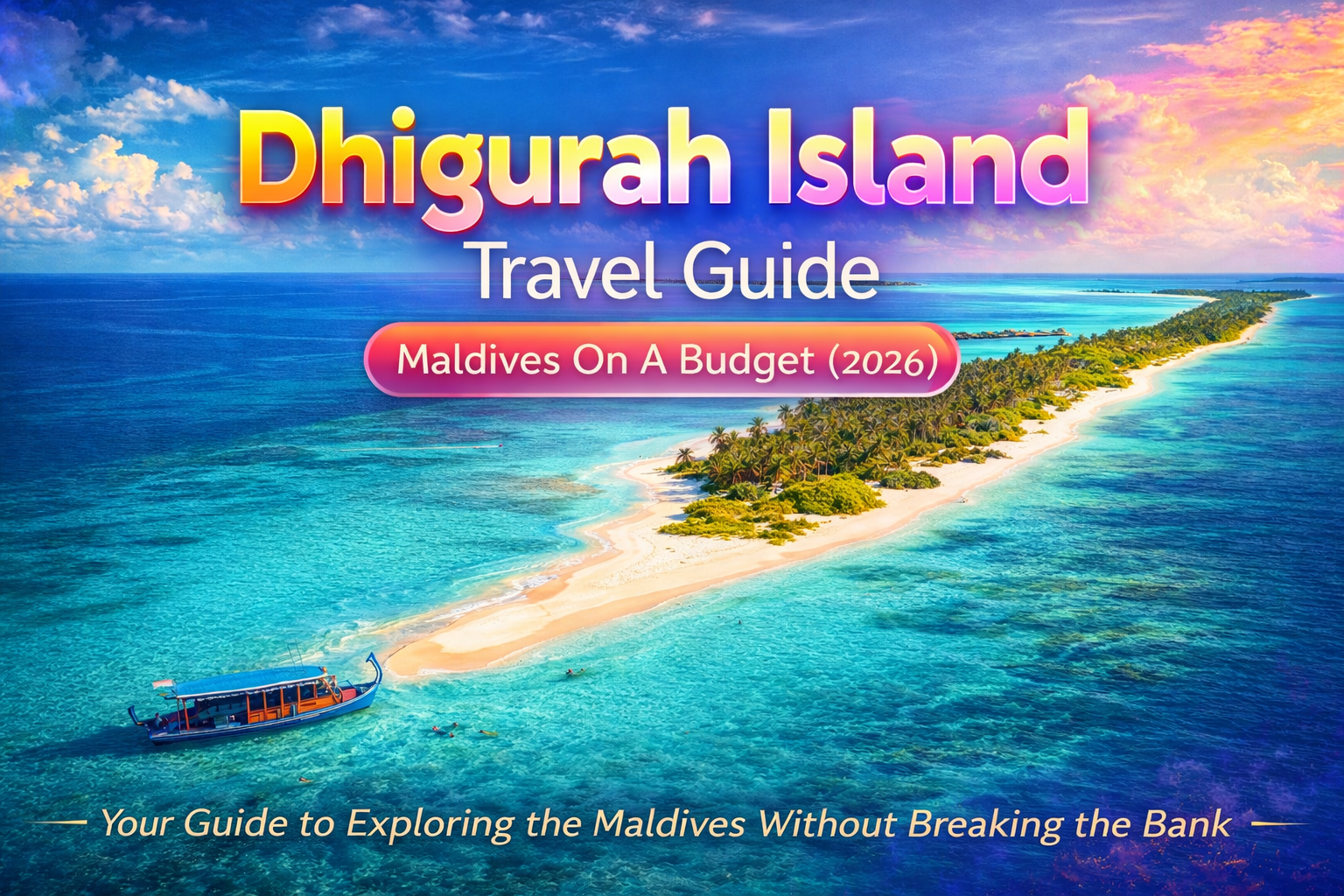
Dhigurah Island was the answer. A local island in the South Ari Atoll, no overwater resorts, no five-star price tags – just one of the longest beaches in the Maldives, family-run guesthouses, and some of the best wildlife encounters I’ve ever had.

I spent three days here and honestly could’ve stayed two weeks. Let me tell you everything you need to know.


Why Dhigurah? (And Why You’ve Probably Never Heard Of It)

Dhigurah means “long island” in the local Dhivehi language, and that’s exactly what it is – a narrow strip of sand stretching about 4 kilometers, with a stunning beach running along most of the west side.

The island flies under the radar compared to the famous resort atolls. But here’s the thing – the water is the same impossibly turquoise color. The beaches are whiter and softer. And the marine life? Actually better in some ways, because there’s less boat traffic.

Plus, you can find guesthouse rooms for around $70 USD per night. Try finding that at a resort.


First Thing First – Is Dhigurah “Worth It” Compared To Resorts?

I get this question a lot, so let’s address it upfront.

If your dream Maldives vacation involves room service, a mini-fridge stocked with champagne, and never leaving your overwater villa – stick with the resorts. That’s a valid choice.

But if you want:

  • Actual local culture and meeting Maldivian families
  • Longer beaches with space to yourself
  • Better prices for food and excursions
  • The chance to stretch your budget from 3 days into 10 days

…then Dhigurah might be exactly what you’re looking for.

We visited both Dhigurah and another local island called Fulidhoo, and Dhigurah was our clear favorite. The beach is just so much bigger and more impressive.


How To Get To Dhigurah (Several Options, Varying Budgets)

No airport on Dhigurah itself, so you’ll fly into Male International Airport (MLE) first. From there, you’ve got choices.

Public Speedboat (What We Did)

Cost: ~$50 USD one way
Duration: 2 hours

This is the sweet spot between cost and convenience. Daily departures from Male at 11 AM and 4:30 PM (10 AM on Fridays). Return boats from Dhigurah at 6:30 AM and 1:30 PM (1:45 PM Fridays).

We asked our hotel to book the speedboat for us and just added it to our room bill. Paid by credit card, no stress, no carrying piles of cash. The boats are comfortable, air-conditioned, and they even hand out free water.

Heads up: The schedule changes sometimes, so confirm with your hotel before you fly.

Public Ferry (Cheapest Option)

Cost: ~$8 USD one way
Duration: 6-7 hours

If you’re on a tight budget and have time to kill, this works. MTCC runs ferries several days a week. It’s slow, it’s basic, but it’ll get you there for almost nothing.

Domestic Flight + Speedboat

Cost: ~$170 USD one way
Duration: 20 minute flight + 20 minute boat

Fly from Male to Maamigili island (VAM) with Villa Air/FlyMe, then a quick taxi to the harbor, then a speedboat to Dhigurah. The boat transfer is usually included. This is a good backup if seas are rough and speedboats aren’t running.

Seaplane (Most Scenic, Most Expensive)

Cost: ~$250 USD one way
Duration: 30 minute flight + 10 minute boat

Look, I’ll admit – the seaplane experience is pretty magical. Flying low over those atolls, watching the colors shift from deep blue to turquoise to white… it’s something else. But it’s also the most expensive way to get there. Worth it if you’ve got room in the budget and want the full “Maldives arrival” experience.


Getting Around The Island

This is almost too easy.

Dhigurah is only about 100-200 meters wide. You can walk everywhere. From the northern tip to the southern sandbar takes about an hour on foot, and honestly, it’s a pleasant walk.

Some hotels rent bicycles if you’d rather roll, but we never felt the need.


Where To Stay On Dhigurah

We stayed three nights and could’ve easily stayed longer. The island has plenty of guesthouses – family-run places with clean rooms, friendly hosts, and breakfast included.

What we paid: Around $70 USD per night for a basic but comfortable room with AC, WiFi, and attached bathroom. Nothing fancy, but clean and the hosts were wonderful.

Booking tip: Most guesthouses can arrange your speedboat transfers and excursions. Just email them before you arrive. Paying by credit card at the end saved us from carrying too much cash.


Best Things To Do In Dhigurah

North West Beach (Bikini Beach)

This is the main event. A stunning stretch of white sand running the length of the island’s west side. This is where tourists can wear swimsuits without issue (more on dress code later).

The water is calm, great for swimming, and there’s a spot called Turtle Reef about halfway along where you can snorkel from shore and see baby sharks and sea turtles. We saw both within five minutes of getting in the water.

Sunset here? Bring your camera.

Long Beach Sandbar

This was my favorite spot on the entire island.

At the southern tip, a long sandbar extends into the ocean – snow-white sand, shallow turquoise water, and often completely empty. You can walk out almost to the neighboring LUX Resort (though technically you’re not supposed to enter if you’re not a guest).

Getting there: Either walk along the beach (about an hour from the main village) or take the jungle path through the island’s interior. We preferred the jungle path – more shade, and we saw some cool lizards along the way.

Go early. By 9 or 10 AM, the light is beautiful and you’ll beat the heat and the crowds. Bring water – there’s nowhere to buy drinks out there.

Whale Shark Safari

This is the big one. Dhigurah is in the South Ari Atoll, one of the best places in the world to swim with whale sharks year-round.

Cost: Varies, but expect around $60-80 USD per person
Duration: 2-3 hours

No guarantees, obviously – they’re wild animals. But the chances are good. The key is going early; multiple tour boats operate here, and the first one to spot a shark gets the best experience.

We didn’t book this ourselves (timing didn’t work out), but every traveler we met who did was absolutely buzzing afterward.

Dolphin Cruises

Dolphins are everywhere around Dhigurah. You’ll likely see them even on other boat trips. But a dedicated sunset dolphin cruise is a lovely way to spend an evening. They move fast, so snorkeling with them isn’t really an option, but watching a pod leap alongside the boat is pure joy.

Manta Ray & Reef Shark Excursions

There’s a manta “cleaning station” near Dhigurah where these gentle giants come to get cleaned by smaller fish. Good chance of seeing them, plus reef sharks cruising by. Usually a 2-3 hour trip.

Resort Day Trips

Here’s a fun hack – several nearby five-star resorts (like Amaya Kuda Rah, Centara Grand, and Vilamendhoo) offer day excursions for Dhigurah guests.

You get a boat transfer to the resort, access to their pools and facilities, and usually a food/drink credit. It’s a fraction of what you’d pay to stay there, and you get to experience the “resort Maldives” for a day.

Fishing Excursions

South Ari Atoll is known for big game fishing – sailfish, yellowfin tuna, kingfish. Catch your dinner and have your guesthouse cook it up for you.

Scuba Diving

Dhigurah is legitimately famous among divers. Some of the best dive sites in the Maldives are right here – healthy coral, lots of fish, good visibility. Several dive shops on the island can set you up.

Watersports

Kayaking, kiteboarding, parasailing, jet skis – if you want to play on the water, you can.


How Long Should You Stay?

Minimum: 2-3 days to see the highlights.

Ideal: 5-7 days to really settle in, do the main excursions, and spend lazy afternoons on that beach.

We did three days and wished we’d booked a week. There’s something about this island that makes you want to slow down.


Practical Tips (Read These)

Money & Payments

  • ATM: One ATM on the north end near the ferry terminal. Worked fine for us with a US debit card, dispensing Maldivian Rufiyaa.
  • Currency: US dollars accepted everywhere, but you’ll get slightly better rates with Rufiyaa. Just don’t take Rufiyaa home – worthless outside Maldives.
  • Credit Cards: Most hotels accept cards (sometimes with 3-5% fee). Restaurants and small shops are cash-only.
  • Exchange: No money changers on Dhigurah. Handle this at Male airport.

Dress Code

Maldives is a Muslim country. On local islands like Dhigurah, dress conservatively outside the designated bikini beach (North West Beach). Cover shoulders and knees when walking through town.

We saw plenty of tourists ignoring this, and nothing bad happened. But out of respect for the local community, better to follow the rules.

Alcohol

Not sold on Dhigurah. If you want a beer, you’ll need to visit a resort island or wait until you’re back in Male. Honestly, we didn’t miss it – but worth knowing if that matters to you.

Food

Maldivian food is similar to Indian cuisine – lots of curry, rice, fresh fish. Plenty of restaurants serving western options too (pizza, burgers, pasta).

Our favorites: Cafe Dune, Beach View Cafe, Malaveli, Shell Restaurant. All reasonably priced, all good.

Internet & Phone

  • WiFi: Fast and reliable, even in budget guesthouses.
  • Cell service: Good 4G coverage with Ooredoo across most of the island, including the sandbar.

Drones

Good news for aerial photographers – drones are allowed on Dhigurah (unlike most resorts). We confirmed with our hotel first, then flew from the sandbar for some incredible shots. Just be respectful of people’s privacy.

Wildlife

  • Fruit bats: Giant flying foxes hanging in the trees. Weird and wonderful.
  • Mosquitoes: They’re around, especially near jungle areas. Bring repellent. Breezy beach spots are usually fine.
  • Malaria: Maldives has been malaria-free since 1984. Dengue exists, so repellent still smart.

Safety

Extremely safe. One of the lowest crime rates in the world. We never felt uneasy, even walking around at night.

Health

Small health center on the island for minor issues. Serious emergencies would need evacuation to Male – same as resort islands.


Best Time To Visit

Dry season (January to April) is ideal. Sunny skies, calm seas, perfect beach weather. We went in January and it was glorious.

Wet season (September to December) has more rain, but also greener landscapes and fewer tourists. Still possible to have a good trip if you’re flexible.


What About Other Islands?

We also visited Fulidhoo – smaller, different vibe, famous for the stingrays and nurse sharks that gather right at the ferry dock. Worth a visit if you have time. But if you only pick one? Dhigurah, hands down.

Getting between them requires going back to Male first. From Dhigurah to Male (2 hours), short wait, then Male to Fulidhoo (1 hour). Total about 4 hours.


Final Thoughts

Dhigurah isn’t the Maldives of Instagram – no overwater villas, no champagne breakfasts, no private butlers.

But it is the Maldives of turquoise water stretching to the horizon. Of beaches so long you can walk for an hour and see no one. Of fruit bats wheeling overhead at sunset and sea turtles swimming five meters from shore.

And honestly? That version of the Maldives felt more real to me. More accessible. More like a place people actually live, not just a backdrop for honeymoon photos.

If you want paradise on a budget – real paradise, not the all-inclusive version – put Dhigurah on your list.

For More Blogs Visit – wanderer girl

Tourist Attractions in Kuala Lumpur – A Complete Travel Guide

Kuala Lumpur, the capital of Malaysia, is a vibrant blend of tradition, culture, and modernity. Whether you’re visiting for the first time or are a seasoned traveler, the tourist attractions in Kuala Lumpur offer an unforgettable experience every time. From iconic skyscrapers and ancient temples to lush parks and vibrant markets, this city has something for everyone.

In this blog, I’ll introduce you to the most popular tourist destinations in Kuala Lumpur that you should definitely include in your itinerary.

Top Tourist Attractions in Kuala Lumpur

Summary Table: Top Tourist Attractions in Kuala Lumpur
AttractionHighlightsTipsEntry Fee
Petronas Twin TowersSkybridge, Observation Deck, KLCC Park80 MYR
Batu CavesGolden Murugan, 272 steps, shrinesDress modestly, arrive earlyFree
Sultan Abdul Samad BuildingMoorish architecture, Merdeka SquareGreat for photos, no entry insideFree
Thean Hou TempleHilltop views, intricate designMorning light for best photosFree
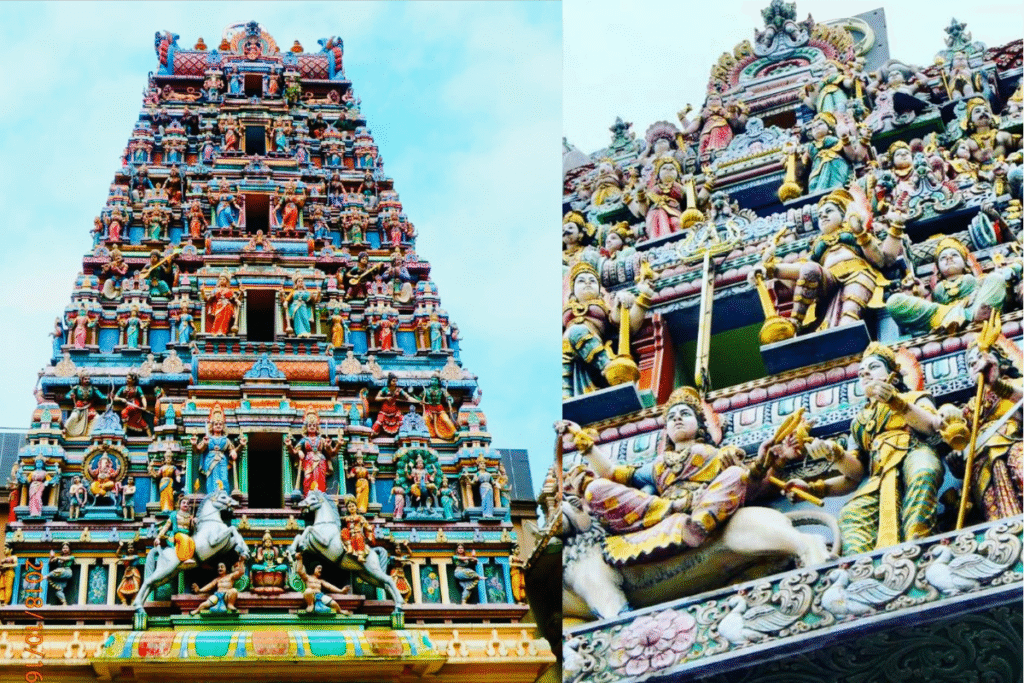
Sri Mahamariaman TempleOldest Hindu temple, ornate gate towerVisit during festivals for atmosphereFree
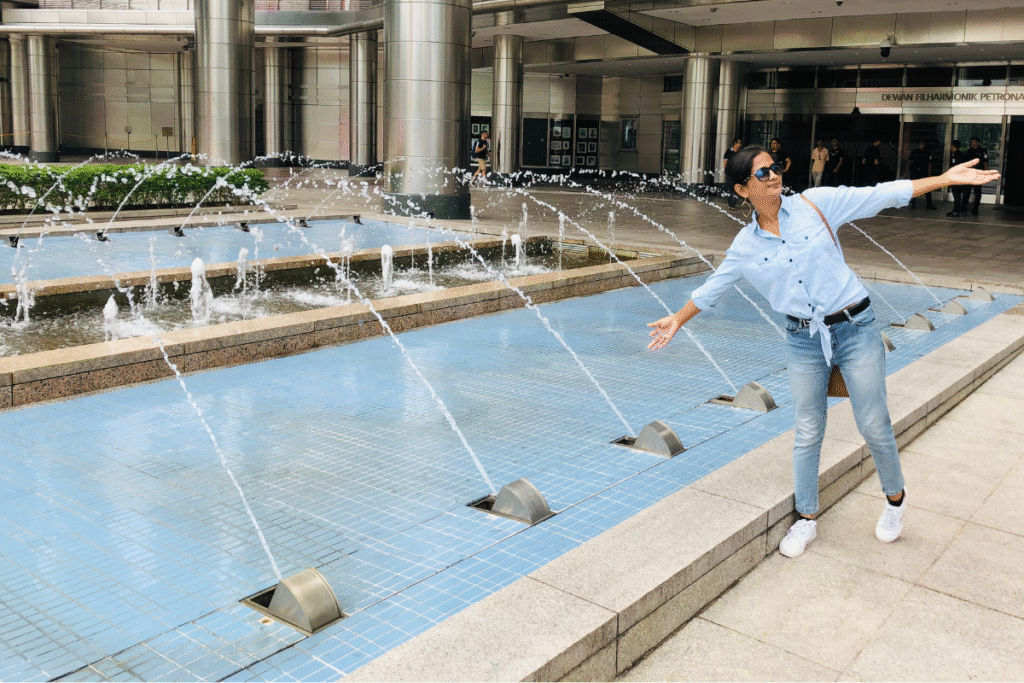
KLCC ParkFountains, jogging tracks, family-friendlyVisit at night for light showsFree
Jalan AlorStreet food, vibrant night sceneGo hungry, try multiple stallsvaries
KL Butterfly ParkThousands of butterflies, insect museum
25 MYR
Royal Selangor Visitor CentrePewter workshops, museum, gift shopJoin a workshop for hands-on experienceFree (workshops extra)

In-Depth Guide to Tourist Attractions in Kuala Lumpur

Kuala Lumpur’s mix of iconic skyscrapers, historical sites, cultural enclaves, and vibrant street life makes it a must-see destination in Southeast Asia. Below is a detailed overview of Kuala Lumpur’s major tourist attractions, including practical tips and explanations for each.

1. Petronas Twin Towers – The Icon of Kuala Lumpur

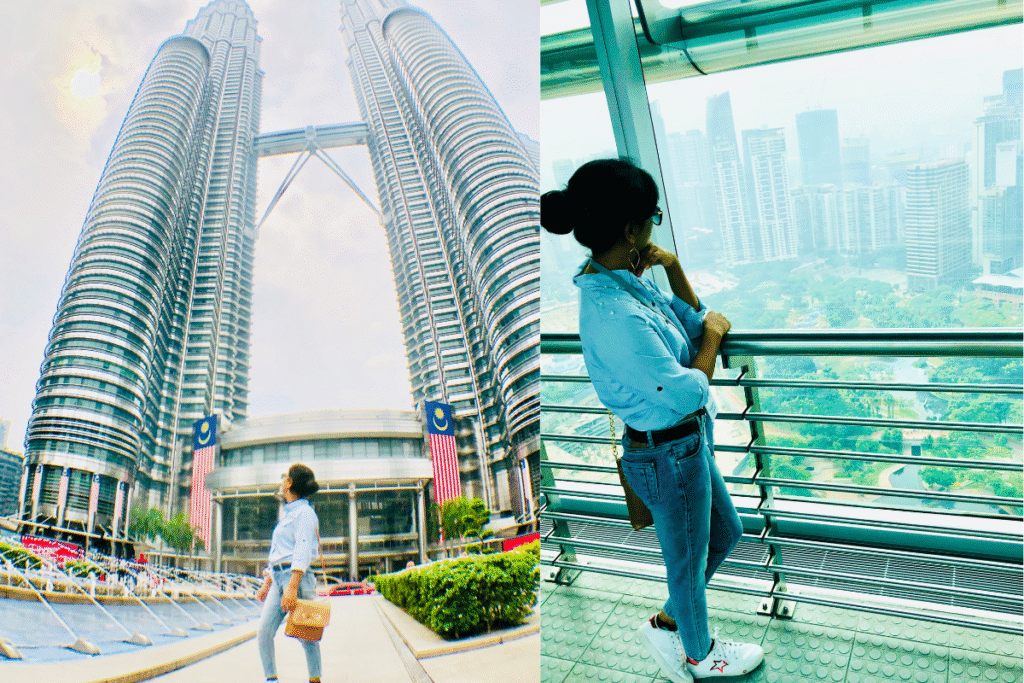
1. Architectural Marvel: The Petronas Twin Towers, once the tallest buildings in the world, are a landmark of Kuala Lumpur. Each tower stands 452 meters (1,483 feet) tall, and a double-decker skybridge connects them on the 41st and 42nd floors.

2. Skybridge & Observation Deck: Tickets for the Skybridge and the Observation Deck on the 86th floor are limited and often sell out, so book online in advance. It’s important to arrive at least 15 minutes early to avoid cancellations.

3. KLCC Park: The towers are located within the lush KLCC Park, a verdant oasis filled with fountains, sculptures, and a jogging track. The park is perfect for a leisurely stroll or a photo op against the backdrop of the towers.
4. Suria KLCC Mall: Located in the basement of the towers, this is Kuala Lumpur’s most prestigious shopping center. This upscale mall offers retail therapy, dining, and entertainment, making the Petronas Twin Towers complex an all-day experience.

2. Batu Caves – A Spiritual and Cultural Landmark

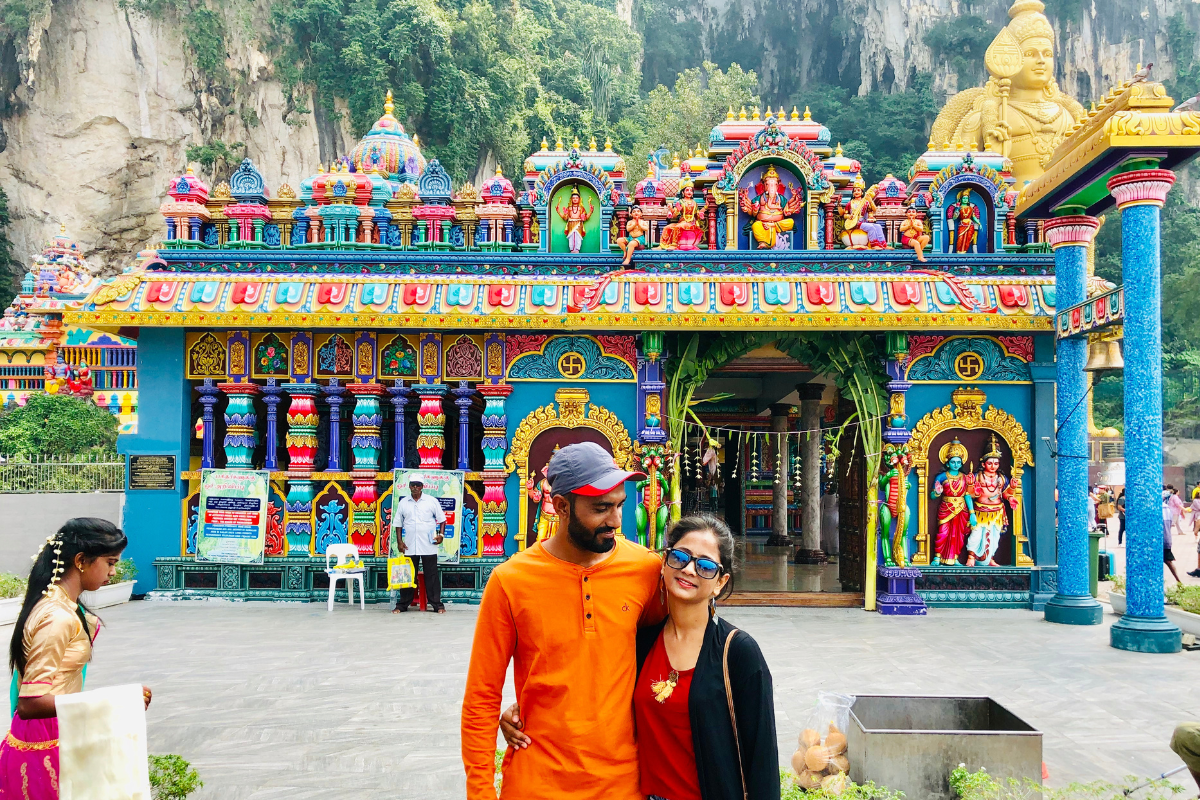
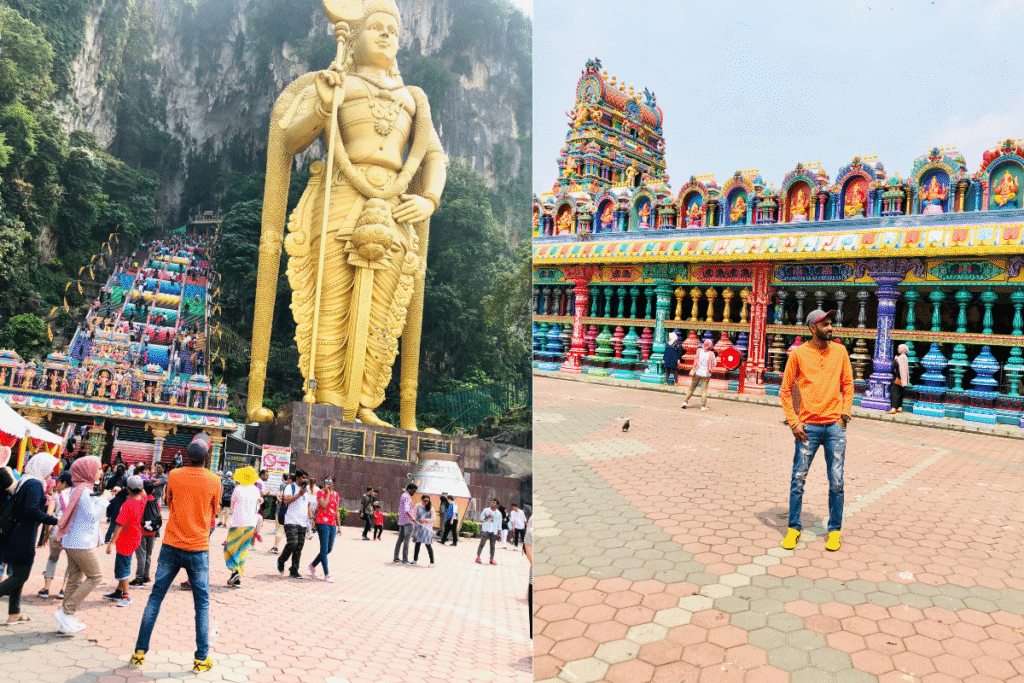
1. Spiritual & Natural Wonder: Spiritual & Natural Wonder: These limestone caves house Hindu temples and are one of Kuala Lumpur’s most distinctive sights. A massive golden statue of Lord Murugan marks the entrance.

2. Climbing the Steps: Visitors climb 272 colorful steps to reach the main Cathedral Cave, which features stunning stalactites and an ornate Hindu temple beneath a 100-meter-high ceiling.

3. Visitor Tips: Dress respectfully (shoulders and knees covered) and arrive early to avoid crowds and heat. Watch out for cheeky long-tailed macaques—keep food hidden and do not feed them.
4. Free Admission: Entry is free, and sarongs can be rented at the base if needed.

3. Sultan Abdul Samad Building & Merdeka Square

1. Historic Landmark: Built in 1897, this Moorish Revival building served as a major colonial administrative center and remains an architectural gem, featuring arches, domes, and a clock tower.

2. Merdeka Square: This adjacent square is where Malaysia declared independence in 1957. It is now the site of national events and a great spot for history buffs and photographers.

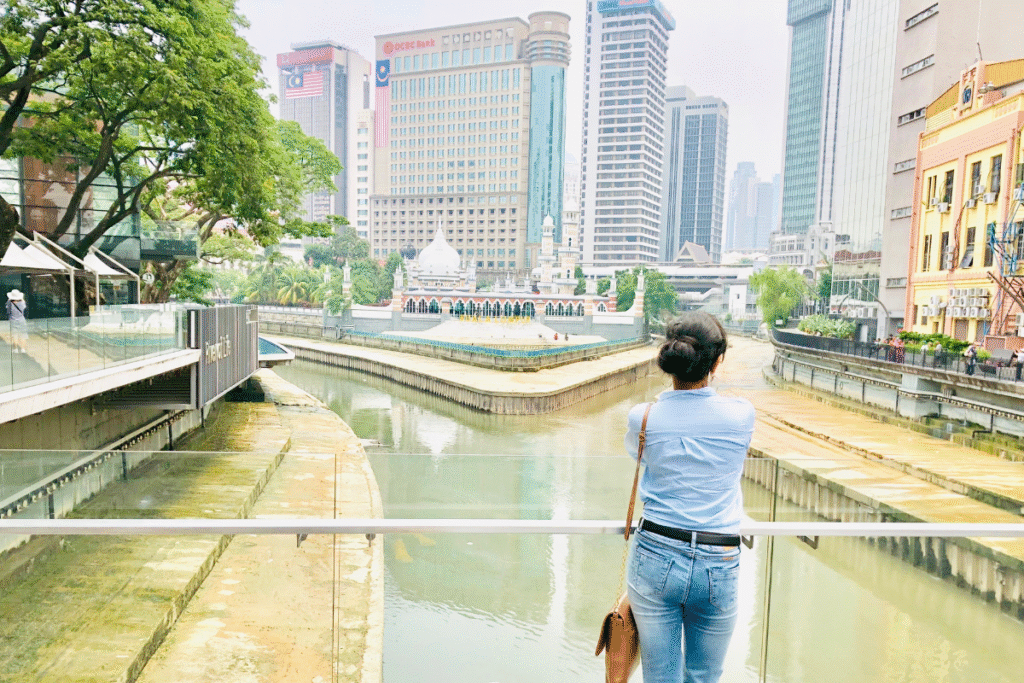
3. Photo Opportunities: Both the building and the square look impressive from the outside, but entry is restricted. The nearby riverside path, which leads to the historic Mosque Jamek, offers beautiful views. Together, this makes for a great photo opportunity.

4. Open 24/7:  The site is always accessible and free to visit

4. Thean Hou Temple – A Chinese Architectural Marvel

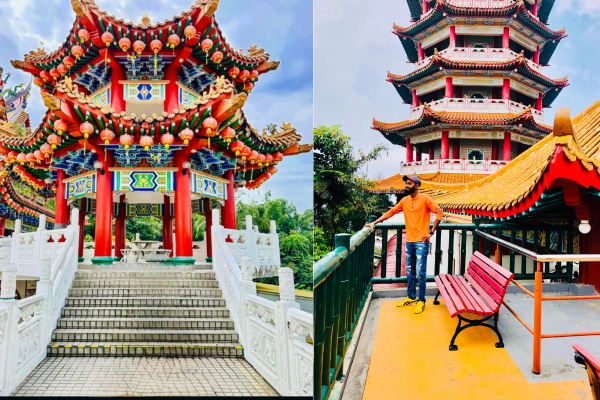
1. Majestic Temple Complex: One of Southeast Asia’s oldest and largest Buddhist temples, Thean Hou Temple is known for its six-tiered architecture and sweeping city views from its hilltop location.

2. Rich Heritage: Built in 1894, the temple honors the Goddess of Heaven and is a center of Chinese-Malaysian religious traditions.
3. Free Admission: Visitors can tour the ornate halls, sculptures, and gardens at no charge.

5. Sri Mahamariaman Temple

 1. Ornate Hindu Temple: Built in 1873, it is Malaysia’s oldest and most elaborately decorated Hindu temple, located on the edge of Chinatown.

2. Architectural Highlights: The entrance is adorned with images of Hindu deities, and the interior features vibrant sculptures and carvings.
3. Free Admission: Entry is free, and the site is an excellent place for anyone interested in religious architecture.

6. KLCC Park

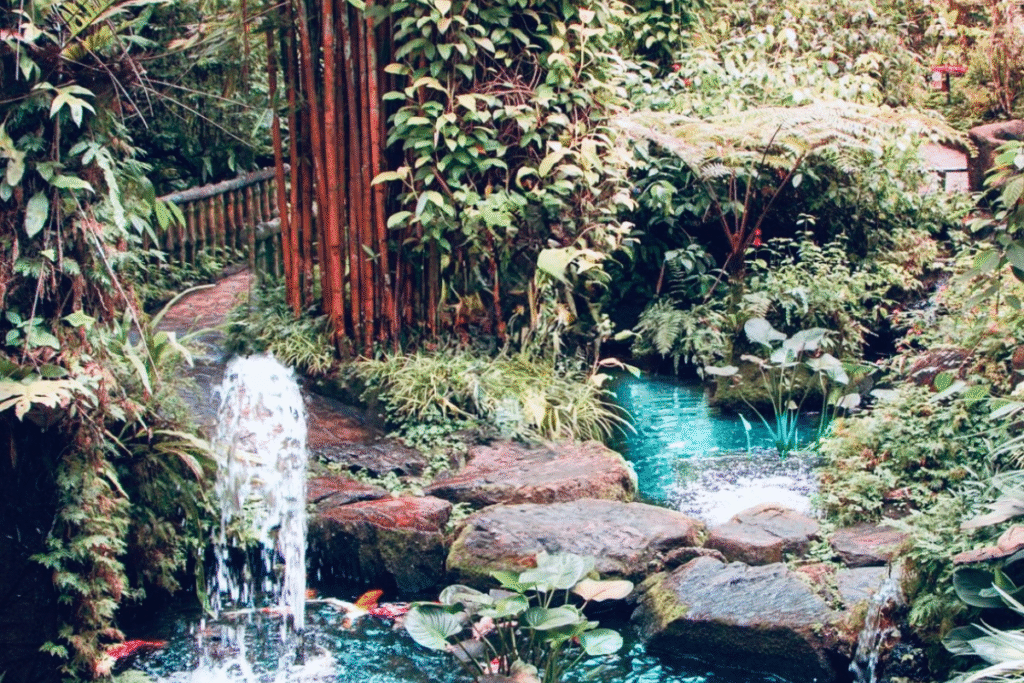
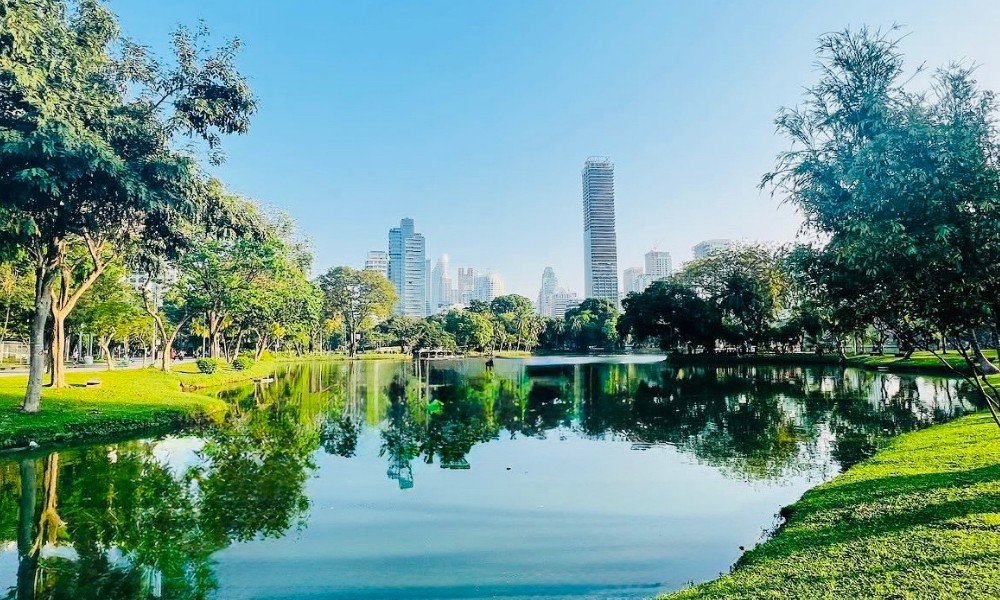
1. Urban Green Space: This park is a peaceful spot in the city center, located below the Petronas Towers, with walking paths, a water fountain, a playground, and even a shallow pool for children.

2. Activities: It’s Ideal for jogging, picnics, and enjoying skyline views.
3. Family-Friendly: This park is the best place for families and those who want a break from the hustle and bustle of the city.

7. River of Life & Masjid Jamek

1. Historic Confluence: It is where the Klang and Gombak rivers meet, the place where Kuala Lumpur’s name translates as “muddy confluence”.

2. Masjid Jamek: Built in 1909, this mosque is one of the city’s oldest and is renowned for its white domes and minarets. It’s a tranquil place for contemplation amidst the urban surroundings.
3. Night Illumination: The River of Life project has transformed the area into a beautiful, illuminated waterfront area, popular in the evenings.

8. Central Market & Kasturi Walk

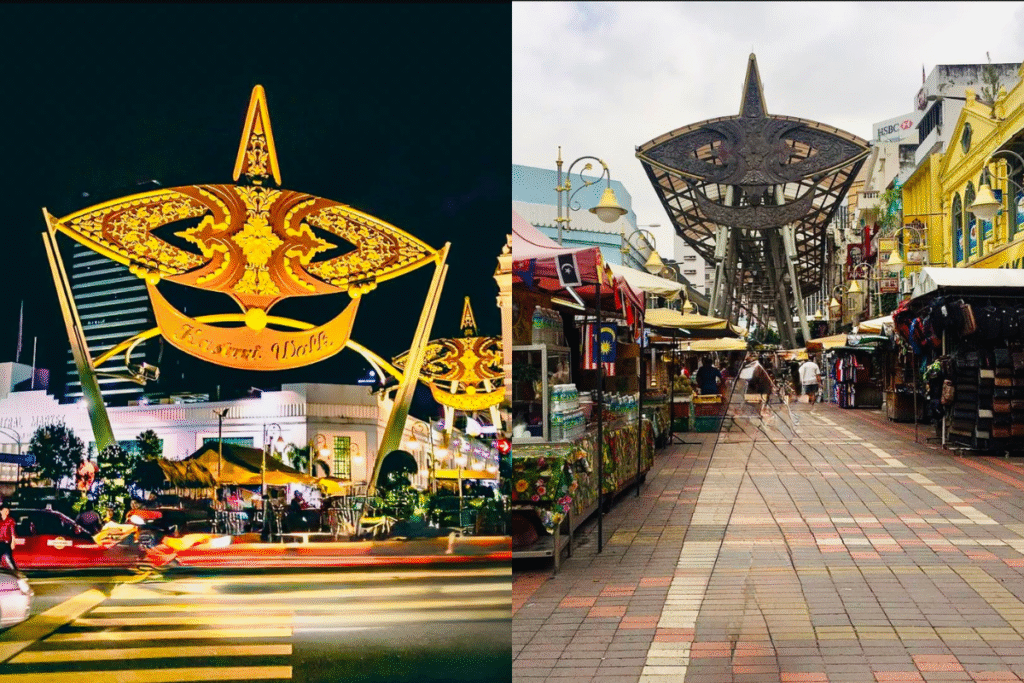
1. Cultural Shopping Hub: Originally established as a wet market in 1888, the Central Market is now a vibrant arts and crafts market selling batik, handmade jewellery, and souvenirs.

2. Food & Performances: Kasturi Walk outside the market also has food stalls and sometimes live performances, making it a lively place for shopping and snacks.
3. Souvenir Shopping: This is one of the best places to buy authentic Malaysian gifts in Kuala Lumpur.

9. Jalan Alor

1. Street Food Paradise: Jalan Alor, once a red-light district, is now the city’s main food street, with hawker stalls selling local favourites such as char kwe teow, satay and grilled seafood.

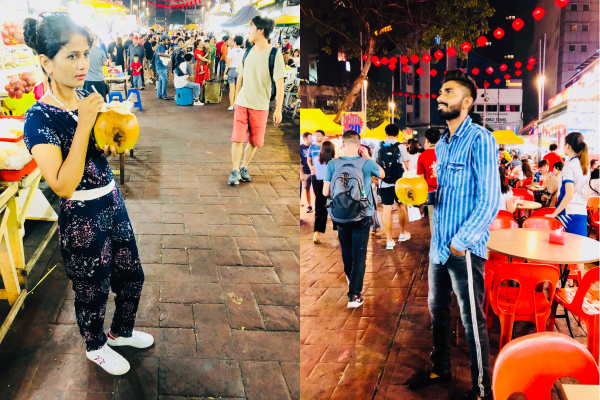
2. Nighttime Vibe: The street really comes alive after dark, with tables scattered across the pavement and a lively, cheerful atmosphere.
3. Must-Try Experience: Tasting the street food here is considered a must for any food-loving traveller.

10. KL Butterfly Park

1. Tropical Garden Oasis: Home to over 5,000 butterflies, this park recreates a rainforest environment, complete with waterfalls and foreign plants.

2. Interactive Experience: Visitors can stroll among butterflies and also visit the Insect Museum, which houses beetles, stick insects, and more.
3. Admission: Tickets are inexpensive (25 MYR), with a small additional charge for video cameras.

11. Royal Selangor Visitor Centre

1. Pewter Heritage: Malaysia is famous for its brass, and this center offers in-depth insight into this craft, including interactive exhibits, demonstrations, and the opportunity to make your own souvenir.

2. Workshop Tours: Visitors can watch artisans at work and learn about the history and production of brass in Malaysia.
3. Gift Shop: The center store offers a wide selection of high-quality brass items.

12. Other Notable Attractions

1. Aquaria KLCC: A world-class aquarium located beneath the Petronas Towers, it is a perfect place for families and marine life enthusiasts.

2. Bukit Bintang: This is the city’s entertainment and shopping district, full of malls, cafes, and nightlife venues. If you’re a shopaholic, this is the perfect tourist attraction in Kuala Lumpur for you.

3. Chinatown & Little India: It’s a vibrant ethnic area perfect for unique shopping and cultural experiences. It’s a great place to shop for souvenirs, sample street food and local cuisine, and experience the energy of the city.

Getting Around: Practical Tips

1. Public Transport: The LRT (Light Rail Transit), MRT (Mass Rapid Transit), and monorail make it easy to reach most of Kuala Lumpur’s major tourist attractions. The KL City Bus is a free bus service that covers many major tourist areas such as Bukit Bintang and Chinatown.

2. Guided Tours: To learn more about the city’s history and culture, you could consider taking a city walking tour or a half-day excursion.

3. Timing: To avoid the crowds and the midday heat, visit popular attractions like the Petronas Towers and Batu Caves early in the day.

4. Dress Code: When visiting religious sites, please wear modest clothing; sarongs are also available for rent here.

Conclusion

Kuala Lumpur offers a truly unique experience, a blend of modern skyscrapers, historical sites, lush parks, and bustling street markets that creates a fantastic and unparalleled travel experience. Whether you’re admiring the breathtaking views from the Petronas Twin Towers, exploring the spiritual depths of the Batu Caves, or savoring the delicious food at Jalan Alor, you’re sure to find something that captivates you in this dynamic Malaysian capital.

These tourist attractions in Kuala Lumpur offer a unique glimpse into the city’s history, culture, and daily life, making them must-see destinations for any visitor.

FAQs

Q. What is the number one tourist attraction in Kuala Lumpur? A.The Petronas Twin Towers are considered Kuala Lumpur’s top tourist attraction and a must-see for all visitors.

Q. Is Kuala Lumpur expensive for tourists? A.No, Kuala Lumpur is quite affordable compared to other Asian capitals. You can find many budget-friendly hotels and restaurants near major tourist attractions in Kuala Lumpur.

Q. What is the best way to travel around Kuala Lumpur? A. The best way to get around tourist attractions in Kuala Lumpur is by using the KL Monorail, MRT, or the Grab ride-hailing app.

Also check top things to do in Kuala Lumpur.

Top 25 Tourist Places In Bali For Every Traveler In 2026

Top 25 tourist places in Bali that will leave you spellbound. In this blog, we will discuss them. Bali, often referred to as the “Island of God,” is one of the most popular tourist destinations in the world. Known for its stunning natural scenery, vibrant culture, and welcoming locals, it offers a unique experience for every type of traveler. Whether you are a couple looking for thrilling activities, a couple in search of romantic moments, a family seeking a fun-filled vacation, or a solo traveler looking for peace and self-discovery, Bali has many tourist places for everyone.

1. Best Tourist Places In Bali For Nature Lovers

If you love nature, Bali is a paradise filled with breathtaking landscapes, lush greenery, and stunning waterfalls.

1. Tegallalang Rice Terraces

One of Bali’s most famous landscapes, these rice terraces showcase the island’s traditional farming techniques and offer breathtaking views, especially at sunrise.

If you are visiting Bali, you must visit this place! Experience the beautiful rice paddies and views, which make people fall in love with this place. 

Many people also appreciate visiting this place because of its magical beauty. So, why not add it to your itinerary before visiting the tropical paradise.

2. Mount Batur

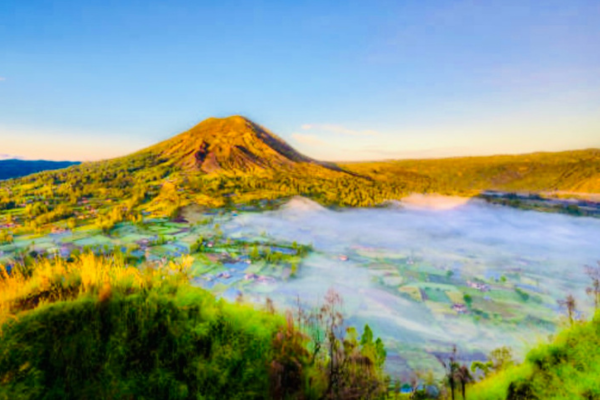
A must-visit for adventure lovers, this active volcano offers an unforgettable sunrise trek, where visitors are rewarded with panoramic views of Bali.

You can go on a trip from Serongga to this mystical beauty of nature in Bali, popularly known as Mount Batur! You must not miss the serene beauty, and the peaceful chirping of the birds, to the visual delight to the eyes with natural wonders, where you would be amazed to witness such beauty, making it one of the best places to visit in Bali. 

Hiking up the trail can be difficult due to the rocky terrain. So, if you enjoy adventure, only visit this place for some real fun in this tropical paradise.

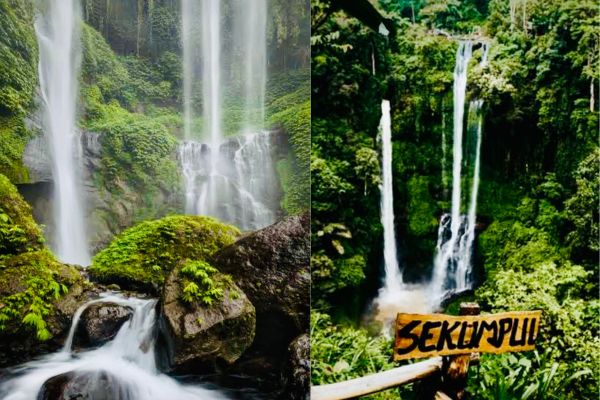
3. Sekumpul waterfalls

Known as the most beautiful waterfall in Bali, this hidden gem features multiple cascading waterfalls surrounded by lush jungle. It is a perfect spot for nature photography and exploration.

Sekumpul Waterfall is one of the top 25 tourist places in Bali for first-timers, nature lovers, and adventure seekers. It’s located in the northern part of Bali. This famous Bali place offers visitors a peaceful ambiance and breathtaking views of Bali’s natural beauty.

To reach the waterfall, tourists have to cross rivers and waterfalls through lush green forests, which is a thrilling experience. Upon reaching the waterfall, tourists can enjoy the stunning view of Bali’s many waterfalls. The water of this waterfall falls into a deep pool below.

4.Tukad Cepung Waterfall

Located in Tembuku, Bangli Regency, Tukad Sepung Waterfall is known for its breathtaking view. After a 15-minute steep climb, one has to wade through waist-deep water and gravel to reach the site. The effort is worth it though; the sunlight falling from the majestic waterfall reflects in the canopy above and gives it a magical feel.

It is surrounded by high valleys on all sides, and the experience of being here is exactly like watching an indoor plunge! It sounds amazing! But, when you visit this place, you will be stunned by its beauty! At times, sunlight penetrates through the rocks and illuminates the waterfall and the pool below, making the place look magical.That’s why it is one of the top tourist places in Bali.

2. Top Cultural & Historical Tourist Places In Bali

Bali is deeply rooted in spirituality and tradition, making it a great place for travelers interested in history and culture.

5. Uluwatu Temple

Perched on a cliff overlooking the ocean, this ancient Hindu temple offers breathtaking views, making it one of the top tourist attractions in Bali.

Also, it is famous for its Kecak fire dance performances at sunset.

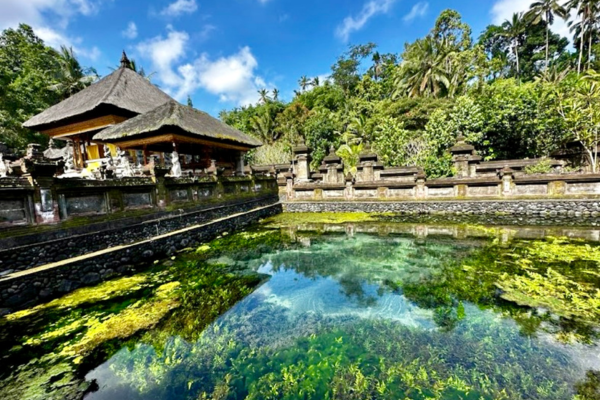
6. Tirta Empul Temple

It is a sacred water temple famous for its holy spring water. Locals and tourists participate in traditional purification rituals, and the temple’s natural springs are believed to have healing properties.

Empul Temple is worth visiting during your holidays in Bali due to its spiritual significance, cultural heritage, and unique melukat purification ritual. This is also one of the best places to visit in Bali.

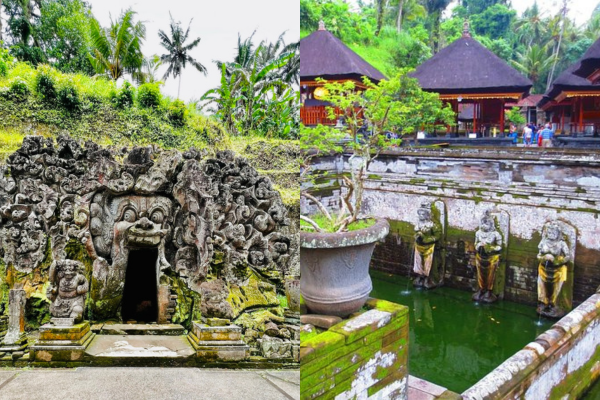
7. Goa Gajah ( Elephant Cave)

Goa Gajah, also known as the Elephant Cave, is a unique and historical site located in the Bedulu village of Bali. You would not want to miss this unique one from the list of top tourist places in Bali.

The cave features beautiful and intricate carvings of various mythological creatures, including elephants, demons, and gods. The carvings are believed to date back to the 11th century, and the cave itself was likely used for meditation and spiritual purposes.

Goa Gajah is a must-visit tourist attraction in Bali. The intricate carvings and serene ambiance make it a popular spot for tourists and locals.

8. Besakih Temple

Besakih Temple, known as Bali’s “Mother Temple,” is Indonesia’s largest and most holy temple complex. Nestled on the slopes of Mount Agung, this ancient site is more than 1,000 years old and consists of 23 separate temples.

Visitors are mesmerized by its stunning architecture, tranquil atmosphere, and breathtaking views of the surrounding landscape.

Besakih Temple is a spiritual center for Balinese Hindus and is a must-visit for anyone exploring Bali’s rich cultural heritage.

3. Must-Visit Beaches In Bali For Relaxation & Water Sports

Bali is famous for its stunning beaches, each offering a different experience, from surfing to luxury relaxation.

Some Bali beaches rank among the top 25 tourist places in Bali.

9. Kuta Beach

One of Bali’s most popular beaches, known for its incredible surf waves, vibrant nightlife, and endless entertainment options.

Kuta Bali offers various activities and experiences with its golden sands, crystal-clear waters, and lively atmosphere. A trip to Bali is incomplete without Kuta Beach.

Kuta Bali is known for its bustling beach, where you can enjoy water sports such as surfing, swimming, and boogie boarding.

Apart from the beach, Bali offers a wide range of entertainment and shopping options. The lively streets are home to an eclectic mix of shops, boutiques and markets, where you can find everything from local crafts and souvenirs to international brands. The area also has a vibrant nightlife scene, with a wide range of bars, clubs and restaurants that cater to diverse tastes and preferences. Bali swings are another popular activity to do in Bali.

10. Nusa Dua Beach

A luxurious seaside destination with clear waters, calm waves, and high-end resorts, perfect for those seeking relaxation.

Nusa Dua is a famous resort in Bali, known for some of the most luxurious accommodation options on the island. There are a variety of high-end resorts, as well as boutique and independent hotels, with many of these places offering on-site dining, amenities, and activities.

11. Blue Point Beach

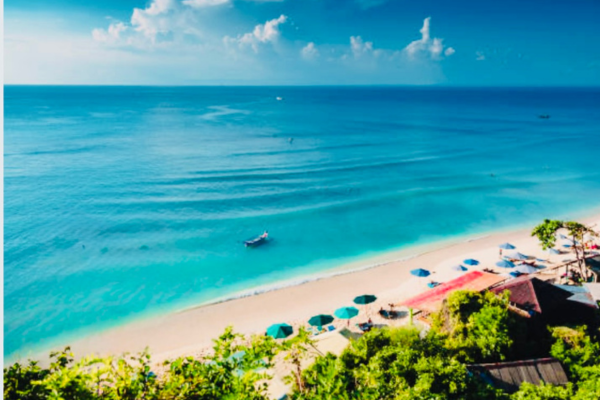
Blue Point Beach is a picturesque spot to soak up the sun and enjoy Bali’s exquisite scenery. Located in the village of Pecatu, it is one of the top tourist places in Bali.

The beach is known for its crystal-clear blue waters and towering cliffs, which offer stunning panoramic views of the surrounding area. Visitors can spend the day relaxing on the sandy beach, taking a dip in the refreshing waters, or even surfing the waves for a thrilling experience.

Blue Point Beach is also home to several restaurants and bars, making it a great spot to enjoy a meal or drink while taking in the breathtaking scenery. It’s one of the top tourist places in Bali for those looking for a peaceful and scenic getaway.

12. Lovina Black Sand Beach

Lovina Beach is also one of the top 25 tourist places in Bali. Located on the northwest coast, it is a picturesque black sand beach. It offers a peaceful escape from the hustle and bustle of the island’s more popular tourist destinations.

The beach is surrounded by lush hills and fishing villages, providing a tranquil atmosphere that is perfect for relaxation. It is one of the best places to visit in Bali for first -time visitors.

Lovina is known for its calm waters, making it an excellent spot for swimming, snorkeling, and other water activities. The black sand beach is also a perfect spot for sunbathing and enjoying stunning views of the Bali Sea.

4. Adventure & Thrill-Seeker Tourist Spots In Bali

For those looking for an adrenaline rush, Bali offers plenty of adventure-packed destinations.

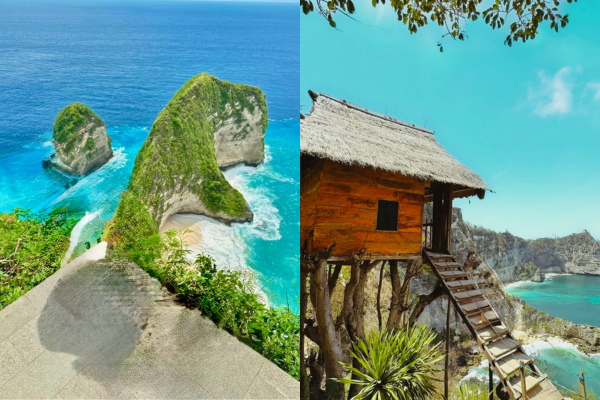
13. Nusa Penida

A rugged island known for its dramatic cliffs, hidden beaches, and fantastic snorkeling spots, including the famous Kelingking Beach.

It’s time to see the unspoiled nature like never before! Yes, we are talking about Nusa Penida, which is a perfect destination to visit. It is an exquisitely beautiful island that has been separated from Bali by Badung Strait and is one of the top 25 tourist places in Bali for first-timers.

Also, the high cliffs, beautifully covered by green foliage and serene waters are magical. Do visit the place and try to book your accommodation here for some uninterrupted beautiful time.

14. Ayung River

The Ayung River is the longest river in Bali. The best place in Bali for white water rafting offers thrilling rapids surrounded by lush jungle scenery.

 What makes it special is that this longest river offers a thrilling water adventure with great sightseeing. The Ayung River rafting valley lies on the northwest of central Ubud and the river runs down approximately 75 km from the northern mountain area to the Badung Strait at Sanur. 

 Usually, as a group you ride a rubber raft led by a guide and paddle through the foam and dodge boulders and obstacles in between calmer checkpoints.

15. Bali Swing

A popular attraction where visitors can swing over the jungle with breathtaking views, perfect for adventure lovers and Instagram picture enthusiasts.

You must visit this place to taste the thrill of adventure, beautiful views, photos, and much more. It is one of the most visited tourist places in Bali. Make sure you take some great photographs with the most magical backdrop in Bali.

You would have a nail-biting experience while the swing goes on, but it would be a perfect frame that is worth capturing and making the best out of your vacation.

5. Best Tourist Places In Bali For Families

Bali is also a great destination for families, with plenty of fun activities suitable for children and adults alike.

16. Bali Safari & Marine Park

A fantastic wildlife park where families can see foreign animals up close, including tigers, elephants, and orangutans.

The park offers safari rides, where you can get up close to lions, zebras, and elephants from the safety of a special vehicle. One of the best places to visit in Bali is the Bali safari as there are entertaining animal shows and opportunities to learn about conservation efforts. It’s a great adventure for families and animal lovers, making it one of the top 25 tourist places in Bali.

17. Bali Bird Park

This park, home to hundreds of bird species from around the world, offers interactive experiences for kids and nature lovers.

Bali Bird Park is one of the top 25 tourist places in Bali. Located in the heart of Bali, this park is like a big, beautiful garden filled with amazing birds flying freely. You can watch them up close, take lots of photos, and even have the chance to feed some of them. It’s a fun and educational experience for families and bird lovers, making it a perfect spot to visit on your Bali adventure.

18. Waterbomb Bali

It is one of the best waterparks in Asia, featuring thrilling slides, lazy rivers, and kid-friendly attractions, making it perfect for a family day out.

Another place on our list of best places to visit in Bali is the Waterbom Waterpark, one the most adventurous places to explore with friends or family Yes, it is one of those amazing attractions in Bali that features a huge collection of rides that are suitable for all types of people.

Enjoy the lively atmosphere of the street along the big rides, while screaming and having fun at the. You can also visit the tropical gardens and a myriad of dining options to offer.

19. Ubud Monkey Forest

If you are looking for a unique experience in Bali, then Ubud Monkey Forest should be first on your list of top tourist places in Bali. This popular tourist attraction in Bali is the natural habitat of over 700 long-tailed monkeys and offers visitors an opportunity to spend a day amid wildlife.

Also, this spectacular place is one of the top 25 tourist places in Bali, Indonesia that you can include in your itinerary. While exploring the forest, visitors can also enjoy the natural beauty of the area, which includes many tall tees and lush green foliage. The forest is a peaceful place and spending a day here is a great way to escape the hustle and bustle of Bali tourist attractions. Ubud Monkey Forest is one of the famous sightseeing places in Bali.

6. Hidden & Off-The-Beaten-Path Tourist Places In Bali

If you’re looking to escape the crowds and explore lesser-known destinations, Bali has plenty of hidden gems.

20. Sidemen Valley

A peaceful and scenic valley with lush rice fields, perfect for those who want a quiet retreat away from touristy areas.

The Sidemen Valley is one of the top 25 tourist places in Bali for couples and for those looking to explore the island’s rice fields. Located in the eastern part of Bali, the valley is a picturesque destination with stunning views of Mount Agung and lush green rice paddies.

Visitors can take a stroll through the rice fields, explore local villages, and even participate in traditional Balinese activities like weaving and farming. The Sidemen Valley is one of the best tourist places in Bali for anyone looking for an authentic and peaceful experience away from the crowds.

21. Amed Beach

A remote black sand beach is known for its fantastic diving and snorkeling spots, featuring vibrant coral reefs and marine life.

Many beaches in Amed have black volcanic sand near Mount Agung, the largest volcano. with its black sand beaches, world-class diving spots, and stunning views of Mount Agung, Aned is quickly becoming a must-visit destination for 2025.

22. Penglipuran Village

A beautifully preserved traditional Balinese village that offers visitors a glimpse of the island’s authentic lifestyle.

Penglipuran Village is a traditional Balinese village located in Kubu Subdistrict, Bangli Regency in Bali, Indonesia. It is recognized for maintaining traditional architecture, customs, and lifestyle. And has been declared the cleanest village in the world.

7. Best Spots For Sunset & Photography Lovers

Bali is known for its spectacular sunsets. There are plenty of places where you can capture the perfect golden time shot.

23. Tanah Lot Temple

One of the most famous places to watch the sunset in Bali. this sea temple is built on a cliff surrounded by crashing waves, making it a picturesque sight. This Balinese temple is a must-see place in Bali.

it is one of the best tourist places in Bali for couples and is considered a popular tourist attraction.

Visitors can take a stroll around the temple and explore the intricate carvings and architecture. The temple is also a popular spot to watch the sunset over the Indian Ocean.

Tanah Lot is a famous place in Bali that should not be missed on any trip to Bali. with its unique location and historical significance, it is one of the best places to visit in Bali, Indonesia.

24. Campuhan Ridge Walk

A scenic walk through lush greenery and rolling hills, offering stunning views, especially sunrise and sunset.

Campuhan Ridge Walk is one of the top tourist places in Bali for couples and those looking for a serene escape from the hustle and bustle of the tourist places in Bali. Located in the central highlands of Ubud, this famous Bali place offers visitors breathtaking views of Bali’s lush green hills and rice fields, It is one of the best places to visit in Bali for first-timers as well.

Compuhan Ridge Walk is a must-visit destination for those seeking a tranquil escape and a chance to experience Bali’s natural beauty. Whether you’re a nature lover, a photography enthusiast, or simply looking for a peaceful walk, the Campuhan Rigde Walk is worth a visit.

25. Handara Gate

One of the most famous photo spots in Bali, which features a majestic Bali Gate with a mountain backdrop, making it a must-visit place for photographers.

It offers a perfect blend of natural beauty and cultural charm. Located in the backdrop of Bali’s Northern Highlands, this massive stone gate surrounded by lush greenery and misty mountains is a spectacular sight to behold.

Conclusion

Bali is a diverse destination that caters to every kind of traveler, from adventure lovers and cultural enthusiasts to beachgoers and families. with its breathtaking, rich traditions, exciting activities, and stunning photo spots, Bali promises an unforgettable experience.

To make the most of your trip :

  • Visit different regions of Bali to experience its diversity.
  • Plan your itinerary based on your interests, whether it’s adventure, culture, or relaxation.
  • Travel during the best seasons to enjoy pleasant weather and fewer crowds.

No matter what kind of traveler you are, Bali is sure to leave you with lifelong memories!

How To Visit Khao Sok National Park In Thailand

I’m just going to say it – Khao Sok completely surprised me.

Before I went to Thailand, I did what we all do now. Scrolled through endless photos on Instagram, saved a bunch of posts, and thought I had a pretty good idea of what to expect. You know how it goes. A pretty lake. Some limestone cliffs. Maybe spot a monkey if you’re lucky.

But then I stepped off that longtail boat onto Cheow Lan Lake, and honestly? Nothing prepared me for the real thing.

The scale of it stopped me mid-step. The silence was so complete I could hear water dripping off the oars. Those limestone mountains just appeared through the morning mist like they’d been waiting there forever. And later that day, watching a wild elephant and her baby feeding right at the water’s edge, completely ignoring our boat floating thirty meters away… that’s the kind of moment you can’t plan. It just happens.

That’s the thing about Khao Sok. It’s not trying to impress anyone with fancy resorts or Instagram spots. It’s just there – one of the oldest rainforests on the planet – doing its thing. Animals living their lives. Cliffs standing where they’ve stood for millions of years. And somehow, even with visitors coming through, it still feels genuinely wild.

I spent three days here and honestly could’ve stayed longer. Here’s everything I learned, including the stuff I wish someone had told me before I arrived.


First Thing – How Long Should You Actually Stay?

This matters more than you’d think. Khao Sok isn’t a place you can properly experience in a few rushed hours.

Day trips from Phuket or Krabi exist. You can book them easily. But please, think twice about this. You’ll spend six or seven hours on a minivan, get maybe two hours at the lake, and head back wondering what everyone was talking about. I met a French girl at my hotel who’d done exactly that. She looked genuinely disappointed. It’s not fair to Khao Sok.

Package tours lasting 2 to 4 days are popular and honestly pretty convenient. They sort everything out – transport, food, accommodation, guides. If you’re short on time or just want someone else to handle the logistics, this works fine. No shame in that.

But here’s what I did and what I’d recommend: stay in Khlong Sok village (that’s the little town right at the park entrance) for at least three days and figure it out as you go. You’ll save money, you’re not tied to someone else’s schedule, and the village itself is genuinely pleasant. Little family-run restaurants everywhere, friendly locals, that relaxed backpacker energy where you can just wander and see what happens.


When To Visit (Weather Stuff That Actually Matters)

Thailand weather discussions can get complicated fast. Let me simplify based on actually being there.

December through April is the sweet spot. The lake is that unreal turquoise color you see in photos. The sky actually looks like sky. Trekking won’t leave you completely drenched in sweat or sudden rain. This is peak season, so book ahead, but the weather is worth it.

May through October is the wet season. Yes, it rains. Sometimes for hours. But here’s the thing nobody mentions – the rainforest is called that for a reason. Everything becomes impossibly lush. The waterfalls actually have water in them. And there’s this dramatic cloud thing happening over the mountains that photographers would kill for. Way fewer tourists too. I went in September. Got rained on a few times. Didn’t care at all.


Getting To Khao Sok (Easier Than It Sounds)

Khlong Sok village is your home base. Remember that name.

From Phuket: About 3 to 4 hours by shared minivan. We actually took a private taxi from the airport because we had big suitcases and wanted to stop at Khao Lak on the way. Cost more but zero stress. Sometimes that’s worth it.

From Krabi / Ao Nang: Same deal – 3 to 4 hours in a shared minivan. Lots of departures daily, usually from the main tourist streets.

From Khao Lak: This is the closest big town – just over an hour away. Lots of tours start from here if you’re going the package route.

From Surat Thani: If you’re coming from Bangkok by train (which I’ve done before and actually enjoyed), you’ll end up here. Then another two hours to the park.

From Bangkok: Honestly? Fly to Surat Thani. Air Asia and Bangkok Airways have cheap flights, saves you a whole day of sitting on a bus.

Once you’re in Khlong Sok: You can walk to the park entrance from most hotels. For the lake itself, you’ll need to drive about an hour to the marina. Your hotel can arrange this or you can rent a motorbike like we did. Riding through that countryside with the limestone cliffs in the distance… that’s a good memory.


Entrance Fees (Bring Cash)

They don’t take cards for this. Learned that the hard way and had to find an ATM.

Cheow Lan Lake area: 300 baht per adult (around $9)
Jungle / headquarters area: 200 baht per adult (around $6)
Kids pay half price.

Here’s something useful – your ticket works for multiple days in the same zone. So if you pay for the jungle today, you’re still covered tomorrow morning. Hang onto that little paper stub.


What To Actually Do There

Cheow Lan Lake Is The Main Event

So here’s something interesting – the lake isn’t actually natural. They dammed a river back in the ’80s and flooded the whole valley. Which means those limestone cliffs you see everywhere? They used to be surrounded by jungle. Now they rise straight out of this weird turquoise water like something from a fantasy movie.

You explore by longtail boat. Our driver took us to the famous three peaks (Khao Sam Kler) that are in every brochure. Worth the photos honestly. Then we crawled through a cave – and I mean crawled. Water up to our knees in places, flashlights absolutely necessary, stalactites hanging low enough to bump your head if you weren’t paying attention.

But honestly the best part was just… drifting. Slow cruising along the edges, watching the treeline. We spotted two hornbills – these massive birds with ridiculous beaks that look prehistoric. And then, completely out of nowhere, an elephant appeared with her baby. Just standing there eating leaves like we didn’t exist, thirty meters away, completely unbothered.

I still don’t have proper words for that moment. Neither do the photos I took.

Stay On The Lake Overnight

Please do this. I’m completely serious.

There are floating bungalows scattered around Cheow Lan. Some are proper resorts with restaurants and proper beds. Some are more basic. We stayed at Keeree Tara Rafthouse – a bit worn down honestly, but it had a mattress, a fan that worked a few hours at night (solar powered), a flush toilet, and a view I still think about randomly while doing dishes at home.

Waking up there? Mist everywhere. Absolute silence except birds calling across the water. Coffee on the little deck watching the sun slowly hit the cliffs. No phone reception. Nothing to do but just… be there.

Electricity is limited to evenings so bring a power bank. Phone signal? Forget about it completely. That ended up being one of the best parts – just disconnected for 24 hours.

Jungle Trekking

First afternoon in Khlong Sok we went trekking. Wide dirt path, jungle on both sides, wildlife everywhere if you know where to look.

For longer treks (past 3km) you need a guide. At first I thought this was just a money grab. But honestly? Our guide spotted things we would’ve walked right past without a second glance. A pit viper curled on a branch, perfectly camouflaged. Tarantulas in holes along the path. Dusky leaf monkeys with their bright orange babies that looked like tiny stuffed animals moving through the trees.

Night trekking is a whole different experience. Jungle after dark is LOUD. Insects, frogs, weird bird calls you don’t hear during the day. You go in with flashlights and everything feels different. Creepy and exciting at the same time. Our guide shone his light on a sleeping bird once – just sat there on a branch, completely undisturbed by all of us standing below.

The Elephant Sanctuary

Look, I know seeing elephants in the wild is the dream. We got incredibly lucky with that lake sighting. But not everyone will.

The sanctuary near Khlong Sok lets you feed them, watch them bathe, just hang out nearby. Choose somewhere that doesn’t allow riding. The good ones are obvious – the elephants roam freely with space, there’s no hooks or chains visible, the mahouts actually seem to love them rather than just using them for money.


What We Actually Did (4 Day Itinerary)

Day 1: Arrived from Phuket by taxi around midday. Dropped bags at Khao-Sok Bed and Breakfast – lovely owners, super helpful with everything. Afternoon jungle trek near park headquarters. Dinner at a random village restaurant – so many options, all good, mostly family-run places with plastic chairs and incredible food.

Day 2: Morning drive to Ratchaprapha Marina. Longtail boat to Cheow Lan Lake. Checked into floating bungalow (left our big bags at the village hotel – they held them for free). Afternoon boat tour – three peaks, cave exploration, wildlife spotting. Dinner on the lake. Bed early because sunrise waits for no one.

Day 3: Up before dawn. Mist on the water. Sunlight slowly hitting the cliffs. Absolute peace. Early morning boat safari (saw hornbills again!), breakfast at the bungalow, then boat back to mainland. Afternoon just wandering Khlong Sok, doing nothing in particular. Evening night safari.

Day 4: Elephant sanctuary in the morning. Then sadly packed up and caught a minivan back to Phuket.


Small Tips That Make A Big Difference

Waterproof bag. Boat rides mean splash. Phone pouches are cheap insurance.

Flashlight. For caves. For night walks. For finding the bathroom in your bungalow at 3am. Your phone light won’t cut it.

Leave big luggage at your village hotel. They’ll hold it while you’re on the lake. Just take an overnight bag.

Cash. So many places don’t take cards. There are ATMs in the village but why risk the fees and middle-of-the-night panic?

Mosquito repellent. The jungle has them. They will find you. Don’t skip this.

Don’t fly drones in the park. Strictly forbidden. They have rangers watching. Just don’t.

Power bank. Electricity on the lake is limited to certain hours. You’ll thank me when your phone dies and you still want sunrise photos.


Restaurants In Khlong Sok

Worth mentioning separately because the food genuinely surprised me. So many little places, mostly family-run, mostly delicious in that unpretentious way.

We ate at this one spot three times – no English sign, just plastic tables and a grandma cooking in the back. Best pad thai I had in all of Thailand actually. Point at what looks good, smile a lot, it works out fine.


So… Is Khao Sok Worth It?

Khao Sok costs more than most of Thailand. The park fees add up. Lake tours aren’t cheap. Those floating bungalows cost more than a similar room on land.

But here’s my honest take after three days there:

I loved the Phi Phi islands. Beautiful, genuinely. But Maya Bay these days? Boats everywhere, people everywhere, feels like a shopping mall on water. Khao Sok never felt crowded. The park is huge, spread out, you find your own corners easily. The animals are actually THERE, living their lives. Waking up on the lake felt like a privilege, not a tourist transaction.

That elephant moment alone was worth the entire trip. Everything else was just bonus.

So yeah. Go. Stay longer than you think you need. Get a little lost. Talk to the grandma running the restaurant. Sit on that bungalow deck and just watch the light change.


Been to Khao Sok? Planning a trip? Drop your questions below – I read every comment and I’m happy to help figure things out!

Chao Phraya River Cruise Bangkok: Tickets, Dinner Options & Travel Tips

A cruise experience on the Chao Phraya River in Bangkok truly encapsulates the magic of this city. From the deck of the cruise, you can delight in magnificent panoramic views—with gleaming temples, modern skyscrapers, and cultural landmarks lining both banks. And all of this unfolds along the banks of the river, often hailed as the city’s lifeline. This cruise offers a unique perspective that simply cannot be obtained from ground level.

Whether you are planning a romantic evening, a family outing, or an exciting solo adventure, a Chao Phraya River cruise promises a memorable journey for everyone. In this comprehensive guide, we will cover everything from ticket prices and dining options to essential travel tips, ensuring you can choose the perfect experience tailored to your preferences.

Check for- Tourist Attractions in Bangkok, Thailand You Must See

Why Choose a Chao Phraya River Cruise in Bangkok?

Bangkok is a city of contrasts, and a cruise ride along the Chao Phraya River showcases this beautifully. As you glide along the river, you will observe ancient temples standing right alongside modern malls and luxurious hotels. Most cruises pass by famous landmarks such as Wat Arun (the Temple of Dawn), the Grand Palace, Rama VIII Bridge, and ICONSIAM.

At night, when dazzling lights illuminate these sites, they appear even more magical; for this very reason, a cruise on the Chao Phraya River is an experience that travelers visiting Bangkok should not miss.

Beyond just sightseeing, luxurious dinner cruises also offer the pleasure of exquisite cuisine, live music, and traditional Thai performances—making them one of the most popular activities in Bangkok.

Also Check- Grand Palace in Bangkok: History, Tickets, & Travel Tips

Types of Chao Phraya River Cruise

The Chao Phraya River Cruise dinner experience is the highlight for most tourists.

  • Duration: 2–3 hours
  • Time: Usually 7:00 PM – 10:00 PM
  • Includes: Buffet dinner, live music, cultural shows

These cruises offer a luxurious experience with both Thai and international cuisine, along with entertainment onboard

2. Luxury Fine Dining Cruises

If you want something more intimate, luxury cruises are the best option.

  • Smaller boats or antique rice barges
  • Set menu instead of buffet
  • Romantic and quiet atmosphere

These premium Chao Phraya River Cruise Bangkok experiences focus on fine dining and exclusivity.

3. Sunset Cruises

Perfect for sunset enthusiasts and photography buffs, sunset cruises offer you the opportunity to enjoy Bangkok during the ‘Golden Hour.

  • Time: Around 5:00 PM – 7:30 PM
  • Ideal for couples and content creators
  • Budget-friendly compared to dinner cruises

4. Hop-On Hop-Off Boat (Budget Option)

This isn’t exactly a dinner cruise, but it is an excellent alternative. I found it to be the absolute best option, and it also allows you to visit quite a few sights.

  • Unlimited day pass available
  • Stops at major attractions
  • Ideal for sightseeing on a budget

Chao Phraya River Cruise Bangkok Ticket Prices

Ticket prices for the Chao Phraya River Cruise vary depending on the experience you choose.

Average Price Range:

  • Budget dinner cruises: 800 – 1,200 THB
  • Standard cruises: 1,200 – 2,000 THB
  • Luxury cruises: 2,500 – 3,500 THB

Some deals and examples:

  • Discount cruises from around 1,100 THB per person
  • Premium experiences can go up to 3,800 THB with drinks included

Tip: Booking online in advance often yields better prices and guarantees seats.

Dinner Options on Chao Phraya River Cruise Bangkok

A major highlight of the Chao Phraya River Cruise experience is the food. Here is what you can expect:

1. International Buffet

  • Thai dishes (Pad Thai, Tom Yum, curries)
  • Seafood (prawns, fish, sushi)
  • Western dishes (pasta, steak, salads)
  • Desserts and fruits

Many cruises offer over 30+ buffet options along with live cooking stations

2. Fine Dining Set Menu

Luxury cruises serve curated multi-course meals:

  • Authentic Thai cuisine
  • Premium ingredients
  • Elegant presentation

3. Drinks & Beverages

  • Welcome drinks included
  • Soft drinks and juices
  • Optional wine, beer, and cocktails

Some premium packages include unlimited drinks.

What to Expect on Board

A typical Chao Phraya River cruise in Bangkok includes the following:

  • Live music performances
  • Traditional Thai dance shows
  • Open-air decks for photography
  • Air-conditioned seating areas
  • Stunning night views of Bangkok

Many cruises also feature professional photographers and themed entertainment.

Best Time to Take a Chao Phraya River Cruise

Timing can make a significant difference to your experience; you can choose from the time slots listed below based on your interests.

Evening (Best Choice):

  • Cooler weather
  • Illuminated landmarks
  • Romantic atmosphere

Sunset:

  • Perfect lighting for photography
  • Less crowded than night cruises

Daytime:

  • Budget-friendly
  • Better for sightseeing than ambiance

Boarding Points & How to Reach

Most Chao Phraya River Cruise Bangkok experiences depart from:

  • Asiatique The Riverfront
  • ICONSIAM Pier
  • River City Pier

These locations are easily accessible via the BTS Skytrain and shuttle boats

Travel Tips for Chao Phraya River Cruise Bangkok

  • Book in Advance: Dinner cruises are popular and often sell out quickly, especially during peak season.
  • Arrive Early: Check-in usually starts 1–2 hours before departure.
  • Choose Upper Deck Seating: For the best views and photos, opt for open-air seating.
  • Check Weather Conditions: Rain can affect outdoor seating and views.
  • Dress Smart Casual: You are free to wear any outfit of your choice in which you look smart and stylish; however, since many cruises have a specific dress code, please keep this in mind at the time of booking.

Is the Chao Phraya River Cruise in Bangkok Worth It?

Absolutely! The Chao Phraya River Cruise is the best way to experience Bangkok. It encapsulates culture, cuisine, and natural beauty into one memorable evening.

While some travelers may not have had a great dining experience, and food quality can indeed vary, most people agree that the overall experience, especially the views, offers excellent value for money.

FAQs

How long is the Chao Phraya River Cruise in Bangkok?

Dinner cruises on the Chao Phraya River in Bangkok typically last between 1.5 and 2 hours. Popular tours such as the Chao Phraya Princess feature buffet dining and live music, and pass by major landmarks like Wat Arun and the Grand Palace.

What is the average ticket cost of the Chao Phraya River Cruise?

There are various types of cruises here—such as the Normal Dinner Cruise, Standard Cruise, and Luxury Cruise—with prices ranging from 800 THB to 3,500 THB, depending on the package.

Is food included in the Chao Phraya River Cruise?

Yes, most Chao Phraya River cruises include a meal. These typically feature a full range of Thai and international buffet options, along with seafood (such as prawns or salmon), desserts, fresh fruit, and hot coffee or tea. A welcome drink is usually included, though alcoholic beverages often require a separate payment.

When is the best time to go on a Chao Phraya River Cruise?

The best time for a Chao Phraya River cruise is during the evening, between 5:00 PM and 7:30 PM, to witness the spectacular sunset and the illumination of landmarks like Wat Arun and the Grand Palace. Dinner cruises generally depart around 7:15–7:30 PM, offering a romantic ambiance and cooler temperatures

Conclusion

A Chao Phraya River Cruise in Bangkok is not merely a boat ride; it is a memorable journey through the very heart of the city. From magnificent dining experiences to affordable sightseeing cruises, there is something here for every traveler.

Whether you are gazing at the setting sun, enjoying a romantic dinner, or exploring famous landmarks, a Chao Phraya River Cruise in Bangkok promises to create memories that will stay with you for a lifetime.

King Power Mahanakhon: SkyWalk Bangkok

If you wish to witness Thailand’s most spectacular skyline views, the King Power Mahanakhon SkyWalk should be at the very top of your travel itinerary. Situated in the heart of Bangkok, this magnificent attraction offers the thrilling experience of walking on a glass floor at an elevation of over 300 meters above the city. From this vantage point, you will be treated to breathtaking, panoramic vistas of Bangkok’s modern skyline.

In this comprehensive travel guide, you will find everything worth knowing about the Mahanakhon SkyWalk Bangkok—including ticket prices, the best time to visit, photography tips, travel advice, and insider recommendations—to ensure you make the absolute most of your trip.

Also Check: Tourist Attractions in Bangkok

What is King Power Mahanakhon SkyWalk?

The Mahanakhon SkyWalk is Thailand’s highest observation deck, situated atop the renowned King Power Mahanakhon skyscraper in central Bangkok. Standing approximately 314 meters tall, the tower features an outdoor observation deck with a glass floor, offering visitors a direct view of the city below. This venue is celebrated for its 360-degree panoramic vistas, modern design, and thrilling SkyWalk experience.

Visitors ascend via a high-speed elevator to the indoor observatory on the 74th floor, and from there, proceed to the rooftop deck on the 78th floor—home to the famous ‘Glass Tray SkyWalk.

Highlights of Mahanakhon SkyWalk Bangkok include:

  • Glass floor observation platform
  • 360° panoramic rooftop deck
  • Interactive digital exhibits
  • Bangkok’s highest rooftop bar
  • Spectacular sunset and night skyline views

Because of these experiences, Mahanakhon SkyWalk Bangkok has quickly become one of the most popular attractions in Bangkok for travelers and photographers.

Why King Power Mahanakhon SkyWalk is So Famous

Although Bangkok features numerous rooftop viewpoints, the Mahanakhon SkyWalk remains the most popular choice. This is because the unique combination of viewpoints available here is unmatched anywhere else; King Power’s attraction boasts the following distinctive features:

1. Thailand’s Tallest Observation Deck

The observation deck is situated at a height of approximately 314 meters above ground level, making it Thailand’s highest public viewing platform. From here, you are treated to panoramic views of Bangkok, a truly magnificent sight.

2. The Glass Floor Experience

The biggest attraction of the King Power Mahanakhon Skywalk in Bangkok is its ‘Glass Tray Platform,’ where tourists can walk on transparent glass and look directly down at the streets of Bangkok.

3. 360-Degree City Views

From this rooftop deck, you can enjoy magnificent 360-degree views of Bangkok and admire its famous landmarks. It is the perfect spot for sightseeing, photography, or simply enjoying the stunning skyline.

4. Sunset and Night Views

The view of the sunset from here is absolutely spectacular, making it an excellent spot for photography. At this time—when Bangkok lights up and begins to sparkle—this observation deck becomes truly magical.

5. A Must-Visit Instagram Spot

Due to its height and architecture, the Mahanakhon Skywalk is one of the most photographed attractions in Bangkok, Thailand. It is particularly famous for its photos of its glass floor and sunset views.

King Power Mahanakhon Tickets

Before visiting Mahanakhon SkyWalk Bangkok, it’s important to know the ticket options and prices.

Ticket Prices (Approximate)

Ticket TypePrice
Adult Ticket880 – 1050 THB
Child Ticket250 – 750 THB
Sunset EntrySlightly higher
Rooftop Bar AccessExtra charge

This price generally includes access to:

  • Indoor observatory
  • Outdoor skywalk
  • Glass floor platform

Ticket prices may vary depending on time slots and special experiences.

Where to Buy Tickets

You can buy Mahanakhon SkyWalk Bangkok tickets from:

  • Official website
  • Online travel platforms
  • The ticket counter at the building

It is advisable to book online, as this place often gets very crowded during peak hours.

Best Time to Visit King Power Mahanakhon SkyWalk

Timing plays a crucial role in your experience at the King Power Mahanakhon Skywalk; therefore, ensure you choose an appropriate time for your visit.

1. Best Season to Visit King Power Mahanakhon :

The best months to visit King Power Mahanakhon are from November to February. During this period, the weather is cool, and the skies are clear, allowing the skyline to be seen more clearly.

2. Best Time of Day to Visit King Power Mahanakhon

The most popular time to visit the Mahanakhon Skywalk in Bangkok is from 4:30 PM to 7:30 PM. This allows you to see:

  • Daytime city views
  • Sunset skyline
  • Night lights of Bangkok

Sunset is a particularly magical time for photography. If you are a photography enthusiast, you should visit in the evening, as you will be able to capture a magnificent view of the city.

3. Least Crowded Time

If you prefer fewer crowds, you can choose the following times:

  • Visit weekday mornings
  • Arrive early before opening

It can get very crowded on weekends and at sunset; you may choose a different time to avoid these periods.

What to Expect During Your Visit

A visit to Bangkok’s Mahanakhon Skywalk typically takes about 1.5 to 2 hours, allowing you ample time to explore the indoor exhibitions, the rooftop deck, and the glass floor experience.

Step-by-Step Experience:

  • Entrance and ticket scanning
  • High-speed multimedia elevator ride
  • 74th-floor indoor observation deck
  • 78th-floor rooftop skywalk
  • Glass tray photo experience
  • Rooftop bar and panoramic viewing areas

The journey itself is designed to be immersive and entertaining.

Photography Tips for King Power Mahanakhon SkyWalk

For travel photographers, the King Power Mahanakhon Skywalk is one of Bangkok’s finest locations for capturing stunning views of the city. If you keep the following tips in mind, your photos will be taken to the next level.

1. Visit During Golden Hour

The best time for photography is just before sunset, when the city lights up with a warm, golden glow. So, if you want to capture some great photos, be sure to visit Mahanakhon at this time.

2. Bring a Wide-Angle Lens

If you want to capture the city view, use a wide-angle lens; it helps capture the entire Bangkok skyline from the observation deck.

3. Reduce Reflections

When shooting through glass:

  • Place the lens close to the glass
  • Use a lens hood

This reduces reflections in photos.

4. Capture Day-to-Night Transitions

Arriving before sunset lets you photograph:

  • Daylight skyline
  • Sunset glow
  • Night city lights

5. Avoid Flash

The light from flash photography can reflect off glass surfaces and ruin your photos; therefore, do not use the flash.

Important Rules and Safety Tips

When visiting the Mahanakhon Skywalk in Bangkok, certain rules must be followed.

Glass Floor Rules:

  • Shoe covers are provided; wear them before stepping onto the glass.
  • No high heels allowed
  • Cameras may be restricted directly on the glass platform

Safety Guidelines:

  • Follow staff instructions
  • Hold children’s hands
  • Avoid loose accessories

These measures help keep you safe while you enjoy an exciting experience.

How to Reach Mahanakhon SkyWalk Bangkok

The easiest way to reach Mahanakhon SkyWalk Bangkok is by public transport.

BTS Skytrain: Take the BTS to Chong Nonsi Station. This tower is directly connected via a skybridge, making it extremely convenient for tourists to reach.

Taxi or Grab: Taxis and ride-hailing services can easily reach the tower from anywhere in Bangkok, so you can make use of them.

Travel Tips for Visiting King Power Mahanakhon

Here are some useful tips to enhance your journey, which you can adopt to avoid potential difficulties during your King Power Mahanakhon trip.

  1. Book Tickets Online: This helps avoid long queues.
  2. Arrive Early: Reach at least 20–30 minutes before your time slot.
  3. Check Weather Forecast: Cloudy or rainy weather may reduce visibility.
  4. Wear Comfortable Shoes: So that you can walk comfortably on the observation deck.
  5. Stay for Night Views: Bangkok’s skyline looks spectacular after dark.

Is King Power Mahanakhon Skywalk Worth Visiting?

Yes, Mahanakhon SkyWalk Bangkok is absolutely worth visiting. Reasons include:

  • The highest observation deck in Thailand
  • Unique glass floor skywalk
  • Best skyline views of Bangkok
  • Amazing sunset photography spots
  • Memorable experience for travelers

Even though the tickets are slightly expensive, most travelers say the views and experience make it worthwhile.

FAQ

What is King Power Mahanakhon SkyWalk in Bangkok?

The King Power Mahanakhon Skywalk is Thailand’s highest observation deck, situated at the very top of King Power Mahanakhon. It offers spectacular 360-degree views of the city, along with a thrilling glass-floor skywalk and a rooftop deck located more than 300 meters above Bangkok.

How much are Mahanakhon SkyWalk Bangkok tickets?

Ticket prices for Mahanakhon SkyWalk Bangkok usually range between 880 THB and 1,050 THB for adults, while children’s tickets are cheaper. Sunset tickets may cost slightly more because this is the most popular visiting time.

What is the best time to visit King Power Mahanakhon SkyWalk?

The best time to visit Mahanakhon SkyWalk in Bangkok is during sunset between 4:30 PM and 7:00 PM. This allows visitors to enjoy daytime views, the sunset skyline, and the beautiful night lights of Bangkok.

Can we visit King Power Mahanakhon in Bangkok at night?

Yes, the Mahanakhon Skywalk remains open in the evening, and visiting at night offers spectacular views of Bangkok’s illuminated skyline; for this reason, it is a popular experience among travelers and photographers.

Is the Mahanakhon SkyWalk in Bangkok worth visiting?

Yes, Bangkok’s Mahanakhon Skywalk is definitely a place worth visiting. It is Thailand’s highest viewpoint, offering thrilling vistas through its glass floor and providing excellent opportunities to capture spectacular photos of the Bangkok skyline.

Conclusion

A visit to the Mahanakhon Skywalk in Bangkok is one of the most thrilling experiences to be had in Thailand’s capital. Whether you are a thrill-seeker, a photographer, or a traveler in search of spectacular cityscapes, this high-altitude attraction offers a truly once-in-a-lifetime experience.

From its magnificent glass floor situated hundreds of feet above the ground to panoramic views of the city bathed in the glow of the setting sun, the Mahanakhon Skywalk Bangkok offers moments you will never forget.

If you are planning a trip to Thailand, be sure to include the Mahanakhon Skywalk Bangkok on your itinerary; it is truly one of the most spectacular vantage points in Southeast Asia.

Tourist Attractions in Bangkok, Thailand You Must See

Thailand’s vibrant capital, Bangkok, is one of Southeast Asia’s most exciting tourist destinations. Renowned for its dazzling temples, bustling markets, delicious street food, and vibrant nightlife, the city attracts millions of travelers each year. From ancient royal palaces to modern shopping districts, tourist attractions in Bangkok offer a perfect blend of culture, history, and entertainment.

Whether you’re visiting for the first time or planning a return visit, exploring the best tourist attractions in Bangkok will help you experience the true spirit of Thailand. In this guide, we’ll cover the best tourist attractions in Bangkok, Thailand, along with useful travel tips, historical information, and essential facts.

Also Check: Top 12 Places To Visit In Pattaya For An Unforgettable Trip

Bangkok is often called the “City of Angels.” The city blends centuries-old temples with futuristic skyscrapers and vibrant markets. Travelers come here to see magnificent temples, stroll along the Chao Phraya River, shop in world-class malls, and explore colorful street markets.

Many tourist attractions in Bangkok showcase Thailand’s deep spiritual traditions, particularly Buddhism, which are reflected in the city’s ornate temples and shrines. Visitors can see golden statues, intricate wall paintings, and serene temples throughout the city.

Best Tourist Attractions in Bangkok

1. Grand Palace

The Grand Palace is the most famous landmark of all tourist attractions in Bangkok. Built in 1782, this magnificent complex served as the official residence of Thai kings for over 150 years.

Inside the palace, visitors can see beautiful temples, golden spires, and large wall paintings depicting Thai history and mythology. The complex is also home to the sacred temple of Wat Phra Kaew, considered Thailand’s most important Buddhist temple.

One of the highlights is the Emerald Buddha, a highly revered statue made of green stone and dressed in gold depending on the season.

Tip: Visit early in the morning to avoid crowds and wear modest clothing, as it is a sacred religious site.

2. Wat Pho

Wat Pho, famous for its large reclining Buddha statue, is one of Bangkok’s most popular tourist attractions.

The temple houses a massive 46-meter-tall golden Buddha statue, one of the largest in Thailand. The temple complex also features hundreds of Buddha statues and traditional Thai architecture. Wat Pho is also known as the birthplace of traditional Thai massage and remains a popular center for Thai medicine and wellness.

Highlight:

  • Massive reclining Buddha statue
  • Beautiful temple architecture
  • Authentic Thai massage school

3. Wat Arun

Wat Arun, also known as the Temple of Dawn, is one of the most photogenic Tourist Places in Bangkok. Located on the banks of the Chao Phraya River, the temple features a towering central spire decorated with colorful porcelain.

The temple’s main tower rises more than 70 meters and offers breathtaking views of the river and city skyline.

Tip: The best time to visit is at sunrise or sunset, when the temple glows beautifully in the golden light.

4. Chatuchak Weekend Market

If you love shopping, Chatuchak Market is one of the most exciting Tourist Places in Bangkok. This massive market spans approximately 35 acres and boasts over 15,000 stalls, making it one of the largest in the world. It’s open most days on Saturdays and Sundays.

Highlight:

You can find clothing, souvenirs, handicrafts, street food, art, and antiques there.

Over 200,000 visitors explore the market every weekend, making it one of Bangkok’s most vibrant attractions.

5. Khao San Road

Khao San Road is one of Bangkok’s most vibrant tourist destinations, especially popular with backpackers and young travelers.

It’s known for its vibrant nightlife, bustling street food stalls, tattoo parlors, and affordable accommodations. Located about 1 km north of the Grand Palace, it transforms into a pedestrian-only, high-energy party zone at night.

Highlight:

  • Budget hotels and hostels
  • Street food stalls
  • Bars and nightclubs
  • Souvenir shops

6. Lumpini Park

If you want a break from Bangkok’s busy streets, Lumpini Park is one of the most peaceful Tourist Places in Bangkok. Lumpini Park is Bangkok’s first public park and a 142-acre “green lung” in the heart of the Central Business District. It’s been called the city’s version of Central Park. It offers a tranquil retreat with manicured lawns, a large artificial lake, and a variety of wildlife, especially the famous monitor lizard.

Highlight:

  • Walking and cycling paths
  • Paddle boats on the lake
  • Outdoor exercise areas
  • Beautiful green landscapes

Early mornings are especially relaxing here, as people here practice Tai Chi and jogging.

7. ICONSIAM Complex

ICONSIAM is one of Bangkok’s most luxurious shopping and entertainment destinations. Opened in 2018 along the Chao Phraya River, ICONSIAM is a premier, large riverside shopping and lifestyle complex that combines luxury brands, restaurants, cultural exhibitions, and an indoor floating market.
The Suksiam indoor floating market is renowned for its stunning architecture inspired by Thai culture and stunning river views.

Highlight:

  • High-end shopping
  • Thai street food zones
  • Cultural performances
  • Riverfront views

8. Safari World Bangkok

Safari World Bangkok is one of Thailand’s largest open-air zoos and leisure parks. Located approximately 40 km from central Bangkok, it spans over 400 acres.
Safari World Bangkok is perfect for families and nature lovers seeking a unique tourist attraction.

This large wildlife park includes two sections:

  1. Safari Park – a drive-through wildlife experience
  2. Marine Park – animal shows and exhibits

Visitors can get a close look at animals like lions, giraffes, dolphins and tigers.

9. Golden Mount Temple

The Golden Mount Temple is one of Bangkok’s most serene spiritual tourist destinations. Built on an artificial hill, the temple offers spectacular views of the entire city.

Visitors must climb approximately 300 steps to reach the top, where a golden chedi houses Buddhist relics.

Highlight:

  • Amazing city views
  • Historic Buddhist temple
  • Quiet atmosphere away from crowds

10. Chao Phraya River

The Chao Phraya River is Bangkok’s lifeline and one of the best ways to explore the city. Booking a boat cruise on one of your activities allows you to see many of Bangkok’s most famous tourist attractions, including temples, markets, and tall buildings.

Dinner cruises on the river are especially popular because they offer spectacular nighttime views of Bangkok’s illuminated landmarks.

11. Asiatique The Riverfront

Asiatique The Riverfront is a premier open-air night market and lifestyle mall along the Chao Phraya River in Bangkok. Located on the former docks of the East Asiatic Company, it blends historic colonial-style warehouses with modern entertainment and dining.

Highlight:

  • Over 1,500 shops
  • Dozens of restaurants
  • Cultural shows and street performances

One of the special places here is the huge Ferris wheel called the Asiatic Sky Ferris Wheel, which offers a spectacular view of the city at night.

12. Sea Life Bangkok Ocean World

Located inside the famous Siam Paragon, this is one of Southeast Asia’s largest aquariums. Visitors can walk through underwater tunnels and see hundreds of marine life, including sharks, stingrays, and colorful tropical fish. If you’re with your family, this is a must-visit; children will love it.

Perfect for:

  • Families with kids
  • Marine life lovers
  • Indoor attractions during rainy days

Travel Tips for Visiting Bangkok

Here are some useful tips when exploring Tourist Places in Bangkok:

  • Dress modestly when visiting temples.
  • Carry cash for street markets.
  • Use the BTS Skytrain or river boats for transport.
  • Try Thai street food like Pad Thai and Mango Sticky Rice.
  • Visit temples early to avoid crowds

FAQ

What are the most famous tourist places in Bangkok?

Some of Bangkok’s most famous tourist attractions include the Grand Palace, Wat Pho, Wat Arun, the Chatuchak Weekend Market, and the Mahanakhon Skywalk. These places showcase Bangkok’s rich culture, history, and magnificent architecture.

What is the best time to visit Bangkok?

The best time to visit Bangkok is between November and February, when the weather is cool and less humid. This is the perfect time to explore outdoor attractions such as temples, markets, and river cruises.

How many days are enough to explore Bangkok?

Most travelers need 3 to 4 days to explore the main tourist attractions in Bangkok. This allows time to visit temples, markets, museums, shopping malls, and enjoy nightlife and river cruises.

What are the best shopping places in Bangkok?

Bangkok is famous for its shopping experiences. Popular shopping attractions include Chatuchak Weekend Market, ICONSIAM, and Asiatique The Riverfront.

Are there family-friendly attractions in Bangkok?

Yes, Bangkok offers many attractive places for families, such as Safari World Bangkok and SEA LIFE Bangkok Ocean World, parks like Lumpini Park are also excellent choices for families.

Why Bangkok Should Be on Your Travel Bucket List

Bangkok is a city that never ceases to amaze travelers. From sacred temples and royal palaces to bustling markets and opulent malls, the sheer diversity of attractions in Bangkok makes it one of Asia’s most exciting destinations. The city’s energy, culture, and beauty will compel you to return time and again.

Whether you are exploring ancient temples like the Grand Palace, shopping at the Chatuchak Market, or enjoying a cruise along the Chao Phraya River, every corner of the city promises a memorable experience.

If you are planning a trip to Thailand, be sure to include these 12 best tourist attractions in Bangkok in your itinerary.

Exit mobile version