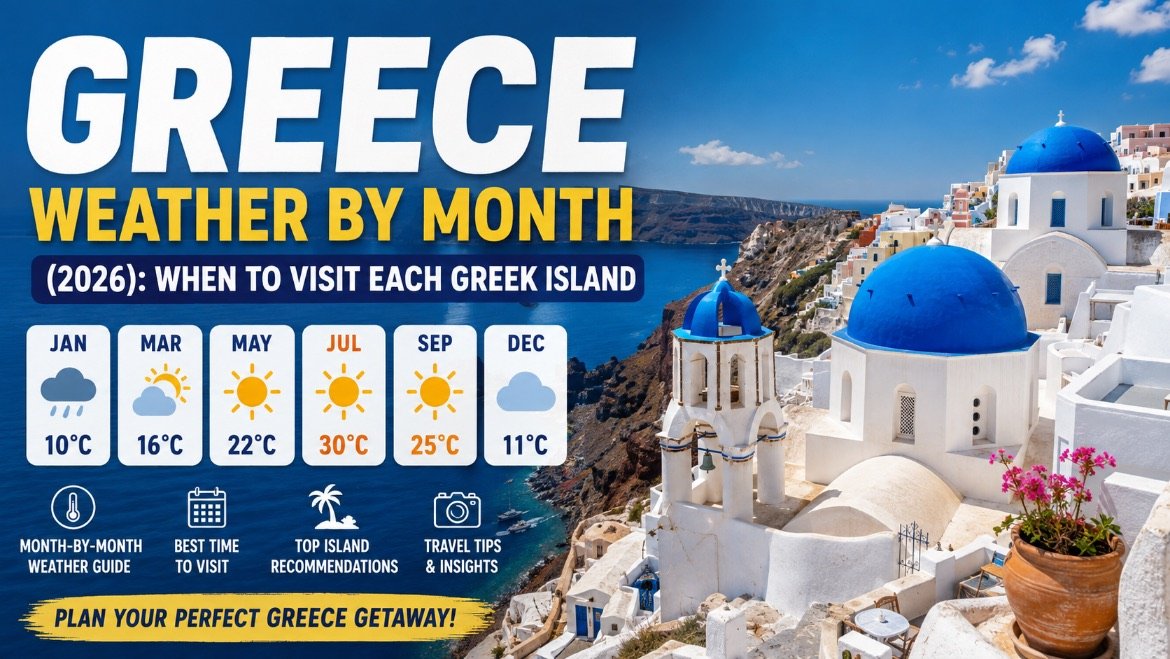
Are you planning a trip to Greece but can’t decide which month is best to visit? You aren’t alone in wondering this. Greece is one of Europe’s most popular destinations, yet the experience can vary significantly depending on the time of year. While July and August are perfect for beach lovers, spring offers blooming flowers, smaller crowds, and lower prices. On the other hand, winter reveals a quieter, more authentic side of the country.
This month-by-month guide to the weather in Greece will help you choose the right time to visit based on your travel style, budget, and preferences. I’ll cover more than just temperatures; I’ll also describe the atmosphere each month—including crowd levels, sea conditions, festivals, sightseeing opportunities, and the best Greek islands to visit.
Whether you dream of watching the sunset in Santorini, exploring ancient historical sites in Athens, relaxing on the beaches of Crete, or island-hopping through the Cyclades, this guide will help you plan your trip with confidence.
Check for: Athens, Santorini, Mykonos Itinerary for 10 Days: The Ultimate Greece Travel Guide
Greece Weather at a Glance
Greece enjoys a Mediterranean climate, which means:
- Hot, dry summers (June to August)
- Mild and colorful springs (March to May)
- Warm, pleasant autumns (September to November)
- Cool, greener winters (December to February)
However, the weather varies across the country. In winter, the Greek islands remain warmer than many places on the mainland, whereas temperatures in the northern regions can drop, and snowfall may occur at times.
Quick Climate Overview
| Season | Months | Average Temperature | Crowed Level | Best For |
| Spring | March-May | 12–25°C | Low to Medium | Sightseeing, hiking, photography |
| Summer | June-August | 25-35°C | Very High | Beaches, nightlife, island hopping |
| Autumn | September-Novmber | 15–30°C | Medium | Couples, swimming, relaxed travel |
| Winter | December-February | 8–17°C | Low | City breaks, culture, budget trips |
Travel Tip: If you’re visiting Greece for the first time, May, June, September, and early October offer an excellent balance of pleasant weather, manageable crowds, and comfortable sightseeing.
Why the Month You Choose Matters
Many travelers think that the weather across Greece remains the same all year round, but that is not the case. In reality, your experience depends heavily on when and where you visit.
For example:
- Santorini in August is vibrant but crowded.
- The same island in late September offers warm weather with fewer tourists.
- Crete remains comfortable for beach holidays even into October.
- Athens is ideal in spring and autumn when temperatures are milder for exploring historical sites.
- Northern Greece, including destinations like Meteora, is especially scenic during spring and autumn.
Choosing the right month can help you save money, avoid long queues, and enjoy a more relaxed vacation.
Best Time to Visit Greece Based on Your Travel Style
Not everyone travels for the same reason. Here’s a quick guide to help you decide.
| Travel Goal | Best Month |
| Beach Holiday | June to September |
| Island Hopping | May to October |
| Honeymoon | May, June, September |
| Photography | April, May, October |
| Budget Travel | March, April, November |
| Hiking & Nature | April, May, October |
| Family Vacation | June, September |
| Cultural Sightseeing | March to May, September to November |
Throughout this guide, you’ll find recommendations tailored to different types of travelers.
Month-by-Month Weather Guide
Understanding tourist crowds can make a big difference to your trip.
1. Greece in January
January is Greece’s coldest month, but compared to much of Europe, temperatures remain relatively mild in many areas.
- Average Temperature: 8–14°C
- Sea Temperature: Around 16°C
- Rainfall: Moderate
- Sunshine: 4–6 hours daily
Northern Greece can be significantly colder, while islands such as Crete often experience milder conditions.
Best Places to Visit in January:
If you are traveling in January, consider visiting places where history, culture, and local experiences are the main attractions—such as Athens, Nafplio, Thessaloniki, Crete (southern coast), and Meteora. These destinations are less crowded, making it easier to explore famous sites and enjoy the local way of life.
Why Visit Greece in January?
If you appreciate a peaceful atmosphere, a low cost of living, an interest in museums and historical sites, and the chance to explore cities without the heat, then January is an excellent choice:
Many popular spots are less crowded, allowing you to experience Greece at a relaxed and leisurely pace.
Things to Keep in Mind
- Some seasonal beach businesses may be closed on smaller islands.
- Ferry schedules can be less frequent.
- Weather can change quickly, so flexible travel plans are helpful.
2. Greece in February
The weather remains cool in February, but the arrival of spring begins to be felt in some areas, making Greece even more beautiful.
- Average temperature: 9–15°C
- Sea temperature: Approximately 15–16°C
- Rainfall: Moderate
- Sunshine: 5–6 hours daily
By the end of the month, wildflowers begin to bloom in parts of southern Greece, enhancing its beauty, and the weather is also excellent at this time.
Best Places to Visit in February
At this time, I would suggest visiting Athens, Crete, Rhodes, Nafplio, and Thessaloniki; these places offer excellent local experiences alongside historical attractions.
Why Visit Greece in February?
The month of February is excellent for travelers who appreciate fewer crowds (fewer tourists), affordable hotels, sightseeing amidst beautiful scenery, local festivals, and authentic, traditional culinary experiences.
In some places, depending on the calendar, colorful carnivals are also celebrated towards the end of February or the beginning of March.
3. Greece in March
March marks the beginning of spring and is one of the most underrated months to visit Greece. During this time, flowers begin to bloom, the landscape turns lush green, and the days grow longer, creating a wonderful atmosphere for exploring and offering spectacular views for photography.
- Average Temperature: 11–18°C
- Sea Temperature: Around 16°C
- Rainfall: Light to Moderate
- Sunshine: 6–7 hours daily
Best Places to Visit in March
Spring transforms many destinations into excellent places to visit—such as Athens, Santorini, Crete, Corfu, Meteora, and Delphi. The weather in these locations is pleasant during spring, and there are fewer crowds compared to the summer months.
Why Visit Greece in March?
March is perfect if you want to:
- Explore archaeological sites comfortably
- Photograph blooming landscapes
- Enjoy hiking trails
- Experience local culture before peak tourist season
Hotels and flights are often cheaper than in the summer.
Spring in Greece: What Makes It Special?
Spring is often considered one of the best seasons to discover Greece beyond its beaches.
During March, April, and May:
- Hillsides are covered in wildflowers.
- Temperatures are comfortable for walking tours.
- Ancient sites are less crowded.
- Hiking trails are at their most scenic.
- Outdoor cafés begin welcoming visitors again.
If you’re planning to combine destinations such as Athens, Santorini, Meteora, and Crete, spring offers an excellent balance of good weather and fewer crowds.
4. Greece in April
In most parts of Greece, April marks the beginning of the true tourist season. The weather remains pleasant and mild, flowers are in full bloom, and daylight hours increase significantly—making it an ideal time for sightseeing.
- Temperature 16–22°C
- Sea temperature 16–18°C
- Sunshine 8–9 hours
- Low rainfall
Athens and the southern islands generally enjoy warmer weather than northern Greece, while destinations like Crete and Rhodes often feel almost like early summer by the end of the month.
Unlike July or August, April rarely feels uncomfortably hot. You can comfortably spend an entire day exploring archaeological sites without worrying about extreme heat. It’s also one of the greenest months of the year, making landscapes around Meteora, Delphi, and the Peloponnese especially beautiful.
Best Greek Islands to Visit in April
The islands recommended for this time include:
- Crete – Warmest weather and beautiful hiking trails
- Rhodes – Sunny weather and historical attractions
- Santorini – Quiet villages with fewer crowds
- Corfu – Lush green landscapes and spring flowers
- Naxos – Traditional villages and peaceful beaches
If you are passionate about photography, April is one of the best months to capture images of Greece’s famous white buildings and stunning blue skies; plus, you won’t find hundreds of tourists in every frame.
Why Visit Greece in April?
April strikes a perfect balance between pleasant weather and affordable travel. During this time, you can enjoy:
- Comfortable temperatures for sightseeing
- Lower hotel rates compared to summer
- Fewer crowds at tourist attractions
- Hiking trails with beautiful scenery
- Lovely spring landscapes
I would recommend traveling in April, as it allows you to enjoy famous destinations like Santorini and Athens in a more relaxed manner compared to the peak season. Conversations with recent travelers have also confirmed that crowds are significantly thinner in late spring than in July and August, and the weather is excellent.
5. Greece in May
For many travelers, May is the best month to visit Greece. This is because the temperatures are pleasantly warm, sea conditions improve, ferry services are more frequent, and almost all hotels, restaurants, and tourist attractions are open. A 2026 weather guide identifies May as one of the best months to visit, citing the ideal combination of sunshine, comfortable temperatures, and smaller crowds compared to the peak summer season.
- Temperature 20–26°C
- Sea temperature 18–21°C
- Sunshine 10–11 hours
- Very little rain
Best Greek Islands to Visit in May
May is a great time to visit almost anywhere in Greece. However, some of the best destinations include Santorini, Mykonos, Crete, Paros, Milos, Rhodes, Athens, Nafplio, Meteora, and Corfu.
Each place offers a unique experience, whether you enjoy beaches, history, food, or outdoor adventures; you can choose the destination that best suits your interests.
Why May Is One of the Best Months to Visit Greece?
May is a popular month because it offers the benefits of summer without the downsides of excessive heat. In May, you can enjoy the following:
- Warm yet comfortable weather
- Longer daylight hours
- Lower accommodation rates compared to peak season
- Excellent ferry connectivity
- Pleasant weather for hiking and sightseeing
- Less crowded cruise ships
For travelers planning a 10-day trip to Athens, Santorini, and Mykonos, May is a more convenient time than July or August. This is because tourist spots are less crowded during this period, yet all services remain fully available.
6. Greece in June
June marks the start of the early summer season, bringing warm, sunny days across Greece and excellent weather for beach outings.
- Average temperature: 25–31°C
- Sea temperature: 21–24°C
- Sunshine: 11–12 hours
- Rainfall: Very low
During this time, the seawater becomes pleasantly warm, making June one of the best months for swimming, snorkeling, and boat tours. Although temperatures do rise, the weather generally remains comfortable compared to the scorching heat of July and August.
Best Greek Islands to Visit in June
Visiting any of Greece’s major islands in June is a fantastic choice; notable options include Santorini, Mykonos, Crete, Zakynthos, Paros, Milos, Naxos, Kefalonia, Lefkada, and Rhodes.
Whether you wish to stay at luxurious resorts, spend time at the beach with your family, or explore beautiful villages, the weather in June is excellent for sightseeing across almost all of them.
Why Visit Greece in June?
June is an excellent month for travelers who enjoy beaches and outdoor activities. Key highlights include warm sea water, long and sunny days, a full ferry schedule, daily operations at beach clubs and restaurants, ideal sailing conditions, and perfect weather for sunset cruises.
Keep in mind that popular destinations tend to get crowded as school holidays approach, so it is advisable to book hotels and ferries in advance.
Spring Festivals and Events
Spring is also a wonderful time to experience Greek culture. You can witness various things during this period, depending on the dates of your trip.
- Local food festivals
- Religious celebrations
- Cultural performances
- Village fairs
- Wine events
- Outdoor music festivals
Many places become more vibrant during the spring season, while the atmosphere remains peaceful compared to the peak summer season.
7. Greece in July
July is the hottest and sunniest month in Greece. By this time, the country has become one of the world’s busiest summer destinations. The beaches are bustling with activity, ferry services to almost every major island are in full swing, beach clubs are lively, and the Aegean Sea reaches the perfect temperature for relaxation. However, while this season offers plenty of sunshine and fantastic nightlife, it also brings larger crowds and higher prices.
- Temperature: 28–35°C
- Sea temperature: 24–26°C
- Sunshine: 12–13 hours
- Rain: very little
Best Places to Visit in July
All major destinations are fully operational in July. Popular places you can visit during this month include Santorini, Mykonos, Crete, Zakynthos, Rhodes, Paros, Milos, Naxos, Corfu, and Lefkada.
Beach resorts, restaurants, and water sports operators are all open, keeping these islands lively and bustling.
Why Visit Greece in July?
If your dream vacation includes these things, then the month of July is the best time:
- Swimming in crystal-clear water
- Island hopping
- Luxury beach clubs
- Sunset cruises
- Snorkelling and scuba diving
- Outdoor dining by the sea
The waters of the Aegean Sea remain warm enough for a long swim, and the long daylight hours give you plenty of time to explore.
Tip: July is also one of the busiest months, so I advise you to book your accommodation and transport several months in advance.
8. Greece in August
August is the hottest and busiest month of the year.
- Temperature: 29–36°C
- Sea Temperature: 25–27°C
- Sunshine: 12 hours
- Rainfall: Very Low
The weather is consistently sunny across most of Greece, making it one of the best months for beach holidays. However, temperatures can occasionally rise above 35°C, particularly on the mainland.
Best Greek Islands to Visit in August
If you are visiting Greece in August, islands like Mykonos, Santorini, Crete, Paros, Milos, Rhodes, Kos, and Zakynthos offer unforgettable experiences.
Each destination has its own unique charm—from the spectacular nightlife of Mykonos to the family-friendly beaches of Crete.
Why Visit Greece in August?
If you are looking for beach festivals, sunset parties, sailing trips, water sports, bustling cafes, and vibrant nightlife, then August is a fantastic month for you—it offers the chance for an action-packed, spirited holiday. Families also travel extensively during August, taking advantage of school holidays.
Tip: You have to make some compromises during peak season. If you are planning to visit Santorini or Mykonos, book your accommodation and transportation in advance.
9. Greece in September
September is considered one of the best months to visit Greece. Although the summer season officially begins to wind down during this time, the sea water remains quite warm after months of sunshine. The weather is excellent for sightseeing, spending time at the beach, and island-hopping.
- Average temperature: 24–30°C
- Sea temperature: 24–26°C
- Sunshine: 10–11 hours
- Rainfall: Low
Best Greek Islands to Visit in September
While all destinations in Greece are excellent for a visit in September, some of the best options include Santorini, Mykonos, Crete, Naxos, Milos, Rhodes, Corfu, Athens, and Meteora; ultimately, the choice depends on the kind of experience you are looking for.
Whether you are planning a beach trip, a historical tour, or a hiking excursion, September is the perfect time for it.
Why September Is So Popular?
Many seasoned travelers choose September because it offers the perfect balance of weather and comfort. During this time, the sea remains warm, the days are pleasant, there are fewer tourists compared to August, hotel bookings are easier to secure, and the atmosphere is more relaxed.
This month is particularly popular among couples, photographers, and travelers who wish to avoid the crowds of the peak season.
10. Greece in October
The weather in October is pleasant, and the atmosphere remains quite calm. Southern islands like Crete and Rhodes stay warm enough for beach holidays, while mainland cities are excellent for sightseeing.
- Average temperature: 19–26°C
- Sea temperature: 21–24°C
- Sunshine: 8–9 hours
- Rainfall: Moderate
So, whether you want to enjoy the beach or explore Greece’s cities, October is the best month.
Best Greek Islands to Visit in October
My top recommendations for places to visit in October include Crete, Rhodes, Santorini, Athens, Nafplio, Meteora, and Corfu; while other locations are also excellent, the experience in these specific places is particularly wonderful during October.
The weather in southern Greece is generally warmest during this month, so if you want to visit the beach or enjoy warmer weather, you should head to southern Greece.
Why Visit Greece in October?
October is an excellent month for travelers who prefer a peaceful trip. It offers the benefits of pleasant weather, the beautiful light of autumn, lower hotel rates, fewer passengers on cruises, and quiet, serene beaches.
The combination of mild warmth during the day and cool temperatures in the evening makes October an ideal time to visit both cities and islands.
11. Greece in November
November marks the transition from autumn to winter. During this time, the weather on southern islands like Crete and Rhodes remains pleasant and mild, whereas northern Greece turns colder and experiences occasional rain.
- Average temperature: 14–21°C
- Sea temperature: 19–22°C
- Sunshine: 6–7 hours
- Rainfall: Moderate
Unlike the crowded summer months, November offers a peaceful atmosphere, allowing you to visit famous attractions without long queues.
Best places to visit in November
Athens, Crete, Rhodes, Nafplio, Thessaloniki, and Meteora are excellent choices for a visit in November, as the weather is pleasant, the history is rich, and you can experience local culture without the usual tourist crowds. Ultimately, you can choose a destination based on your personal preferences and interests.
Why Visit Greece in November?
November is the perfect time for you if you prefer a quiet holiday, want lower hotel rates, have an interest in museums and history, wish to enjoy local cuisine, and like to explore at a leisurely pace.
Although some seasonal businesses along the coast begin to close, the city and larger islands continue to welcome tourists throughout the month.
12. Greece in December
The weather turns cool in December, festive decorations appear everywhere, and a special holiday atmosphere takes hold; if you wish to experience Greek festivals, December is the time to visit. Although swimming is not the main attraction during winter, these cities become excellent destinations for cultural experiences, shopping, and Christmas celebrations.
Snowfall can also occur in the northern mountainous regions, revealing a completely different side of Greece—a sight that draws many international tourists specifically.
- Average temperature: 10–17°C
- Sea temperature: 17–19°C
- Sunshine: 5–6 hours
- Rainfall: Moderate
Best places to visit in December
Athens, Thessaloniki, Nafplio, Arachova, Meteora, and Crete are excellent destinations to visit in December.
Athens looks stunning during the December holiday season, thanks to festive lights, Christmas markets, and seasonal events.
Why Visit Greece in December?
If you are looking for the following, December is a great month for you:
- Christmas celebrations
- The joy of exploring the city in winter
- Affordable living costs
- Authentic Greek culture
- Cozy cafés and local cuisine
Final Month-by-Month Summary
Every traveler has different preferences, so there isn’t a single “best” month for everyone. Keeping your needs in mind, I have outlined the specific advantages of each month in this chart, allowing you to choose the time that best suits your interests.
| Month | Best For |
| january | Museums & budget travel |
| February | Culture & local festivals |
| March | Hiking & sightseeing |
| April | Photography & Spring landscapes |
| May | Couples & first-time visitors |
| June | Beaches & island hopping |
| July | Summer holidays & nightlife |
| August | Beach vacation & festivals |
| September | Perfect all-round travel |
| October | Hiking & relaxed island trips |
| November | Budget-friendly city breaks |
| December | Christmas markets & cultural travel |
If you are planning your first trip, the months of May and September offer the best combination of pleasant weather, fewer crowds, and excellent conditions for sightseeing.
What to Pack for Greece
Packing depends on the season in which you are going, whether it is winter, summer, or normal weather. Let me tell you about packing based on each season.
Packing for Spring & Autumn
- Comfortable walking shoes
- Light jacket
- Sunglasses
- Sunscreen
- Reusable water bottle
- Day backpack
Packing for Summer
- Swimwear
- Lightweight clothing
- Sun hat
- Flip-flops
- Beach towel
- Reef-safe sunscreen
Packing for Winter
- Warm jacket
- Sweater
- Waterproof shoes
- Umbrella
- Scarf
- Layers for changing temperatures
I would advise you to travel light, especially when planning to visit multiple islands; carrying too much luggage can spoil the fun of the trip.
Common Travel Mistakes to Avoid
I have noticed certain mistakes that people make when visiting here—especially first-timers—which significantly impact the overall experience and the trip itself. So, to ensure you don’t make these same errors, let’s discuss them first.
- Booking ferry tickets at the last minute during summer.
- Visiting popular spots during the heat of the afternoon.
- Misjudging walking distances on hilly islands like Santorini.
- Packing only beachwear without a light jacket for cool evenings.
- Trying to visit too many islands during a short trip.
A well-planned itinerary is usually more enjoyable than trying to see everything at once.
Frequently Asked Questions
While Greece is a great destination to visit year-round—depending entirely on your interests and the activities you prefer—if you ask for my advice, the months of May, June, September, and October are the best. They offer the perfect combination of pleasant weather, fewer crowds, and a relaxed sightseeing experience.
Generally, Greece becomes cheaper during the months of January through April, as well as November and December, compared to the peak summer season; the colder weather leads to fewer tourists, resulting in lower hotel and flight prices. However, prices do rise slightly in December due to Christmas and New Year celebrations.
Yes, if you want to visit the beach and also wish to avoid the city’s heat, September is the best time for you. September is a month when the sea water generally remains warm, the weather is pleasant, and the crowds are thinner; it is also an excellent time for exploring the beach. While August is good for the beach, but it is too hot for sightseeing in the city.
Yes. In southern locations like Crete and Rhodes, the sea temperature often remains comfortable for swimming during October. As the month progresses, however, it gets colder, making swimming or bathing at the beach difficult.
Crete is widely considered one of the warmest Greek islands throughout the year, making it a great destination in both spring and autumn.
Conclusion
Choosing the right month can completely transform your experience in Greece. While July and August are ideal for beach and nightlife enthusiasts, these months also bring larger crowds and higher prices. For travelers seeking a balance of pleasant weather, leisurely sightseeing, and good value for money, the months of May, June, September, and October are excellent choices.
This guide to Greece’s weather (2026) will help you plan your trip with confidence—whether you are wandering through the ancient streets of Athens, watching the sunset in Santorini, relaxing on a Mykonos beach, or exploring lesser-known islands. By aligning your travel goals with the right season, you can enjoy a smooth, memorable trip and make the most of everything Greece has to offer.
Check for: 20 Best Places to Visit in Greece in October: Weather, Festivals & Travel Tips (2026)