


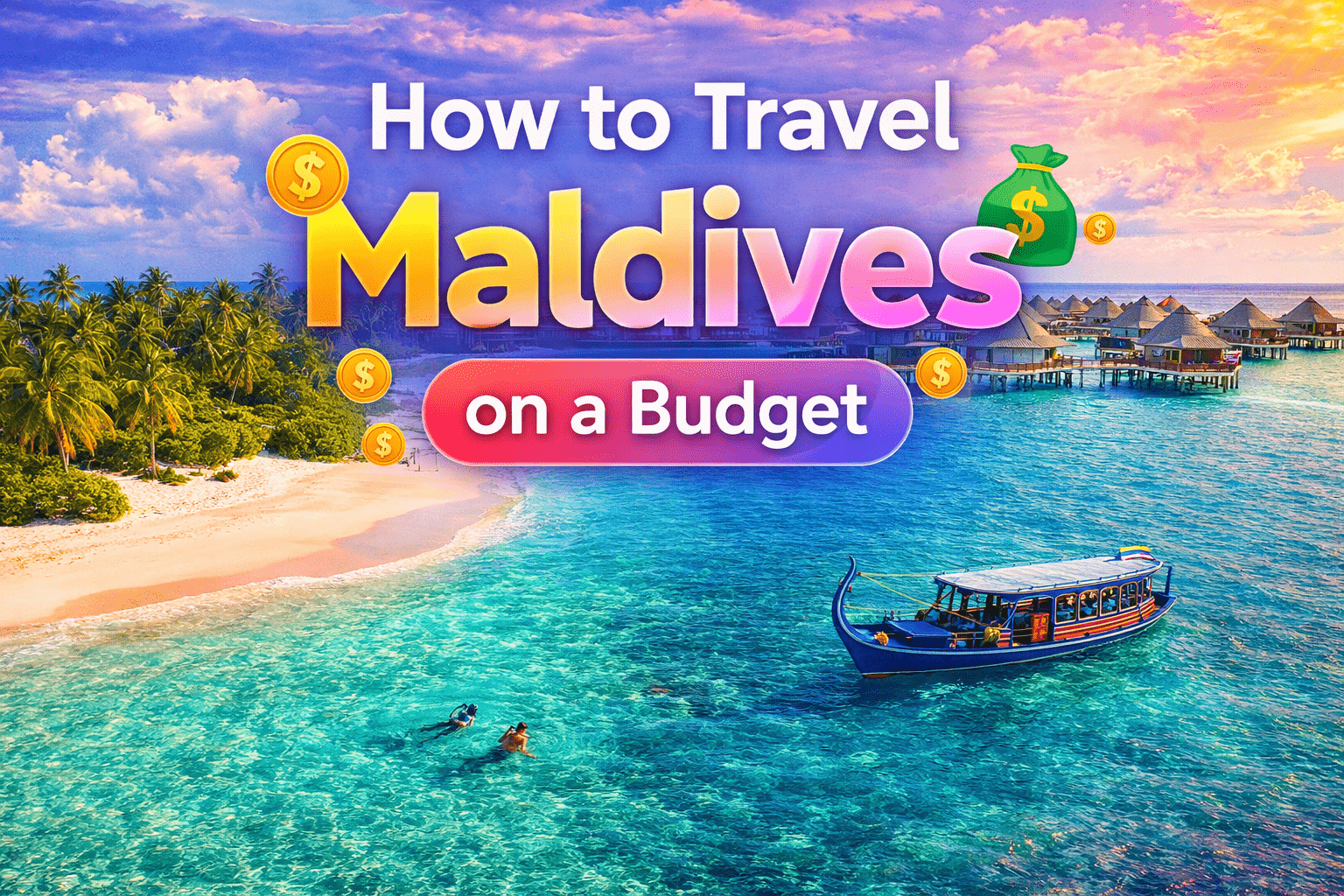
Let me start with a confession: I almost didn’t go to the Maldives.
For years, I’d looked at those photos – overwater villas stretching into turquoise lagoons, private decks with direct ocean access, infinity pools overlooking endless blue. And I’d think the same thing everyone thinks: “That’s for rich people. That’s not for me.”
The Maldives felt like a place you go to spend money, not a place you go to travel.
Turns out, I was wrong.
My trip to Dhigurah Island completely changed how I think about this country. Yes, the ultra-luxury resorts exist. But tucked away on the local islands – places where Maldivian families actually live, where guesthouses cost $70 a night instead of $700 – there’s a whole different Maldives. One that’s accessible, authentic, and honestly just as beautiful.
This guide is everything I learned about experiencing the Maldives without going broke. How to get there, where to stay, what to do, and how to avoid the mistakes that cost other travelers hundreds of dollars.
First, Understand How The Maldives Works
The Maldives is basically 1,200 tiny islands scattered across the Indian Ocean. Here’s what you need to know:
Resort Islands: These are private islands where one resort occupies the entire landmass. You fly in, take a seaplane or speedboat, and don’t leave until you fly out. Beautiful, exclusive, expensive. Think $500+ per night.
Local Islands: These are inhabited by Maldivians. Guesthouses operate alongside local homes, schools, and mosques. You experience actual Maldivian culture. Guesthouses run $50-100 per night. This is where budget travel happens.
The Catch: Local islands have different rules. No alcohol. Conservative dress codes outside designated beach areas. But honestly? Those “limitations” are part of what makes the experience real.
Best Local Islands For Budget Travelers
Not all local islands are created equal. Based on my research and experience, these are the ones to know:
Dhigurah Island (South Ari Atoll)
My personal favorite.
This island has one of the longest beaches in the Maldives – four kilometers of white sand running down the west side. The sandbar at the southern tip is stunning. And crucially, Dhigurah sits in South Ari Atoll, which means whale shark excursions are excellent year-round.
Best for: Beach lovers, whale shark seekers, people who want space to walk
Fulidhoo Island (Vaavu Atoll)
Smaller, more traditional vibe. The highlight here is literally steps from the ferry dock – stingrays and nurse sharks gather in the shallows daily. You can stand knee-deep and watch them cruise past. It’s surreal.
Best for: Wildlife up close, traditional village feel, photographers
Maafushi (Kaafu Atoll)
The most developed local island, closest to Male. Lots of guesthouses, restaurants, tour operators. It’s busy – some say too busy – but the infrastructure is solid and prices are competitive.
Best for: First-timers, people wanting maximum tour options, shorter transfers
Ukulhas (Alif Alif Atoll)
Known for being environmentally conscious – one of the cleanest local islands with good waste management and protected marine areas. Beautiful beach, laid-back vibe.
Best for: Eco-conscious travelers, families, relaxed pace
Thoddoo (Alif Alif Atoll)
Famous for its watermelon farms (yes, really) and a stunning lagoon on the north side. Less touristy than Maafushi, more agricultural feel.
Best for: Off-the-beaten-path vibes, lagoon swimming, budget longer stays
How To Get To The Local Islands
You’ll fly into Male International Airport (MLE) . From there, you’ve got options.
Public Speedboat (Best Balance)
Cost: $40-60 USD one way
Duration: 1-3 hours depending on island
This is the sweet spot. Comfortable, air-conditioned boats with daily schedules to most major local islands. To Dhigurah, it’s 2 hours and about $50. To Maafushi, it’s 30 minutes and about $25.
Pro tip: Ask your guesthouse to book the speedboat for you before you arrive. They’ll add it to your room bill, you pay by card, and you don’t have to worry about a thing.
Public Ferry (Cheapest)
Cost: $3-10 USD one way
Duration: 1-7 hours depending on island
The MTCC public ferries are absurdly cheap. To Dhigurah, it’s about $8 for a 6-7 hour journey. To closer islands like Maafushi, it’s faster. The trade-off is time and comfort – these are basic vessels with limited schedules (often only a few times per week).
Speedboat + Domestic Flight
Cost: $150-200 USD one way
Duration: 20 minute flight + boat transfer
For distant atolls like Addu or Baa, flying makes sense. Fly from Male to a regional airport, then a short speedboat to your island. More expensive than public options, but saves serious time.
Seaplane (The Splurge)
Cost: $250-400 USD one way
Duration: 30-60 minutes
Look, I’ll be honest – seaplanes are incredible. Flying low over those atolls, watching the colors shift… it’s a memory for life. But it’s also expensive. If you can swing it for one leg of your journey, do it. If not, you’re not missing essential Maldives experiences.
Where To Stay (Without Breaking The Bank)
Guesthouses are your friend. Family-run, clean, breakfast included, and often the owners will help arrange everything – transfers, excursions, dinner reservations.
Typical costs: $50-100 USD per night for a double room with AC, private bathroom, and WiFi.
What to expect: Simple but comfortable. Think clean tile floors, decent mattress, hot water, reliable WiFi. Not luxury, but perfectly fine.
Booking tip: Use booking sites to research, then email guesthouses directly. Sometimes you’ll get better rates, and you can ask questions before committing.
Hotels we liked:
- Dhigurah: Khao-Sok Bed and Breakfast (friendly owners, great location)
- Fulidhoo: Huvan Inn (right near the shark/stingray point)
Getting Around The Islands
Here’s the beautiful thing about Maldivian local islands – they’re tiny. Most are less than a kilometer wide. You walk everywhere.
Some islands rent bicycles. Some have the occasional taxi pickup truck. But honestly? Walking is the way. You see more, meet more people, and it’s free.
What To Do (Excursions & Activities)
This is where your budget stretches further than you’d expect. Excursions from local islands cost a fraction of resort prices.
Whale Shark Safari (South Ari Atoll)
Cost: $60-80 USD per person
Duration: 2-4 hours
South Ari Atoll is one of the best places on earth to swim with whale sharks. Year-round presence, good chances of sightings. Multiple tour operators run trips from Dhigurah and other South Ari islands.
Warning: These are wild animals. No guarantees. But the operators are experienced and want you to see them as much as you do.
Manta Ray Excursions
Cost: $50-70 USD per person
Duration: 2-3 hours
Manta rays visit cleaning stations around many atolls. Baa Atoll is famous for them, but they’re spotted elsewhere too. Snorkeling with these gentle giants is unforgettable.
Dolphin Cruises
Cost: $30-50 USD per person
Duration: 1-2 hours
Dolphins are everywhere in the Maldives. A sunset dolphin cruise is one of the most relaxing ways to spend an evening. They move fast, so snorkeling isn’t really possible, but watching them leap alongside the boat is pure joy.
Sandbank Trips
Cost: $25-40 USD per person
Duration: Half day
Those tiny sandbars you see in photos – just a patch of white sand in the middle of turquoise water? You can visit them. Usually combined with snorkeling stops. Bring lunch, spend a few hours on your own private paradise.
Snorkeling Safaris
Cost: $30-50 USD per person
Duration: Half day
Visit multiple snorkeling spots – house reefs, turtle cleaning stations, coral gardens. Equipment usually included. Good snorkelers will see plenty.
Diving
Cost: $60-100 USD per dive
The Maldives has world-class diving. Local island dive shops are significantly cheaper than resorts. Dhigurah in particular is known for excellent diving.
Fishing Excursions
Cost: $40-60 USD per person
Duration: 2-4 hours
Big game fishing, night fishing, reef fishing – options vary. Catch your dinner and have your guesthouse cook it.
Resort Day Trips
Cost: $100-200 USD per person
This is a fun hack. Many nearby resorts offer day packages to local island guests. Boat transfer, pool access, facilities, and usually a food/drink credit. Experience the “resort Maldives” for a fraction of the cost.
How Much Does A Budget Maldives Trip Actually Cost?
Let’s get specific. Here’s roughly what we spent per day:
| Item | Cost (USD) |
|---|---|
| Guesthouse (double room) | $35-50 per person |
| Meals (3 local restaurants) | $20-30 |
| One excursion | $40-60 |
| Speedboat transfer (amortized) | $15-20 |
| Miscellaneous | $10 |
| Daily Total | $120-170 |
For a week, that’s $840-1,190 USD including accommodation, food, excursions, and transfers. Add your international flight, and you’re still way under what a resort would cost.
Can you do it cheaper? Yes. Stay longer on one island, take public ferries, cook some meals, skip expensive excursions.
Can you spend more? Absolutely. More excursions, fancier guesthouses, seaplane transfers.
But this range gives you a realistic picture of what a comfortable, enjoyable budget Maldives trip looks like.
Money Tips (Read These Before You Go)
Currency
- Maldivian Rufiyaa (MVR) is local currency
- US Dollars accepted almost everywhere, but you’ll get better rates with Rufiyaa
- Don’t take Rufiyaa home – worthless outside Maldives
ATMs & Cards
- Male airport has reliable ATMs – withdraw enough for a few days
- Most local islands have one ATM (may or may not work with your card)
- Guesthouses often accept credit cards (sometimes 3-5% fee)
- Restaurants and shops are cash-only
- Strategy: Withdraw at Male airport, use card for guesthouse and big excursions, cash for everything else
Tipping
Not expected but appreciated. Service workers earn modest wages. 10% at restaurants, $1-2 for hotel staff helping with bags, $5-10 for guides who did well.
Packing List Essentials
Clothing:
- Lightweight, modest clothing for walking through villages (cover shoulders/knees)
- Swimwear for designated bikini beaches only
- Sarong or cover-up (useful for transitions)
- Reef-safe sunscreen (regular sunscreen damages coral)
Gear:
- Snorkel mask (fits better than rentals, though rentals are fine)
- Underwater camera or phone housing
- Power bank (some islands have occasional power fluctuations)
- Reusable water bottle (plastic waste is a huge problem here)
Health:
- Mosquito repellent (essential, especially near jungle areas)
- Basic first aid kit
- Any prescription medications (pharmacies are limited)
Important Cultural Notes
The Maldives is a Muslim country. On local islands, this matters:
Dress Code: Cover shoulders and knees when walking through villages. Swimwear only on designated bikini beaches. We saw tourists ignoring this and nothing bad happened, but it’s respectful to follow local norms.
Alcohol: Not sold on local islands. Zero. If you want a drink, you need to visit a resort island or wait until you’re back in Male. Honestly, we didn’t miss it – but worth knowing.
Prayer Calls: You’ll hear the call to prayer from mosques. It’s part of life here. Not “noise” – it’s culture. Bring earplugs if you’re sensitive, but approach it with respect.
Ramadan: If visiting during Ramadan, expect shorter operating hours for restaurants during the day. Evening meals become festive. It’s a special time to visit if you’re culturally curious.
Relationships: Unmarried couples can share rooms without issue on local islands. Public displays of affection are frowned upon – save that for private spaces.
When To Visit (Weather & Seasons)
Dry Season (December – April): Peak season. Sunny skies, calm seas, perfect beach weather. Prices slightly higher, crowds slightly larger. January through March are particularly gorgeous.
Shoulder Months (November, May): Transition periods. Could be great weather, could be rain. Fewer crowds, better deals.
Wet Season (June – October): More rain, but often in short bursts. Greener landscapes, emptier beaches, lowest prices. South Ari Atoll still has good whale shark viewing. If you’re flexible and don’t mind occasional rain, this is the budget traveler’s sweet spot.
Sample 10-Day Budget Maldives Itinerary
Day 1: Arrive Male, speedboat to Dhigurah. Settle in, explore village, sunset at North West Beach.
Day 2: Morning walk to Long Beach sandbar. Afternoon snorkeling at Turtle Reef (from shore).
Day 3: Whale shark safari (full morning). Relaxed afternoon. Sunset dolphin cruise.
Day 4: Scuba diving or snorkeling safari. Evening fishing excursion, cook your catch.
Day 5: Resort day trip (experience the luxury side). Sunset at the sandbar.
Day 6: Morning kayaking. Speedboat back to Male. Overnight in Male (or connect to next island).
Day 7: Speedboat to Fulidhoo. Afternoon at the stingray/shark point. Village walk.
Day 8: Snorkeling excursion to nearby reefs. Relaxed evening.
Day 9: Sandbank trip (half day). Last beach time. Sunset photos.
Day 10: Morning speedboat to Male. Airport, fly home.
Common Mistakes To Avoid
Booking one island without research. Every island has different character. Dhigurah for beaches, Fulidhoo for wildlife, Maafushi for convenience. Match the island to your travel style.
Skipping travel insurance. Medical evacuation from remote islands is expensive if something goes wrong. Don’t risk it.
Assuming resorts are the only option. This almost kept me from visiting. Local islands offer the same water, same sunsets, same marine life – for a fraction of the cost.
Forgetting cash. Card acceptance is limited outside guesthouses. Run out of cash and you’re hunting for an ATM that may or may not work.
Overpacking excursions. You don’t need to book everything. Leave days empty to just be on the beach. That’s the point.
Ignoring dress code. You’re a guest in someone’s home. Cover up in villages. It’s not complicated.
Final Thoughts
The Maldives taught me something important.
Luxury travel and budget travel aren’t opposites. They’re just different ways of experiencing a place. The overwater villa traveler and the guesthouse traveler both end up in the same turquoise water. Both watch the same sunset. Both leave with memories that last.
One pays ten times more for the privilege of a private deck and a mini-fridge full of champagne.
The other meets local families, eats where Maldivians eat, and stretches a week’s budget into two weeks of travel.
Neither is wrong. But if you’re reading this because you thought the Maldives was out of reach – it’s not. The water is waiting. The beaches are waiting. And they’re more accessible than the Instagram photos would have you believe.
Go. You’ll thank yourself.
Planning a Maldives trip? Been to a local island? Drop your questions below – I read every comment and I’m happy to help!