


I’ll be honest – when people say “Maldives,” most of us picture those overwater bungalows with glass floors and private butlers.
And sure, those places are beautiful. But they’re also wildly expensive. Like, “sell-a-kidney” expensive.
So when I started researching the Maldives, I kept wondering – is there a way to experience those turquoise waters, white sand beaches, and incredible marine life without going broke?
Turns out, yes. Absolutely yes.
Dhigurah Island was the answer. A local island in the South Ari Atoll, no overwater resorts, no five-star price tags – just one of the longest beaches in the Maldives, family-run guesthouses, and some of the best wildlife encounters I’ve ever had.
I spent three days here and honestly could’ve stayed two weeks. Let me tell you everything you need to know.
Table of contents
- Why Dhigurah? (And Why You’ve Probably Never Heard Of It)
- First Thing First – Is Dhigurah “Worth It” Compared To Resorts?
- How To Get To Dhigurah (Several Options, Varying Budgets)
- Getting Around The Island
- Where To Stay On Dhigurah
- Best Things To Do In Dhigurah
- How Long Should You Stay?
- Practical Tips (Read These)
- Best Time To Visit
- What About Other Islands?
- Final Thoughts
Why Dhigurah? (And Why You’ve Probably Never Heard Of It)
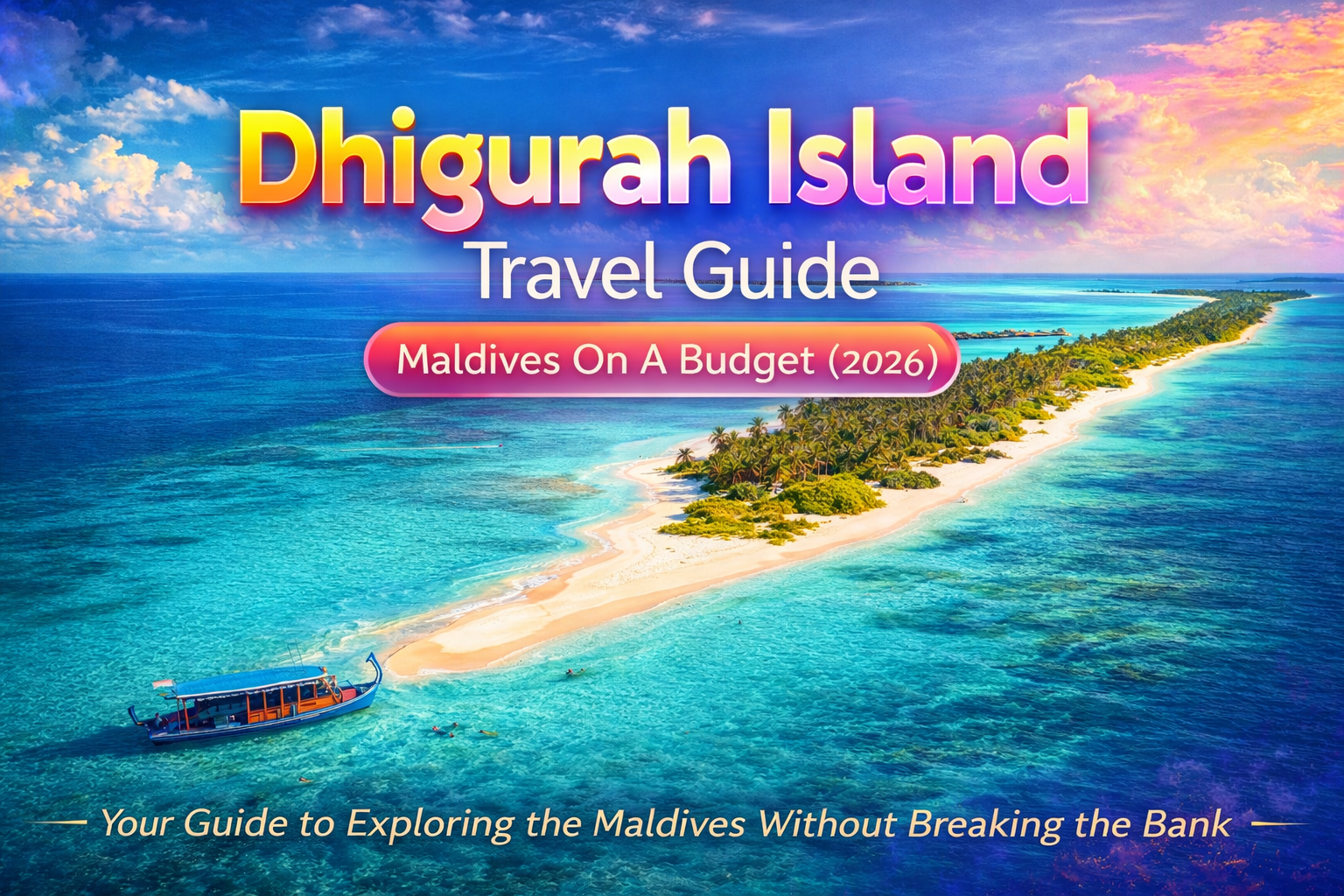
Dhigurah means “long island” in the local Dhivehi language, and that’s exactly what it is – a narrow strip of sand stretching about 4 kilometers, with a stunning beach running along most of the west side.
The island flies under the radar compared to the famous resort atolls. But here’s the thing – the water is the same impossibly turquoise color. The beaches are whiter and softer. And the marine life? Actually better in some ways, because there’s less boat traffic.
Plus, you can find guesthouse rooms for around $70 USD per night. Try finding that at a resort.
First Thing First – Is Dhigurah “Worth It” Compared To Resorts?
I get this question a lot, so let’s address it upfront.
If your dream Maldives vacation involves room service, a mini-fridge stocked with champagne, and never leaving your overwater villa – stick with the resorts. That’s a valid choice.
But if you want:
- Actual local culture and meeting Maldivian families
- Longer beaches with space to yourself
- Better prices for food and excursions
- The chance to stretch your budget from 3 days into 10 days
…then Dhigurah might be exactly what you’re looking for.
We visited both Dhigurah and another local island called Fulidhoo, and Dhigurah was our clear favorite. The beach is just so much bigger and more impressive.
How To Get To Dhigurah (Several Options, Varying Budgets)
No airport on Dhigurah itself, so you’ll fly into Male International Airport (MLE) first. From there, you’ve got choices.
Public Speedboat (What We Did)
Cost: ~$50 USD one way
Duration: 2 hours
This is the sweet spot between cost and convenience. Daily departures from Male at 11 AM and 4:30 PM (10 AM on Fridays). Return boats from Dhigurah at 6:30 AM and 1:30 PM (1:45 PM Fridays).
We asked our hotel to book the speedboat for us and just added it to our room bill. Paid by credit card, no stress, no carrying piles of cash. The boats are comfortable, air-conditioned, and they even hand out free water.
Heads up: The schedule changes sometimes, so confirm with your hotel before you fly.
Public Ferry (Cheapest Option)
Cost: ~$8 USD one way
Duration: 6-7 hours
If you’re on a tight budget and have time to kill, this works. MTCC runs ferries several days a week. It’s slow, it’s basic, but it’ll get you there for almost nothing.
Domestic Flight + Speedboat
Cost: ~$170 USD one way
Duration: 20 minute flight + 20 minute boat
Fly from Male to Maamigili island (VAM) with Villa Air/FlyMe, then a quick taxi to the harbor, then a speedboat to Dhigurah. The boat transfer is usually included. This is a good backup if seas are rough and speedboats aren’t running.
Seaplane (Most Scenic, Most Expensive)
Cost: ~$250 USD one way
Duration: 30 minute flight + 10 minute boat
Look, I’ll admit – the seaplane experience is pretty magical. Flying low over those atolls, watching the colors shift from deep blue to turquoise to white… it’s something else. But it’s also the most expensive way to get there. Worth it if you’ve got room in the budget and want the full “Maldives arrival” experience.
Getting Around The Island
This is almost too easy.
Dhigurah is only about 100-200 meters wide. You can walk everywhere. From the northern tip to the southern sandbar takes about an hour on foot, and honestly, it’s a pleasant walk.
Some hotels rent bicycles if you’d rather roll, but we never felt the need.
Where To Stay On Dhigurah
We stayed three nights and could’ve easily stayed longer. The island has plenty of guesthouses – family-run places with clean rooms, friendly hosts, and breakfast included.
What we paid: Around $70 USD per night for a basic but comfortable room with AC, WiFi, and attached bathroom. Nothing fancy, but clean and the hosts were wonderful.
Booking tip: Most guesthouses can arrange your speedboat transfers and excursions. Just email them before you arrive. Paying by credit card at the end saved us from carrying too much cash.
Best Things To Do In Dhigurah
North West Beach (Bikini Beach)
This is the main event. A stunning stretch of white sand running the length of the island’s west side. This is where tourists can wear swimsuits without issue (more on dress code later).
The water is calm, great for swimming, and there’s a spot called Turtle Reef about halfway along where you can snorkel from shore and see baby sharks and sea turtles. We saw both within five minutes of getting in the water.
Sunset here? Bring your camera.
Long Beach Sandbar
This was my favorite spot on the entire island.
At the southern tip, a long sandbar extends into the ocean – snow-white sand, shallow turquoise water, and often completely empty. You can walk out almost to the neighboring LUX Resort (though technically you’re not supposed to enter if you’re not a guest).
Getting there: Either walk along the beach (about an hour from the main village) or take the jungle path through the island’s interior. We preferred the jungle path – more shade, and we saw some cool lizards along the way.
Go early. By 9 or 10 AM, the light is beautiful and you’ll beat the heat and the crowds. Bring water – there’s nowhere to buy drinks out there.
Whale Shark Safari
This is the big one. Dhigurah is in the South Ari Atoll, one of the best places in the world to swim with whale sharks year-round.
Cost: Varies, but expect around $60-80 USD per person
Duration: 2-3 hours
No guarantees, obviously – they’re wild animals. But the chances are good. The key is going early; multiple tour boats operate here, and the first one to spot a shark gets the best experience.
We didn’t book this ourselves (timing didn’t work out), but every traveler we met who did was absolutely buzzing afterward.
Dolphin Cruises
Dolphins are everywhere around Dhigurah. You’ll likely see them even on other boat trips. But a dedicated sunset dolphin cruise is a lovely way to spend an evening. They move fast, so snorkeling with them isn’t really an option, but watching a pod leap alongside the boat is pure joy.
Manta Ray & Reef Shark Excursions
There’s a manta “cleaning station” near Dhigurah where these gentle giants come to get cleaned by smaller fish. Good chance of seeing them, plus reef sharks cruising by. Usually a 2-3 hour trip.
Resort Day Trips
Here’s a fun hack – several nearby five-star resorts (like Amaya Kuda Rah, Centara Grand, and Vilamendhoo) offer day excursions for Dhigurah guests.
You get a boat transfer to the resort, access to their pools and facilities, and usually a food/drink credit. It’s a fraction of what you’d pay to stay there, and you get to experience the “resort Maldives” for a day.
Fishing Excursions
South Ari Atoll is known for big game fishing – sailfish, yellowfin tuna, kingfish. Catch your dinner and have your guesthouse cook it up for you.
Scuba Diving
Dhigurah is legitimately famous among divers. Some of the best dive sites in the Maldives are right here – healthy coral, lots of fish, good visibility. Several dive shops on the island can set you up.
Watersports
Kayaking, kiteboarding, parasailing, jet skis – if you want to play on the water, you can.
How Long Should You Stay?
Minimum: 2-3 days to see the highlights.
Ideal: 5-7 days to really settle in, do the main excursions, and spend lazy afternoons on that beach.
We did three days and wished we’d booked a week. There’s something about this island that makes you want to slow down.
Practical Tips (Read These)
Money & Payments
- ATM: One ATM on the north end near the ferry terminal. Worked fine for us with a US debit card, dispensing Maldivian Rufiyaa.
- Currency: US dollars accepted everywhere, but you’ll get slightly better rates with Rufiyaa. Just don’t take Rufiyaa home – worthless outside Maldives.
- Credit Cards: Most hotels accept cards (sometimes with 3-5% fee). Restaurants and small shops are cash-only.
- Exchange: No money changers on Dhigurah. Handle this at Male airport.
Dress Code
Maldives is a Muslim country. On local islands like Dhigurah, dress conservatively outside the designated bikini beach (North West Beach). Cover shoulders and knees when walking through town.
We saw plenty of tourists ignoring this, and nothing bad happened. But out of respect for the local community, better to follow the rules.
Alcohol
Not sold on Dhigurah. If you want a beer, you’ll need to visit a resort island or wait until you’re back in Male. Honestly, we didn’t miss it – but worth knowing if that matters to you.
Food
Maldivian food is similar to Indian cuisine – lots of curry, rice, fresh fish. Plenty of restaurants serving western options too (pizza, burgers, pasta).
Our favorites: Cafe Dune, Beach View Cafe, Malaveli, Shell Restaurant. All reasonably priced, all good.
Internet & Phone
- WiFi: Fast and reliable, even in budget guesthouses.
- Cell service: Good 4G coverage with Ooredoo across most of the island, including the sandbar.
Drones
Good news for aerial photographers – drones are allowed on Dhigurah (unlike most resorts). We confirmed with our hotel first, then flew from the sandbar for some incredible shots. Just be respectful of people’s privacy.
Wildlife
- Fruit bats: Giant flying foxes hanging in the trees. Weird and wonderful.
- Mosquitoes: They’re around, especially near jungle areas. Bring repellent. Breezy beach spots are usually fine.
- Malaria: Maldives has been malaria-free since 1984. Dengue exists, so repellent still smart.
Safety
Extremely safe. One of the lowest crime rates in the world. We never felt uneasy, even walking around at night.
Health
Small health center on the island for minor issues. Serious emergencies would need evacuation to Male – same as resort islands.
Best Time To Visit
Dry season (January to April) is ideal. Sunny skies, calm seas, perfect beach weather. We went in January and it was glorious.
Wet season (September to December) has more rain, but also greener landscapes and fewer tourists. Still possible to have a good trip if you’re flexible.
What About Other Islands?
We also visited Fulidhoo – smaller, different vibe, famous for the stingrays and nurse sharks that gather right at the ferry dock. Worth a visit if you have time. But if you only pick one? Dhigurah, hands down.
Getting between them requires going back to Male first. From Dhigurah to Male (2 hours), short wait, then Male to Fulidhoo (1 hour). Total about 4 hours.
Final Thoughts
Dhigurah isn’t the Maldives of Instagram – no overwater villas, no champagne breakfasts, no private butlers.
But it is the Maldives of turquoise water stretching to the horizon. Of beaches so long you can walk for an hour and see no one. Of fruit bats wheeling overhead at sunset and sea turtles swimming five meters from shore.
And honestly? That version of the Maldives felt more real to me. More accessible. More like a place people actually live, not just a backdrop for honeymoon photos.
If you want paradise on a budget – real paradise, not the all-inclusive version – put Dhigurah on your list.
For More Blogs Visit – wanderer girl